
From Fitness Trackers to Lifesaving Ecosystems: Reimagining Global mHealth
A Product and Service Concept Proposal to Improve the Monitoring of Citizens’ Health in Society at Large
The paper proposes a holistic mHealth product and service concept designed to improve public health monitoring through wearable devices and cloud-based Machine Learning. By transitioning from individual-focused solutions to a societal scale, it leverages ubiquitous sensors to provide decision support for healthcare professionals across all age groups.
TL;DR
This research moves beyond simple step-counting to propose a unified healthcare monitoring system for all ages. By integrating wearable sensors, cloud computing, and Machine Learning, the authors outline a service concept that transforms raw biometric signals into actionable clinical knowledge, validated by industry interviews and consumer surveys.
Problem & Motivation: The Fragmentation of Health Data
Despite the explosion of wearables, most devices operate in "silos." Fitbits track steps, Apple Watches take spot ECGs, and specialized medical monitors like Medtronic’s MiniMed focus on single conditions like diabetes.
The authors identify a significant gap: contextual synthesis. Current systems rarely cross-reference data from different biometric markers—such as correlating heart rate spikes with movement or stress metrics—to provide a holistic view of health. Furthermore, many existing platforms, such as Altice Labs' SmartAL, still require manual data input, creating friction that prevents continuous, 24/7 monitoring.
Methodology: The Integrated Monitoring Architecture
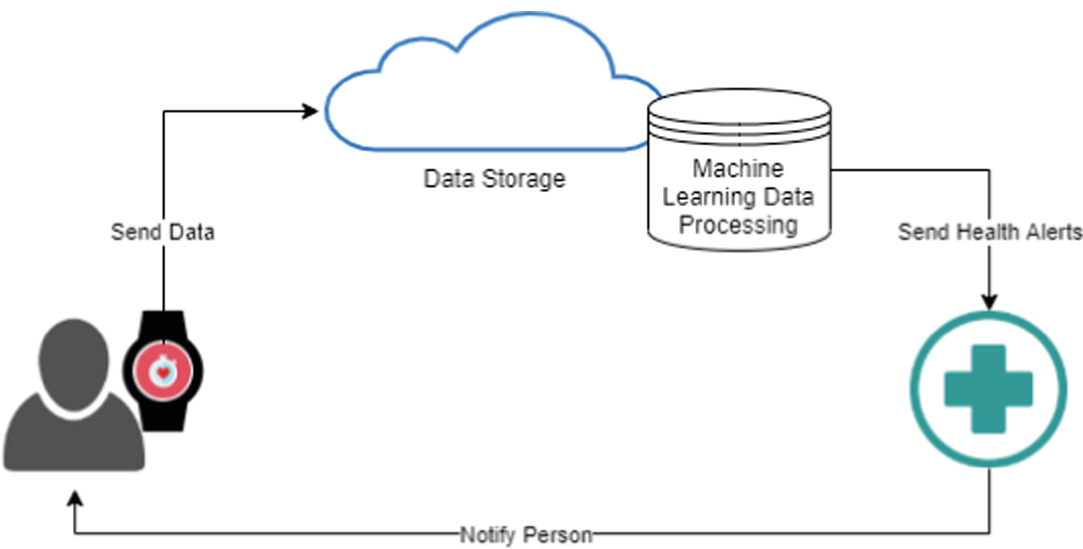
The proposed solution centers on a continuous loop between the user, the cloud, and the healthcare provider.
1. The Sensor Layer
The system utilizes wearables (smartwatches, smart clothing, and patches) to capture high-density data (10–500 samples per second). The goal is to move past "lifestyle" tracking into "medical wellness" by monitoring:
- Heart Rate & Variability
- Stress Levels (via data fusion)
- Fall Detection & Gesture Recognition
2. The Intelligence Layer (Machine Learning)
The architecture uses Machine Learning models (specifically KNN, SVM, and ANN) to detect anomalies. The physical intuition here is Data Fusion: using accelerometer data to "denoise" ECG signals—knowing that a high heart rate during a sprint is normal, whereas a high heart rate while stationary is a red flag.
Experimental Insights & Survey Results
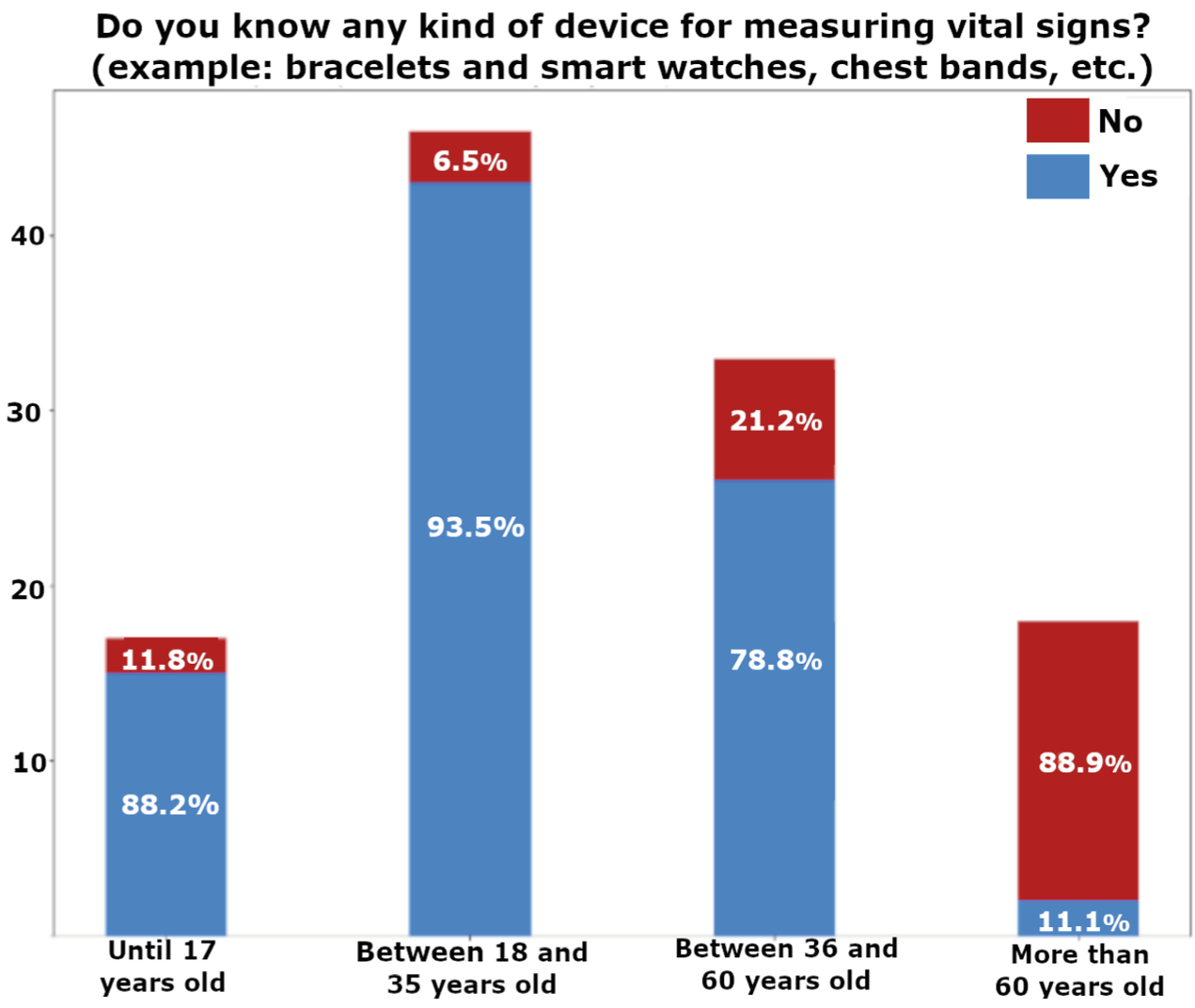
To validate their concept, the team analyzed 114 diverse participants across age groups (from teens to 60+).
- Universal Acceptance: While the elderly are the primary targets for many health apps, the survey showed that all age groups are highly receptive to using wearables for monitoring.
- The GDPR Paradox: Interestingly, users who are highly aware of the General Data Protection Regulation (GDPR) are less likely to share their data. This suggests that as technical literacy increases, so does skepticism regarding data misuse by third parties.
- Payment Barriers: Only 20% of participants expressed a clear willingness to pay for these services, suggesting that mHealth products must demonstrate "radical innovation"—such as active intervention (e.g., automated drone response or emergency alerts)—to convert users into customers.
Critical Analysis & Conclusion
Takeaway
The paper effectively argues that the future of healthcare lies in ubiquity. By treating health monitoring as a society-wide service rather than a niche medical intervention, we can transition from reactive treatment to proactive prevention.
Limitations
- Cloud Infrastructure: Storing sensitive medical data requires custom high-security clouds, as generic providers (AWS/Azure) may not meet the strict regulatory requirements for medical-grade data handling in some jurisdictions.
- Clinical Resistance: Interviews with Altice Labs revealed that medical staff are often hesitant to trust computer-aided diagnoses, fearing the loss of the "human factor" and clinical semantics.
Future Outlook
The authors suggest that the next "radical" step is the integration of Autonomous Response. Imagine a system where a wearable detects a cardiac event and automatically dispatches a medical drone or triggers a smart home system to unlock the door for emergency responders. This move from "Monitoring" to "Reaction" is the frontier of the next decade's mHealth revolution.