
Social Annotations: Breaking the "Black Box" of CAD Modeling Strategies
Productivity Improvement by Using Social-Annotations about Design Intent in CAD Modelling Process
This paper explores the impact of "social-annotations" on productivity during the Engineering Change Process (ECP) in CAD modeling. By embedding explicit design intent and modeling strategies within 3D models, the researchers demonstrated a significant time reduction in performing geometric modifications using platforms like Autodesk Inventor and Siemens NX.
TL;DR
A CAD model is more than just 3D geometry; it is a frozen sequence of decisions. When those decisions are hidden, modifying the model becomes an engineering nightmare. This research introduces Social-Annotations—explicit textual "breadcrumbs" left by the original designer—to communicate design intent. The result? A 10-20% boost in productivity during engineering changes.
The Problem: The Hidden "Know-How"
In the world of New Product Development (NPD), CAD models are often shared across teams. However, most models only convey declarative knowledge (the "what"—the final shape). They fail to convey procedural knowledge (the "how" and "why").
When a new engineer inherits a complex model without knowing the original modeling strategy:
- Rigidity: Simple changes break the parametric "parent-child" relationships.
- Inefficiency: Time is wasted reverse-engineering the feature tree.
- Risk: Designers might use "dirty" workarounds (like delete-and-remake) rather than clean parametric updates.
Methodology: Mapping Intent to Geometry
The authors tested their hypothesis by injecting three types of annotations into CAD environments (Autodesk Inventor and Siemens NX):
- Location: Identifying which set of features defines which geometric element.
- Design Intent: Explaining the logic behind a profile or constraint.
- Modification Procedures: Explicit "Do's and Don'ts" (e.g., "Avoid using the mirror feature here").
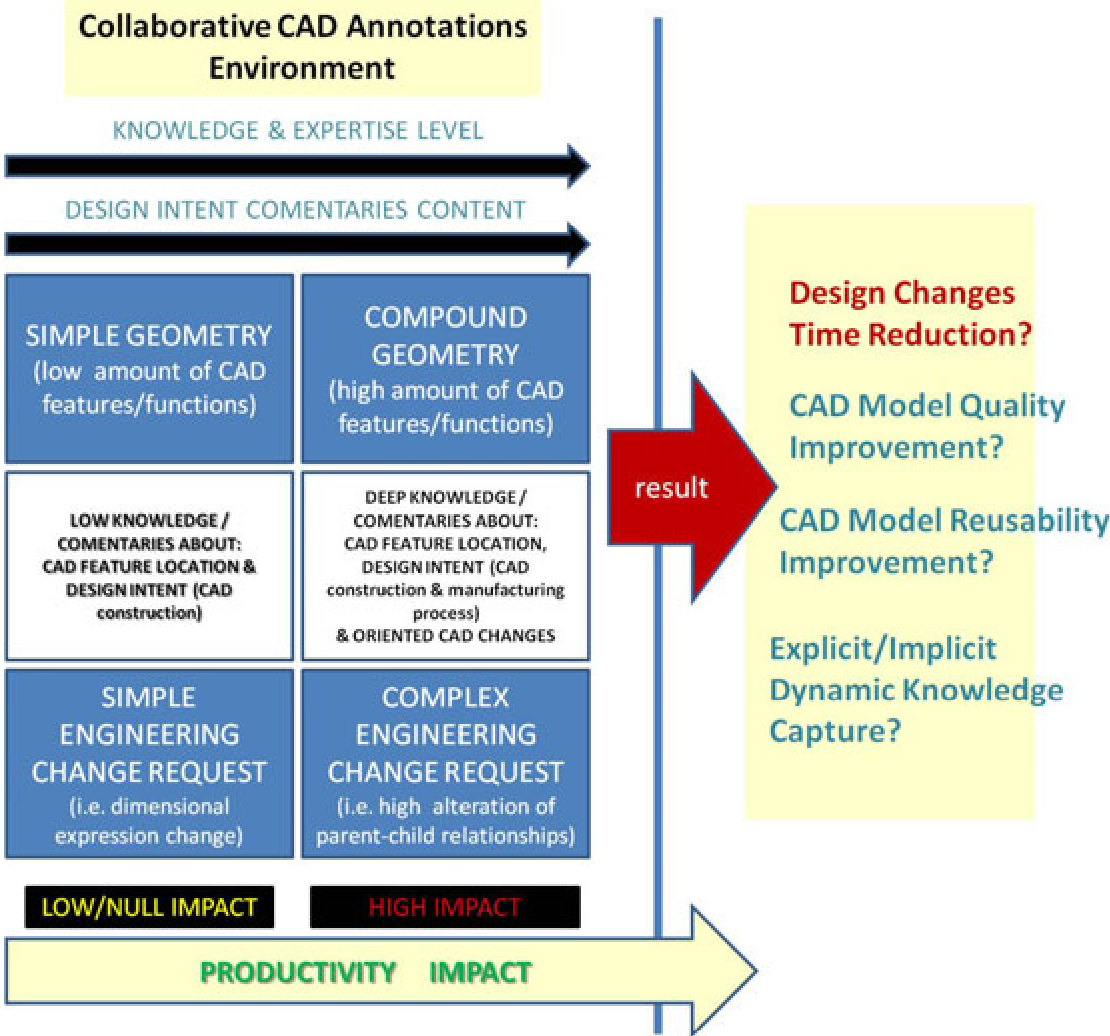 Figure 1: The relationship between user knowledge, annotation content, and productivity impact.
Experimental Design
- Phase I (Undergraduate): Students with homogenous, basic skills using Inventor.
- Phase II (Postgraduate): Master's students with professional industry experience using Siemens NX.
- Task: Perform specific "Engineering Change Orders" (geometric modifications) on both simple and complex part geometries.
Key Results: Time is Money
The data confirms that providing design intent via annotations significantly lowers the "cognitive load" of the engineer making the change.
| Group | Control (No Annotations) | Experimental (With Annotations) | Improvement |
|---|---|---|---|
| Undergraduate (Ex 1) | 37 min | 28 min | ~24% |
| Postgraduate (Ex 1) | 52 min | 43 min | ~17% |
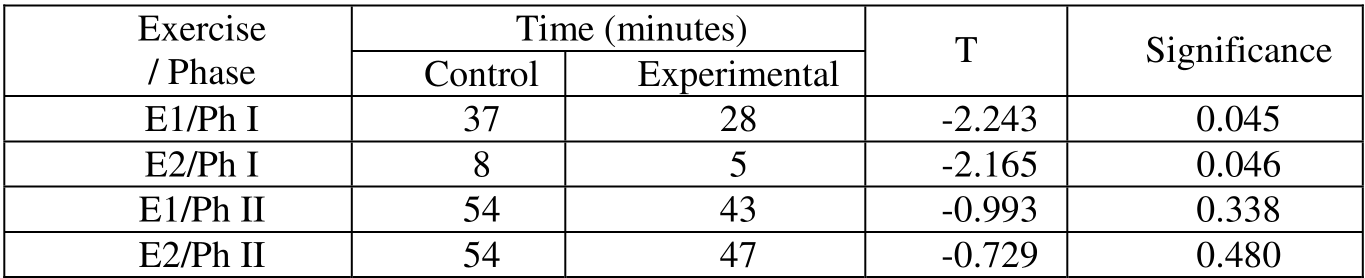 Table 1: Statistical comparison showing significant time savings in Group I (Undergraduates).
Interestingly, the Undergraduate group saw a more pronounced benefit. The authors suggest this is because experts (Postgraduates) often bring their own "procedural baggage"—trying to find commands from other software (like hunting for a mirror tool in NX because they knew it in CATIA), which can sometimes dilute the efficiency gained from annotations.
Critical Insight: Complexity Matters
The study concludes that the "Annotation Impact" is not linear. For very simple geometries, annotations might be redundant. However, as the Geometric Complexity and Modification Complexity increase, the value of social-annotations grows exponentially.
Future Outlook and Limitations
While the study provides a strong proof-of-concept, the sample sizes were relatively small (30 undergraduates, 18 postgraduates). Future research should explore:
- Automated Annotations: Can AI summarize the feature tree logic automatically?
- Platform Neutrality: How can these annotations persist when moving models between different CAD software (e.g., from SolidWorks to NX)?
Conclusion
By treating CAD modeling as a social process rather than a solitary drafting task, engineering teams can significantly reduce the friction of design iterations. Explicitly documenting "how" a model is built is just as important as the model itself.