
Efficient Social Search: Using User Profiles to Kill the Flooding Problem
Profile-based Query Routing in a Mobile Social Network
This paper introduces a profile-based query routing method for mobile social networks aimed at reducing network traffic. By leveraging user interests (profiles) and 2-hop routing information, the system directs queries only to relevant nodes rather than broadcasting them to all friends.
TL;DR
In the early days of mobile social networking, retrieving information from friends-of-friends meant overwhelming everyone's inbox with "flooded" queries. This paper proposes a profile-based routing system that identifies "experts" within 2-hops, allowing queries to bypass irrelevant nodes and strike directly at the target, drastically reducing packet overhead.
Background: The Cost of Global Curiosity
Search in a social network—whether finding an image or a subject matter expert—is inherently a "needle in a haystack" problem. The naive solution is the Broadcast/Flooding method: you ask all your friends, they ask all their friends, and so on. In a mobile environment using e-mail protocols, this creates a massive load on the management server and a nuisance for users who receive irrelevant queries.
The authors recognize that social networks possess an inherent structure: people have specific expertise and interests. If the network "knew" who knew what, it could route queries like a postal service instead of a megaphone.
Methodology: Profile-based Routing
The core innovation lies in turning "Invitations" into "Metadata." When a user invites a friend to the network, they assign three keywords (a profile) to that friend.
1. The 2-Hop Knowledge Base
When a user receives consistent feedback (e-mail descriptors) from three or more people, they are flagged as an "expert" for that topic. Crucially, this routing information isn't kept secret; it is shared with every node within a 2-hop radius.
2. Intelligent Redirection
Instead of simply passing a message along, the routing mechanism on the handset checks: "Do I have routing info for this keyword?"
- If Yes: The query is sent directly to the identified expert's e-mail.
- If No: The system falls back to traditional flooding.
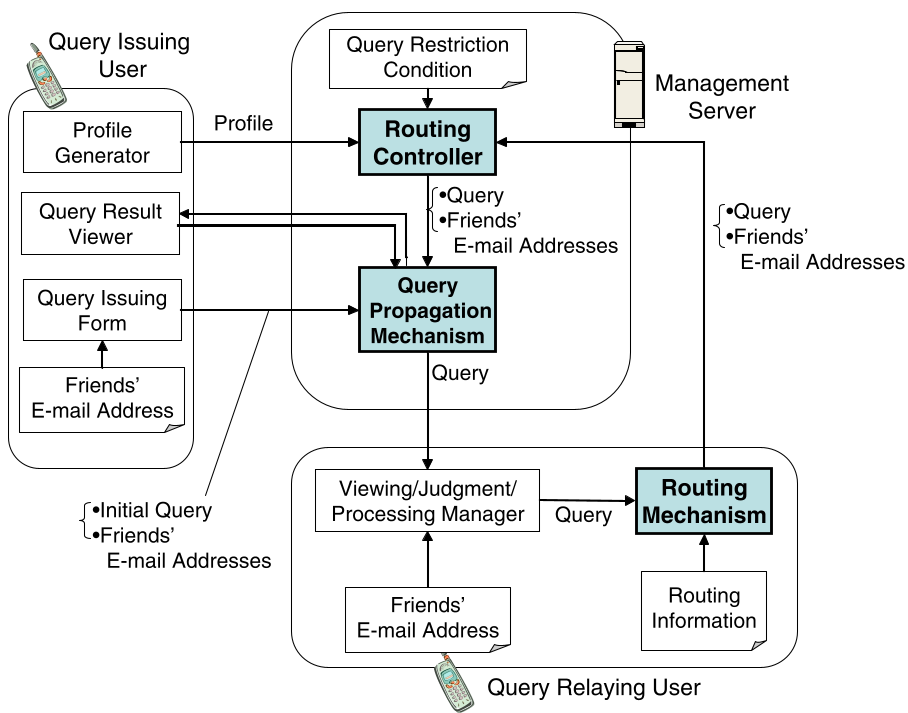 Figure 1: The architecture including the Profile Generator and Routing Controller.
Experiments: When is Routing Worth It?
The researchers conducted simulations using a Power-Law Random Graph (PLRG), which mimics the real-world "scale-free" nature of social networks where a few "hubs" have many friends while most have few.
The Packet Trade-off
There is a catch: sending routing information (the "setup phase") costs packets. The authors identified a pivot point:
- If the "Expert Density" is high (>5%), the overhead of sharing routing info exceeds the savings of targeted search because everyone is busy announcing their expertise.
- If density is low (the "rare expert" scenario), the method is vastly superior.
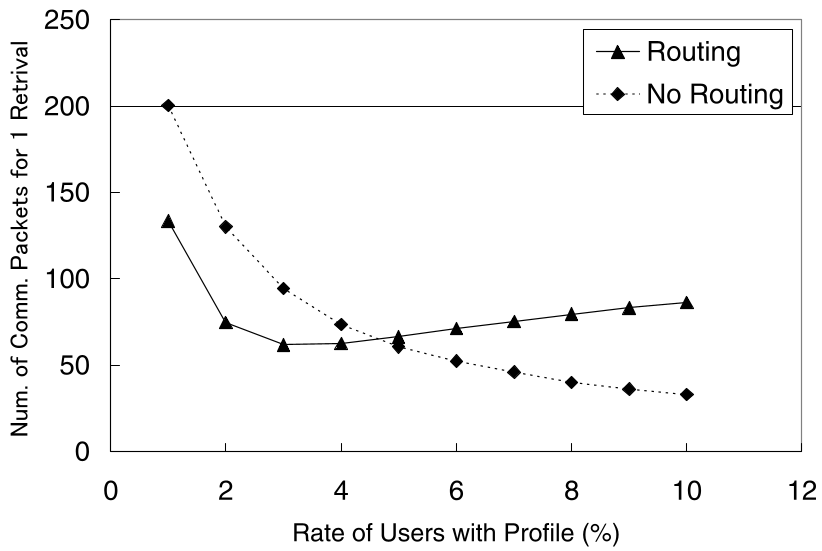 Figure 2: Communication packets vs. Rate of users with profiles.
The paper proves mathematically that even in high-density scenarios, the routing method wins as long as the keyword is queried frequently enough. For most realistic settings, it only takes 4 queries to break even and start saving network bandwidth.
Critical Insight: The "Small World" Advantage
The beauty of this research is its reliance on the 2-hop limit. By not trying to map the entire global network on every phone—which would be a storage and privacy nightmare—it utilizes the "friend of a friend" logic that defines the most effective part of human social networking. It effectively bridges the gap between structured DHT (Distributed Hash Table) routing and unstructured social flooding.
Conclusion
While modern social apps now use centralized AI to route content, the principles in this paper—decentralized expertise discovery and localized routing tables—remain highly relevant for privacy-first social networks and Edge Computing scenarios where a central server might not always be accessible.
Takeaway for Architects:
Don't broadcast; describe. The cost of a small "metadata handshake" upfront is almost always lower than the cost of a global flood in the long run.