
Beyond the Frame: Why Your Profile Picture Is a Reliable Mirror of Bias, Not Personality
What Does Your Profile Picture Say About You? The Accuracy of Thin-Slice Personality Judgments from Social Networking Sites Made at Zero-Acquaintance
The study investigates the accuracy of "thin-slice" personality judgments based solely on Facebook profile pictures. Using a sample of 52 female profile owners and 10 raters, it evaluates how brief (10-second) exposures to images influence personality assessment across 10 bipolar attributes.
TL;DR
Can a stranger know who you are just by looking at your Facebook profile picture for 10 seconds? According to Mark Turner and Natalie Hunt’s research, the answer is a resounding no. While people agree on what they think you are like (consensus), their judgments rarely align with your actual personality (accuracy). This study deconstructs the "Halo Effect" of attractiveness and the social cues that lead us to make confident, yet wrong, assumptions.
The Digital Facade: Identity Construction vs. Reality
In the physical world, first impressions are spontaneous. In the digital world of Social Networking Sites (SNS), they are curated. Researchers have long debated whether SNS profiles reflect our "extended real-life" or an "idealized virtual-identity."
The problem is that users have selective control. We choose the lighting, the angle, and the company we keep in our photos to signal social status. This study specifically isolates the profile picture—the most influential element of an online persona—to see if "thin-slice" judgments (decisions made in seconds) hold any weight.
Methodology: The 10-Second Glimpse
The researchers recruited 52 female Facebook users and extracted their profile pictures. Ten strangers (the raters) were then shown these images for exactly 10 seconds.
- Attributes Measured: 10 bipolar scales (e.g., Nervous–Calm, Unintelligent–Intelligent, Unfriendly–Friendly).
- Control Cues: The study categorized photos by content—smiling vs. non-smiling, and individual vs. group shots.
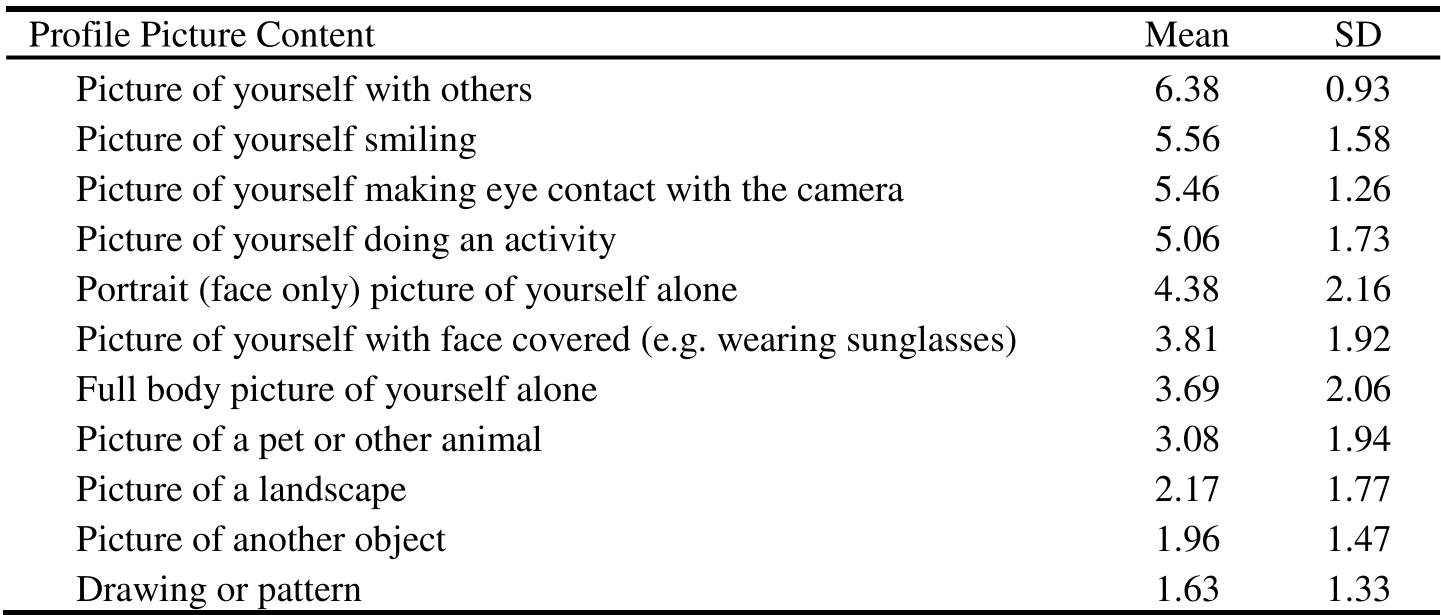 Most users preferred shots with others or smiling, indicating a desire to appear more social.
The Core Finding: High Consensus, Low Accuracy
The statistical results reveal a fascinating psychological paradox: Strangers agree with each other, but they don't agree with you.
1. The Consensus Effect
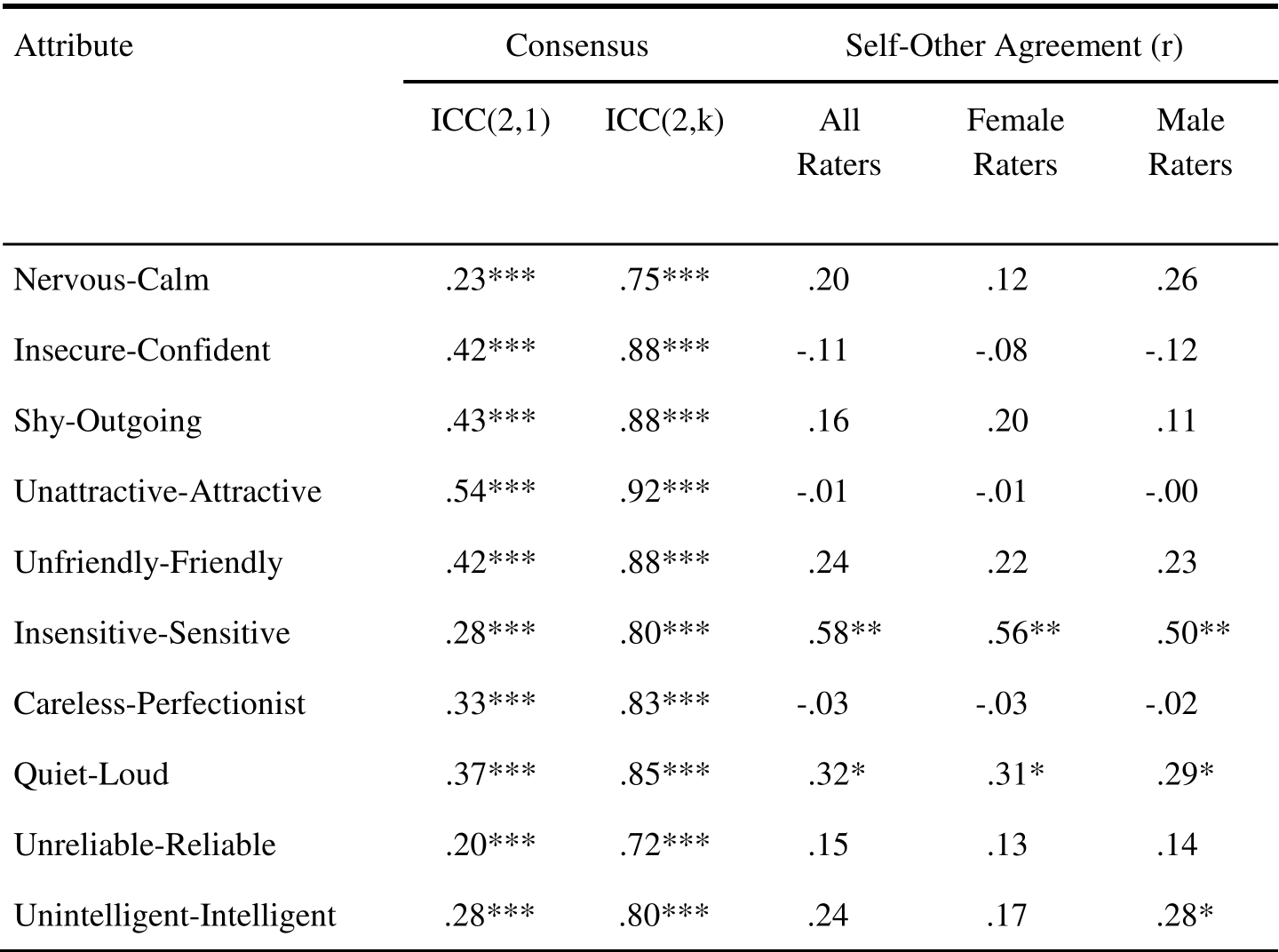
Raters showed high Intraclass Correlation (ICC) for traits like attractiveness, outgoingness, and confidence. This means humans share a "template" for what these traits look like. If three strangers look at your photo, they will likely give you the same personality score.
2. The Accuracy Gap
However, when comparing these stranger ratings to the owners' own self-evaluations, the accuracy vanished. Self-other agreement was significant for only Sensitivity and Loudness. For the other 8 attributes—including intelligence and reliability—there was zero correlation between the rater's guess and the owner's reality.
The "Halo Effect" and Visual Cues
Why are we so bad at judging personality from photos? The study points to three major "biases" that hijack our judgment:
- Attractiveness Bias: Raters who saw a profile owner as attractive automatically rated them as calmer, more confident, more outgoing, and friendlier. For female raters, attractiveness even correlated with perceived intelligence and reliability.
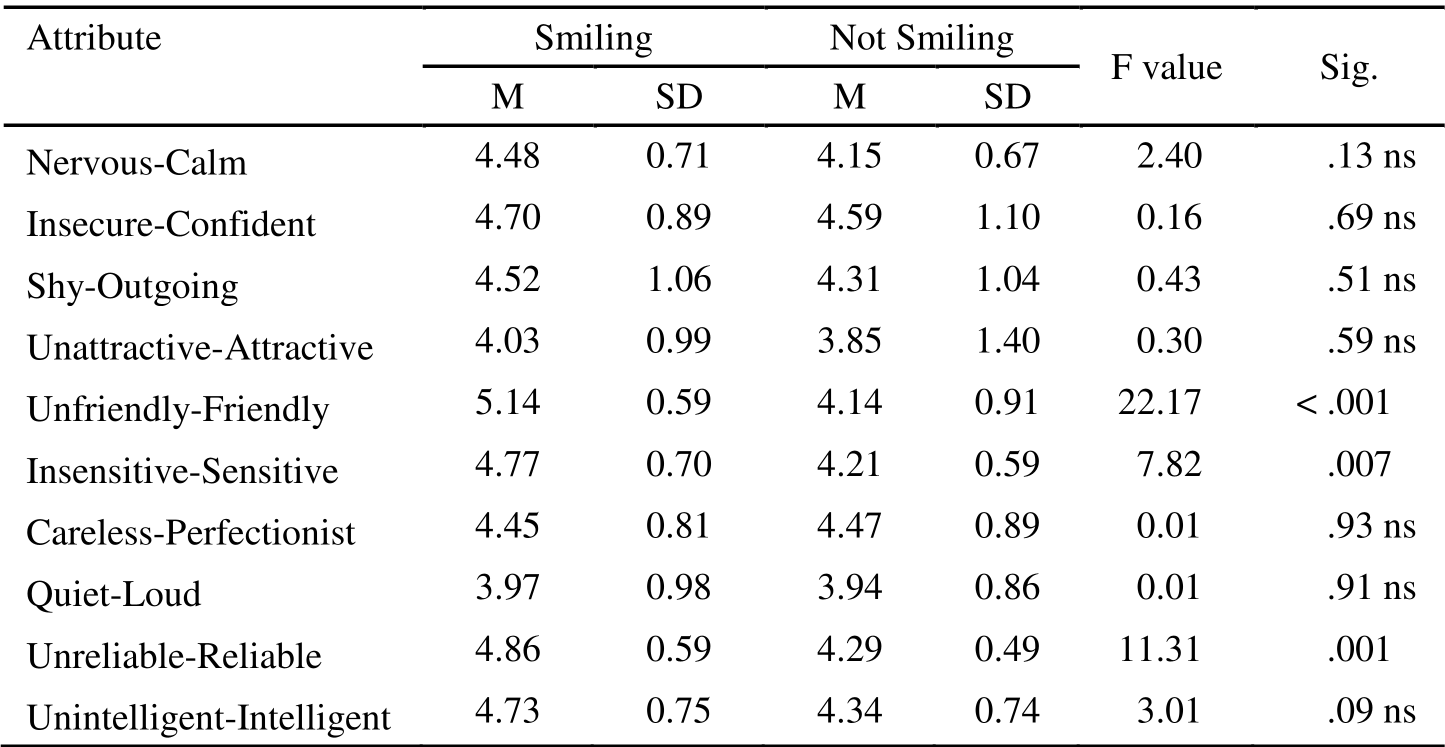
- The Smile Effect: Profile owners who were smiling were judged significantly friendlier, more sensitive, and—interestingly—more reliable.
- The Social Context: Being in a group photo (the "with others" condition) moved the needle on extroversion. Owners with friends in their photos were rated as calmer, more outgoing, and friendlier than those pictured alone.
Deep Insight & Conclusion
This research highlights a critical vulnerability in digital first impressions. We are "wired" to make rapid judgments, but our mental shortcuts (like the Halo Effect) aren't optimized for the curated environment of social media.
The Takeaway: While you can successfully manipulate how "friendly" or "social" you appear by choosing a smiling group photo, you cannot easily convey deeper traits like conscientiousness or intelligence. Paradoxically, the more we focus on making an "attractive" impression, the more we may actually be obscuring our true character by triggering the rater's internal biases.
Limitations: The study used a 10-second exposure. While enough for a "thin-slice," it remains to be seen if a 60-second exposure or the addition of text-based information (like a "Bio") would bridge the accuracy gap. For now, the old adage holds: don't judge a book—or a user—by its cover.