
RISA: Bridging the Gap Between Big Data Volatility and Cloud Cost Efficiency
Profit Maximization of Big Data Jobs in Cloud Using Stochastic Optimization
This paper introduces RISA (Reserved Instances Stochastic Allocation), a novel resource management framework that maximizes the net profit of executing Big Data jobs in the cloud. By mapping the resource reservation challenge to the classic News Vendor Problem, the method determines the optimal number of Reserved Instances (RIs) while utilizing On-Demand instances to handle overflow, achieving near-optimal profitability.
TL;DR
Cloud "Reserved Instances" (RIs) are cheap but inflexible; Big Data jobs are flexible but unpredictable. RISA is a new approach that uses the News Vendor Problem—a classic mathematical model for inventory management—to calculate exactly how many cloud instances you should reserve to maximize profit. It treats cloud capacity like a perishable product, resulting in up to 10x higher net profit than traditional "safe" over-provisioning.
The "Commitment Trap" in Cloud Economics
Cloud providers like AWS offer a massive 75% discount if you pay for a "Reserved Instance" (RI) for 1-3 years. However, these are non-refundable. If your data job ends early, you still pay. If your job spikes and you haven't reserved enough, you fall back to On-Demand prices, which are significantly more expensive.
Prior works often took the "average" demand (which fails during spikes) or the "maximum" demand (which wastes money on idle time). The authors discovered that for 40 real-world Hadoop users, resource demand varied by an average of 156%, with some users hitting extreme 1292% fluctuations. Using a single "point estimate" in such a volatile environment is financially reckless.
Methodology: From Newspapers to Virtual Machines
The core insight of RISA is that an RI is like a daily newspaper: it has value if used within its term, but it is "perishable" in the sense that an idle hour of a reserved instance is money gone forever.
1. Modeling the Uncertainty
Instead of guessing a single number, RISA analyzes historical traces to create a Probability Distribution (RDPD). In their tests, the authors found the Lognormal distribution offered the best fit for MapReduce workloads.
2. The Critical Fractile Formula
RISA uses stochastic optimization to find the optimal number of instances (). The math hinges on the Critical Fractile: Where:
- : Expected profit generated by an instance.
- : The average cost of an instance (blending Reserved and On-Demand rates).
- : The inverse cumulative distribution function of your workload history.
3. Architecture Overview
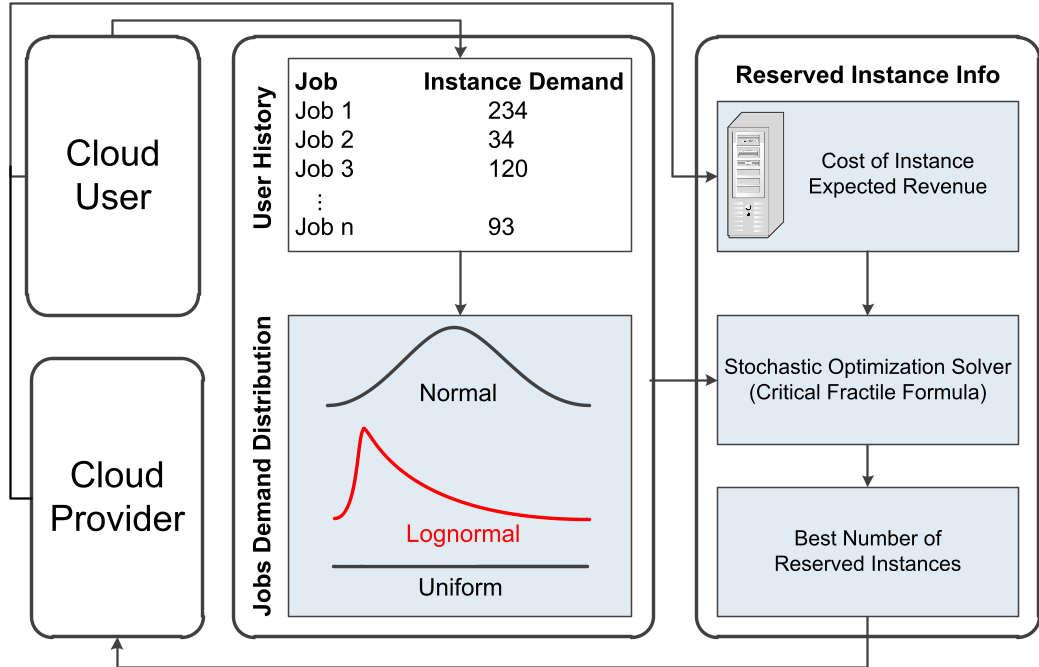 Figure 1: The RISA workflow, integrating job history, distribution fitting, and NVP optimization.
Experiments and Breakthroughs
The authors tested RISA against three baselines: On-Demand only, RIPAM (an autoregressive model), and Conservative (maximum demand).
- Profitability: RISA produced 10x more profit than the Conservative approach. Why? Because the Conservative approach was so afraid of On-Demand costs that it spent all its revenue on idle RIs.
- Proximity to Optimal: RISA consistently stayed within 1.5% to 5% of the "Optimal" baseline—a scenario where the user has perfect "god-mode" knowledge of future jobs.
- Handling Variance: For "User 1" (high variance), RISA correctly identified that it's actually more profitable to reserve fewer instances and pay the On-Demand penalty for peaks rather than over-reserving.
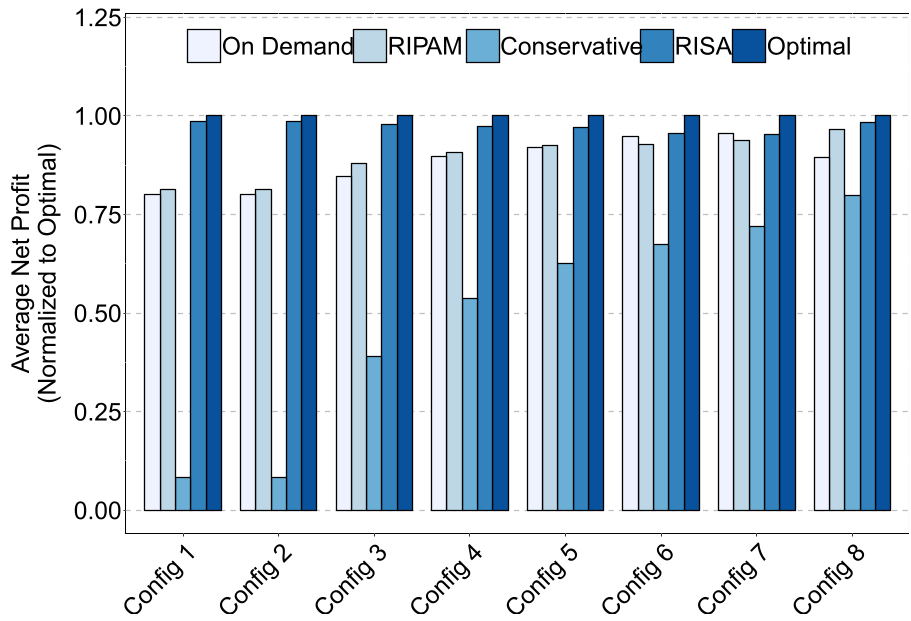 Figure 2: Average net profit across various AWS instance configurations.
Critical Analysis & Conclusion
RISA proves that Cloud FinOps (Financial Operations) is as much a mathematical optimization problem as it is an engineering one.
Key Takeaways:
- Don't ignore the tails: Big Data's long-tail distribution means you should rarely provision for the "worst-case scenario."
- Context matters: RISA changes its recommendation based on your business profit (), not just the cloud cost. If your data job is high-value, RISA reserves more; if it's low-margin, it plays it safe.
Limitations: RISA assumes you can fit a distribution to your logs. If your workload is purely "random walk" (no pattern), the model breaks. Furthermore, it assumes non-overlapping jobs, though the authors provide an extension for concurrent execution.
Future Outlook: The next frontier is extending this to Spot Instances, which add a third dimension of risk (instance revocation), and multi-dimensional distributions (balancing CPU, RAM, and IOPS simultaneously).