
ProMoT: Bridging the Gap Between Profitability and Truthfulness in Mobile Crowdsourcing
Profit maximization in mobile crowdsourcing: A truthful auction mechanism
The paper introduces ProMoT, a Profit Maximizing Truthful auction mechanism for mobile crowdsourcing systems. It employs a novel greedy winner determination algorithm based on Linear Programming relaxation and a critical payment scheme to achieve near-optimal platform profit and guaranteed truthfulness.
TL;DR
Mobile crowdsourcing relies on incentivizing users to share sensor data. However, maximizing platform profit while ensuring users don't "game the system" is computationally difficult. The ProMoT mechanism solves this by transforming an NP-hard optimization problem into an efficient, greedy auction that guarantees truthfulness (users bid their actual costs) and achieves near-optimal (within 0.3%) social welfare.
Deep Dive into the Motivation
In a typical mobile crowdsourcing ecosystem (like Waze or Sensorly), the platform acts as a middleman between data consumers and smartphone owners. The conflict is inherent:
- The Platform wants to maximize profit—the value of completed tasks minus payouts.
- The Users are selfish; they want to maximize their utility (Payment - Actual Cost) and might lie about their costs to get a higher payout.
Prior solutions like MSensing sacrificed significant profit for speed, while optimal mechanisms were mathematically sound but "NP-hard," meaning they would stall as the number of users grew. ProMoT was designed to hit the "sweet spot": High Profit + Polynomial Time + Truthfulness.
Methodology: The Core Mechanism
ProMoT's innovation lies in its two-stage architecture: Winner Determination and Payment Scheme.
1. Winner Determination (The Greedy Engine)
The authors first prove that the optimal winner selection is a variation of the Knapsack problem, making it NP-hard. To solve this, ProMoT:
- Relaxes the Problem: It treats binary choices (win or lose) as continuous variables (0 to 1) to solve a Linear Programming (LP) version.
- LP-Based Sorting: The LP solution provides a "priority score" (). Users with higher scores are prioritized because they are mathematically likely to contribute more to total profit.
- Monotone Selection: It iterates through the sorted list, adding a user to the winner set only if their marginal contribution to the platform's profit is positive.
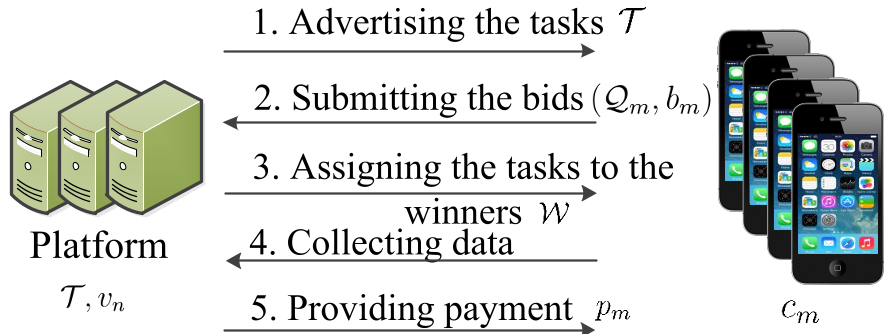 Fig 1: The operational flow of ProMoT, from task advertisement to payment.
2. The Payment Scheme (Ensuring Truthfulness)
To prevent strategic bidding, ProMoT uses Critical Payment. The payment to a user is the maximum bid they could have submitted and still remained a winner. This removes the incentive to lie; bidding higher than your cost doesn't increase your payout, it only increases your chance of losing.
Experimental Evidence
The authors tested ProMoT against the MSensing mechanism across several variables:
- Profit Scalability: As the number of smartphone users () grows, ProMoT captures significantly more profit by leveraging the increased competition.
- Efficiency vs. Optimality: The most striking result is the comparison to the NP-hard optimal solution. ProMoT achieves a social welfare level that is 99.7% of the theoretical maximum, while actually being fast enough to run in real-time.
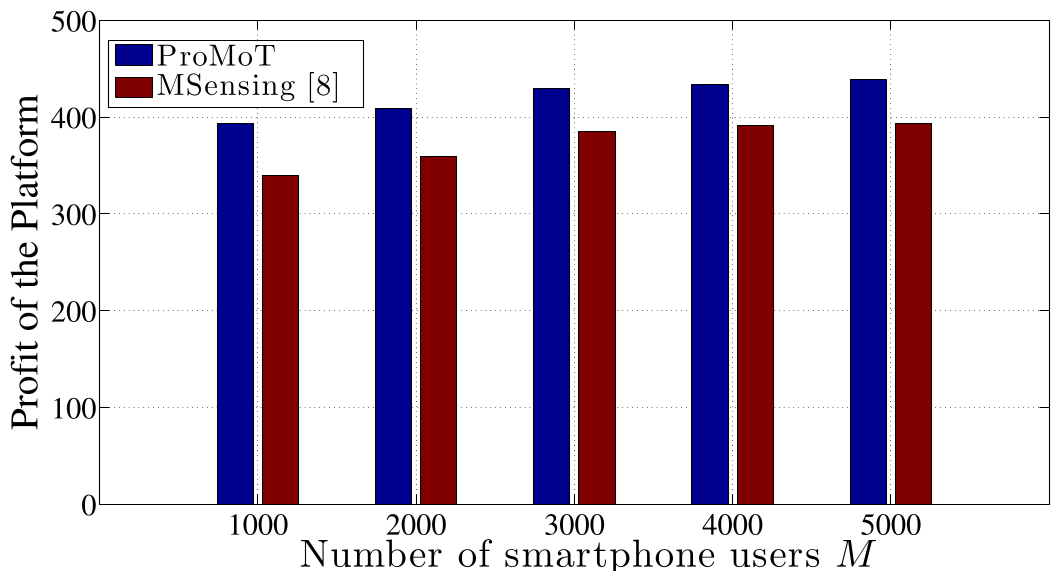 Fig 2: Profit comparison showing ProMoT significantly outperforming baseline models as user density increases.
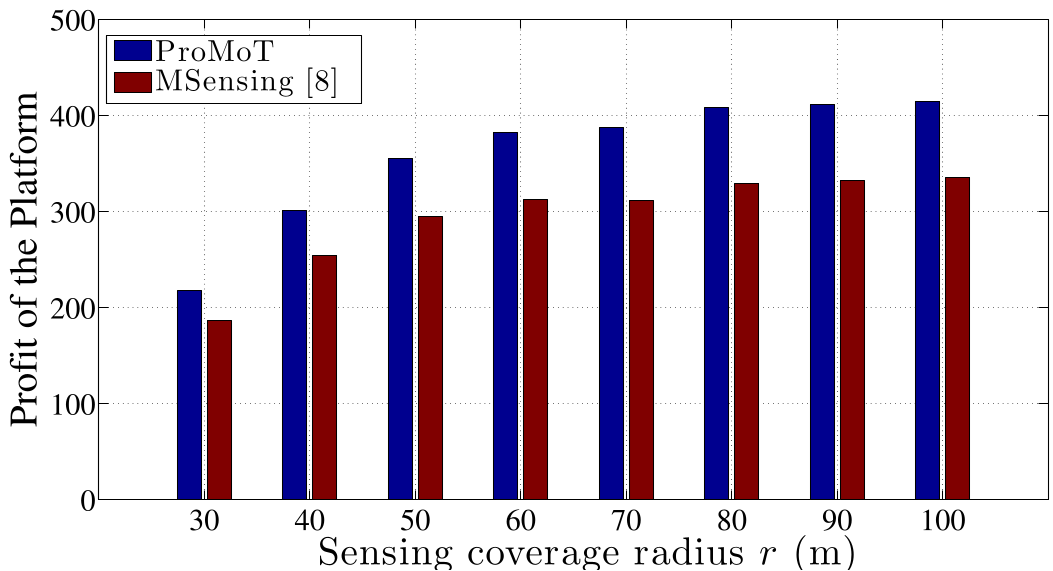 Fig 3: The negligible gap between ProMoT's greedy algorithm and the NP-hard optimal solution.
Critical Analysis & Takeaways
ProMoT succeeds because it doesn't just use a simple heuristic (like "cheapest user first"). By using the LP-relaxation as a guide for its greedy search, it incorporates the global constraints of the problem into its local decisions.
Limitations:
- The current model assumes a static auction (all bids are in before winners are picked). In real-world apps, users come and go dynamically.
- It assumes fixed task values, whereas in reality, the value of data might decrease the more people collect the same information (diminishing returns).
Future Impact: ProMoT provides a blueprint for building "Fair Data Markets." As we move toward decentralizing the web (Web3) and growing the "Gig Economy," these types of Truthful Auction Mechanisms will be essential to ensure platforms remain viable while users are treated fairly.