
Cellular STEM: Bridging the Digital Divide via SMS and Social Media
Promoting interest in science, technology, engineering, and math education using cellular messaging, cloud computing, and web-based social networks
This paper introduces Cellular STEM, a cloud-based framework that interfaces computational engines like MATLAB/Octave with SMS/MMS messaging via the Twitter API. It enables students to execute scientific code and generate visualizations directly from feature phones to enhance STEM engagement.
TL;DR
Cellular STEM is an innovative system that turns any basic cell phone into a scientific workstation. By routing SMS messages through Twitter's API to a cloud-based Octave engine, students can write code, solve equations, and generate graphs without needing a PC or a smartphone. It replaces clunky, insecure email-parsing methods with a robust, social-media-driven architecture.
Background: Higher Education in Your Pocket?
In the early 2010s, the "App Store" revolution was in full swing, but a significant portion of pre-college students still lacked smartphones. Meanwhile, scientific tools like MATLAB remained expensive and restricted to university labs. The authors of "Cellular STEM" identified a unique opportunity: leverage the 100% ubiquity of SMS (texting) to make STEM education pervasive.
The Evolution of the Architecture
The researchers initially tried a direct approach: sending SMS to a dedicated email account. However, they hit a wall. Every cellular provider (Verizon, AT&T, etc.) formatted their SMS-to-mail headers differently, making a "universal parser" nearly impossible to maintain.
From Email to Twitter API
The breakthrough came by using Twitter as a communication layer.
- Parsing Power: Twitter already handled the nightmare of multi-carrier SMS formatting.
- Security: Instead of insecure Telnet connections, the system adopted OAuth, ensuring user credentials were never exposed.
- Engagement: It utilized a medium students were already comfortable with.
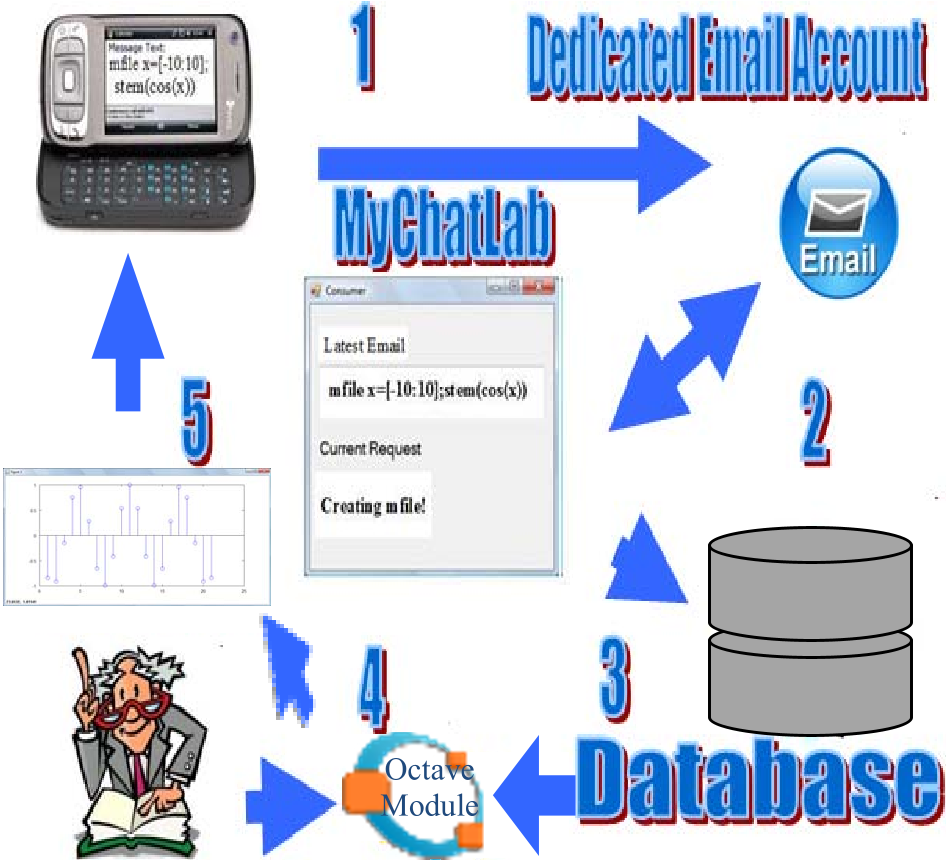 The original data flow utilized a dedicated email account, which was later replaced by the more robust Twitter-based API shown in Section II-B.
Methodology: How It Works
The "MyChatLab" application (built on .NET) acts as the conductor.
- Text Commands: A student sends a direct message (DM) to a specific Twitter handle (e.g.,
d PSEENCAT mfile x=[-10:10]; stem(cos(x));). - Visualization: The cloud-based Octave engine processes the command, generates a plot, and sends it back to the student's phone.
- Image Processing: By using Twitpic, students can send an actual photo (MMS) and a code snippet to process it—for example, generating a "heat map" of a captured image.
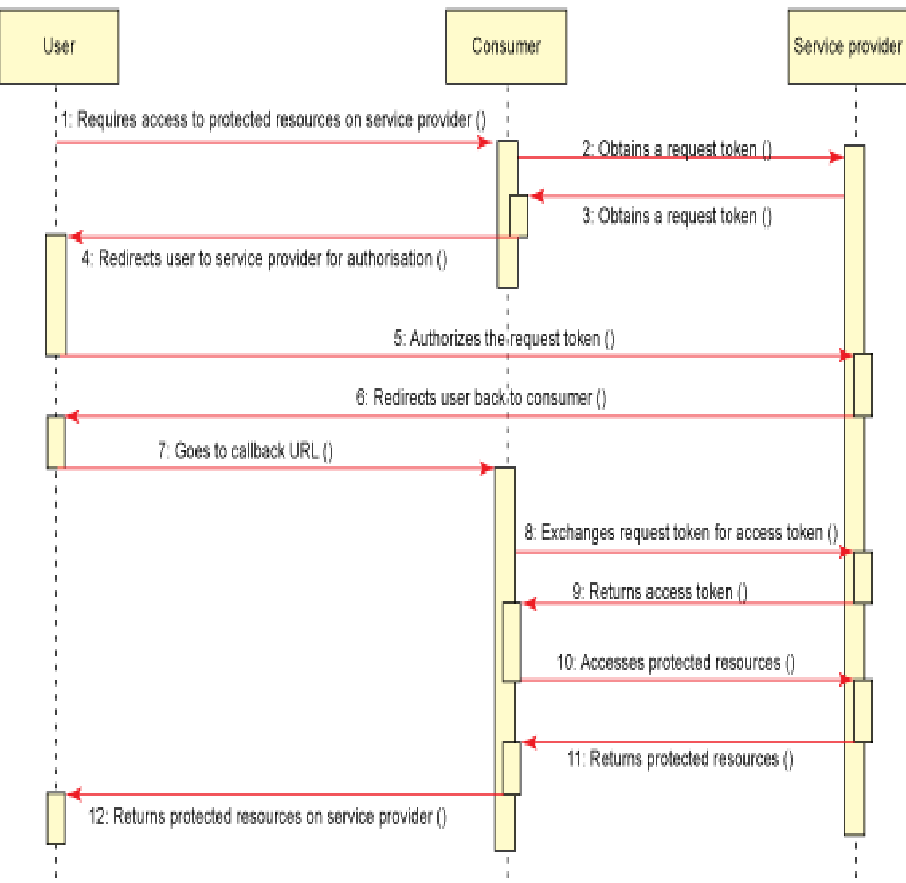 The adoption of OAuth (User -> Consumer -> Provider) significantly enhanced the security posture compared to the initial Telnet/Email version.
Experimental Results: Speed & Reliability
The authors conducted 60 trials to compare the Twitter-based system against the legacy email approach.
- Reliability: The Email-based system failed 46-53% of the time due to rate-limiting and parsing errors. The Twitter-based system achieved a 100% success rate.
- Speed: "Phone-to-App" time plummeted from 54 seconds to just 13 seconds.
| Criteria | Twitter-Based | Email-Based |
|---|---|---|
| Success Rate | 100% | 53.3% |
| Phone-to-App Time | 12.9s | 54.4s |
| Setup Complexity | 4-5 steps | 1 step |
Critical Insight & Future Outlook
While the "Setup Steps" are higher for Twitter (due to the need to "follow" the account and link a phone), the trade-off in robustness is undeniable.
The true value of this work lies in its Inductive Bias toward accessibility. While modern tools focus on high-bandwidth 5G applications, Cellular STEM reminds us that low-bandwidth, asynchronous messaging (SMS) coupled with cloud "computation-as-a-service" can democratize education for those without the latest iPhone.
Future Work: The authors suggest expanding into audio/video processing and integrating directly with Learning Management Systems (LMS) like Blackboard to create a truly enterprise-level educational cloud.
Takeaway
Innovation isn't always about the newest hardware; sometimes it's about re-engineering the middleware to work on the hardware everyone already has.