
3D Talking Heads: Visualizing the Physics of Speech for Deaf Children's Rehabilitation
Pronouncing Rehabilitation of Hearing-Impaired Children Based on Chinese 3D Visual-Speech Database
The paper introduces a specialized 3D visual-speech rehabilitation system for hearing-impaired children, utilizing a parameterized 3D talking head. By combining 3D facial tracking with Electropalatography (EPG), the system provides real-time, intuitive visual feedback of internal vocal organs (tongue and palate) to correct pronunciation errors.
TL;DR
Pronunciation rehabilitation for hearing-impaired children is often hindered by the "invisibility" of speech mechanics. This paper proposes a 3D Visual-Speech Database and a parameter-driven talking head that renders the face translucent, revealing the movements of the tongue and palate. By comparing a child's articulation with standard 3D parameters, the system provides real-time corrective feedback that bridges the gap between seeing a face and understanding a sound.
The Problem: When Hearing Is Not an Option
For children with profound hearing loss, the critical window for language development (ages 0-7) is often missed because they cannot hear the nuances of phonemes. Traditional methods—audio-based feedback or 2D animations—fail because:
- Internal Blindness: Learners cannot see where the tongue touches the palate or how the jaw rotates.
- Evaluation Gap: Audio rewards tell a child if they are wrong, but not how to be right.
The authors argue that a 3D spatial approach is required to turn the abstract concept of "sound" into a concrete "physical movement" that can be imitated visually.
Methodology: Mapping the Hidden Articulators
The core innovation lies in the synchronized capture of external and internal speech organs to build a high-fidelity Chinese 3D visual database.
1. Data Capture and Feature Extraction
The system uses a dual-capture approach:
- External: 3D dynamic capture systems track facial feature points (based on MPEG-4 standards).
- Internal: Electropalatography (EPG) records the contact between the tongue and the palate using a sensor-laden "false palate" worn by the speaker.
2. The 3D Talking Head Model
Unlike static models, this 3D head is driven by mathematical parameters. It includes:
- Finite Element Modeling: The tongue is modeled using hexahedral elements to simulate soft tissue deformation.
- Muscle Control: Six degrees of freedom for the jaw and specific muscle-driven parameters for the tongue (up/longitudinal, transverse, and vertical muscles).
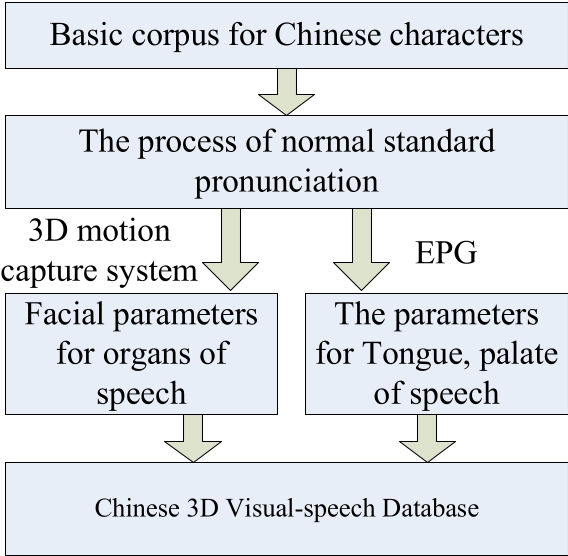 Figure 1: The workflow from corpus selection to parameter extraction and database storage.
3. Visual Feedback Loop
The rehabilitation process follows a "Capture-Compare-Correct" loop. A trainee’s pronunciation is tracked in real-time, and the system generates a "difference set" by comparing their parameters against the 40-speaker standard database.
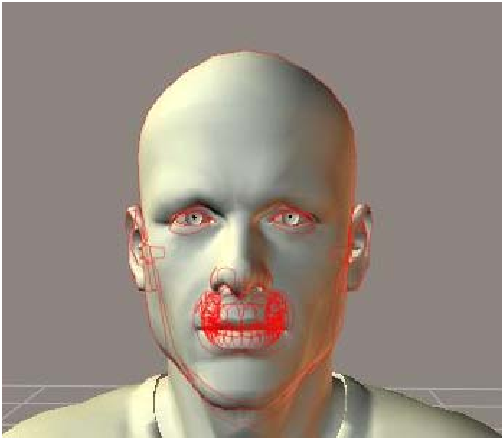 Figure 2: The mesh-based model allows for translucent rendering, making the "invisible" visible.
Experiments and Insights
The database covers 37 basic tones and a wide array of Chinese characters spoken by 40 male and female speakers.
Key Results:
- Positional Feedback: The system successfully identified specific errors in tongue placement that are invisible to the naked eye.
- Intuitive UI: By rendering the 3D head from multiple angles (profile, cross-section), children could grasp the spatial requirements of "homonyms"—words that look the same on the lips but differ in internal tongue position.
- Engagement: The use of a "virtual tutor" increased children's interest in repetitive pronunciation practice.
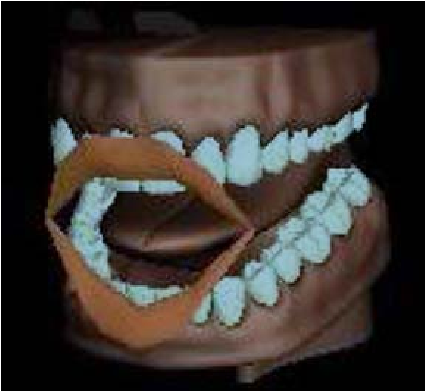 Figure 3: The closed-loop rehabilitation method connecting the digital database with the human trainee.
Critical Analysis & Conclusion
This work represents a significant step in Multimodal Human-Computer Interaction (HCI) for special education. While many modern systems focus on AI-generated video (Deepfakes), this research emphasizes parametric precision—the "Why" and "How" of muscle movement over pure visual realism.
Limitations & Future Work
- Hardware Intensity: The current setup requires EPG sensors and high-speed cameras, which may be difficult for home use.
- Model Fidelity: The authors acknowledge that the 3D realism of skin and tongue textures needs further refinement to avoid the "Uncanny Valley."
- Real-time Processing: Future iterations will focus on reducing noise and improving the sensitivity of parameter extraction to handle natural, continuous speech more fluidly.
By turning speech into a visual science, this system offers hearing-impaired children a chance to break the silence and find their voices through technology.