
DNIe-Auth: Strengthening Social Media Security via National Cryptographic ID Cards
A Proposal for Using a Cryptographic National Identity Card in Social Networks
This paper proposes a cryptographic authentication framework for social networks and internet services using the Spanish National Identity Card (DNIe). By leveraging the smart card's embedded security features and NFC capabilities, the system provides a reliable method for identity verification and age-restricted access control.
TL;DR
Researchers have proposed a framework that turns your national identity card (DNIe) into a digital gatekeeper for social networks. By utilizing the cryptographic chips in Spanish ID cards, the system can verify a user's age and identity via NFC, ensuring that children are blocked from adult-oriented platforms and that users are exactly who they claim to be.
Context: This work shifts the burden of identity verification from easily manipulated software forms to government-grade hardware, placing it at the intersection of e-Government and online safety.
Problem & Motivation: The Weak Link in Child Protection
Most social networks currently use "age gates" that essentially rely on the honor system. This is a critical failure point in child protection, leading to frequent cases of online abuse and exposure to inappropriate content.
The authors argue that the missing link is a Hardware-based Root of Trust. While many citizens already carry high-security smart cards (like the Spanish DNIe), these are underutilized for daily internet services. The challenge lies in creating a seamless workflow that handles different card versions (2.0 vs. 3.0) and protects user privacy while fulfilling the service's need for verification.
Methodology: High-Security Age Verification
The proposed framework follows a systematic diagnostic process to identify the user's age category based on the card’s internal file structure (ISO/IEC 7816).
1. The Differentiation Logic
The system first identifies the card version using the ATR (Answer To Reset) string:
- DNIe 2.0: Requires a contact reader; identified by the 16th byte value
0x01. - DNIe 3.0: Supports NFC; identified by the 16th byte value
0x04.
2. Secure Channel and Data Retrieval
To prevent "man-in-the-middle" attacks, the framework establishes a secure channel according to the EN 14890-1 standard. This involves a mutual authentication protocol and the derivation of session keys (Encryption and MAC).
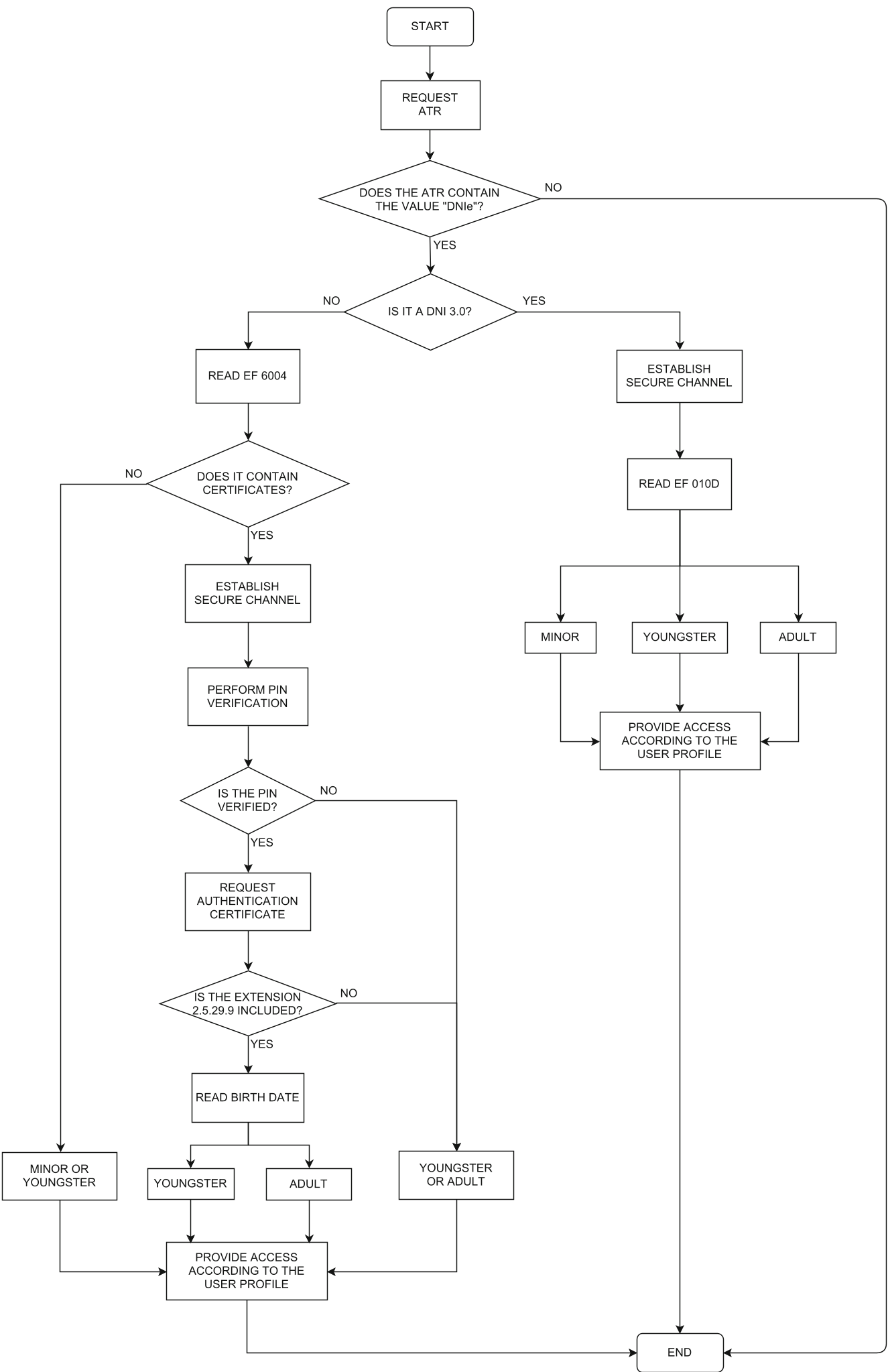 Figure 1: The logical flow of the authentication process, from ATR request to age determination.
3. Smart Card File System Architecture
The DNIe uses a hierarchical structure of Dedicated Files (DF) and Elementary Files (EF).
- EF 6004: Contains info about certificates. If empty, the cardholder is likely a minor.
- EF 010D (DNIe 3.0): Contains filiation data (Date of Birth), which can be read via NFC once the secure channel is established.
Experiments & Comparison: 2.0 vs. 3.0
The paper highlights a significant evolution in user experience and security between the two versions of the national ID.
| Feature | DNIe 2.0 | DNIe 3.0 |
|---|---|---|
| Interface | Contact Only | Contact & NFC |
| Age Logic | Check EF 6004 & PIN | Direct Read EF 010D |
| Hardware Requirement | External Card Reader | NFC Smartphone |
| MAC Length | 4 Bytes | 8 Bytes |
The DNIe 3.0 is the clear winner for social media adoption because it allows users to tap their card against their phone, removing the friction of buying specialized hardware.
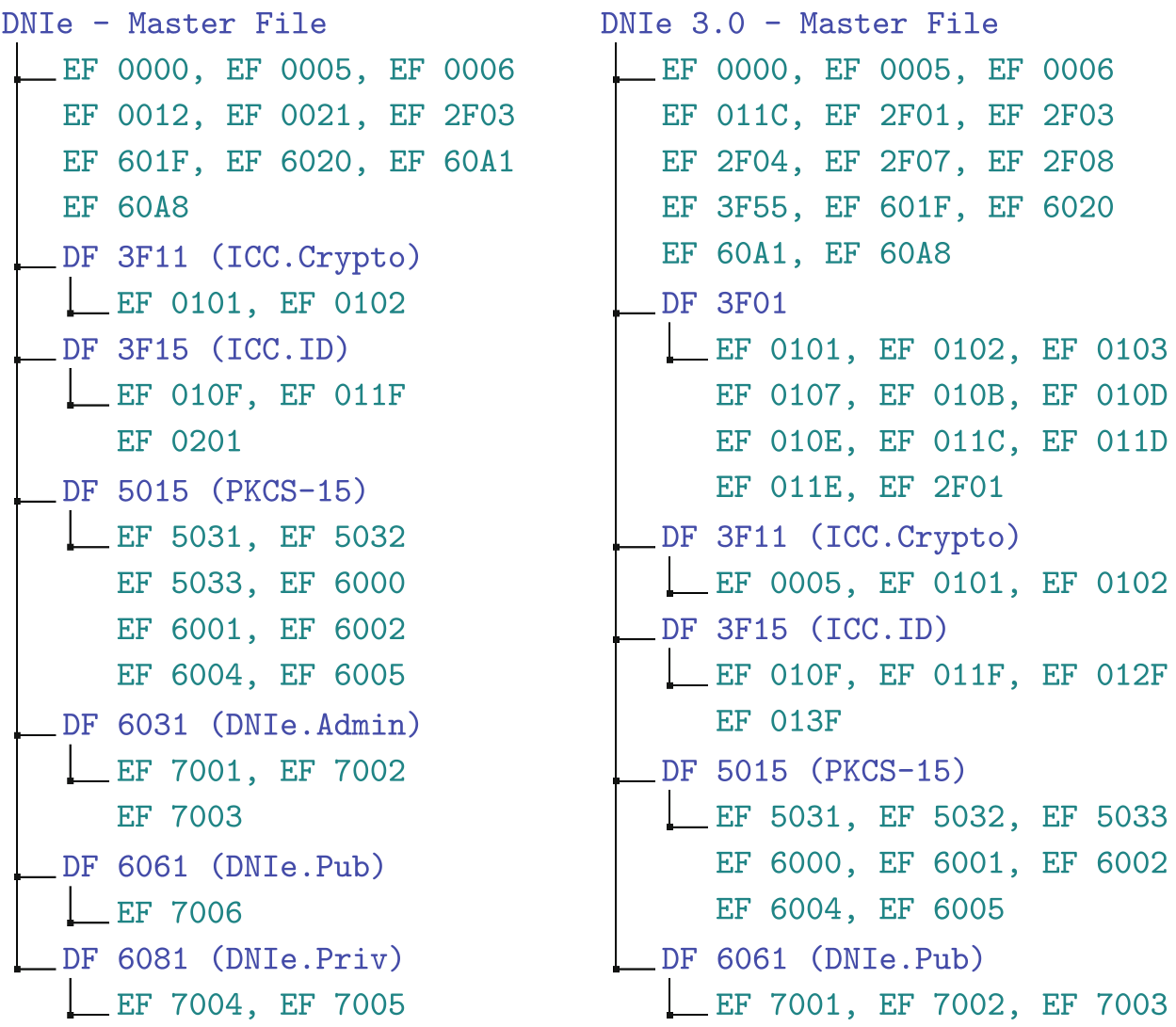 Figure 2: Comparing the PKCS #15 file structure between version 2.0 and 3.0.
Critical Insight: The Privacy Paradox
While the DNIe 3.0 improves usability, the authors identify a major security concern: some personal data (like the digitized photograph in EF 0102) can be accessed without a PIN code validation.
If a rogue application convinces a user to tap their card, it could theoretically "scrape" their photo and signature without the user providing explicit consent through a PIN. This highlights a classic tension between Usability (fast login) and Privacy (PIN-gated access).
Conclusion & Future Outlook
Takeaway: This framework successfully demonstrates that national eID cards can provide a cryptographic "source of truth" for the internet, potentially ending the era of fake ages on social media.
Limitations: The reliance on country-specific card standards (Spanish DNIe) means the framework must be mapped to other nations (Italy, Finland, etc.) who use similar but slightly different ISO/IEC implementation variants.
Future Work: The next frontier is Selective Disclosure. Instead of the app reading the full "Date of Birth," the smart card should ideally only output a "Yes/No" signal regarding whether the user is over the age limit, further enhancing privacy.