
The Double-Edged Sword of Gamification: Why Leaderboards Might Be Killing Student Motivation
Pros and cons gamification and gaming in classroom
This paper evaluates the impact of gamification in higher education, specifically focusing on the "pros and cons" of competitive elements. It documents a case study involving a "ranking type plugin" within a Moodle LMS to assess its effect on student motivation and engagement.
TL;DR
Gamification is often seen as the ultimate tool for engagement, but this research reveals its darker side. By implementing a ranking system in a university Moodle platform, researchers found that instead of boosting participation, student engagement actually dropped by nearly 10%. The study highlights a critical "winner-takes-all" trap where competitive mechanics can alienate the majority of the classroom.
Perspective: Moving Beyond the Hype
In the modern pedagogical landscape, "digital natives" are thought to require game-like stimulation to remain focused. However, this paper serves as a vital reality check. It positions itself as a critical evaluation of whether game mechanics—specifically Rankings and Leaderboards—truly align with academic success or merely drive mechanical, short-term behaviors.
Motivation: The Hidden Cost of Competition
The authors argue that existing gamification strategies often ignore the diverse psychological profiles of students. The primary motivation for this study was to test the assumption that social recognition (via ranks) acts as a universal catalyst for action. They hypothesized that if the experience of "play" is removed and only the "mechanics" (points/badges) remain, students may default to mechanical behaviors or, worse, complete withdrawal.
Methodology: The Moodle Experiment
The researchers utilized an exploratory case study approach within the "Vasile Alecsandri" University of Bacău.
- Control Phase: Students used a standard Moodle setup with basic progress tracking.
- Experimental Phase: A "ranking block" plugin was introduced, displaying a course-wide leaderboard.
- Variables: The study tracked weekly visits, activity completion, and subjective motivation via surveys.
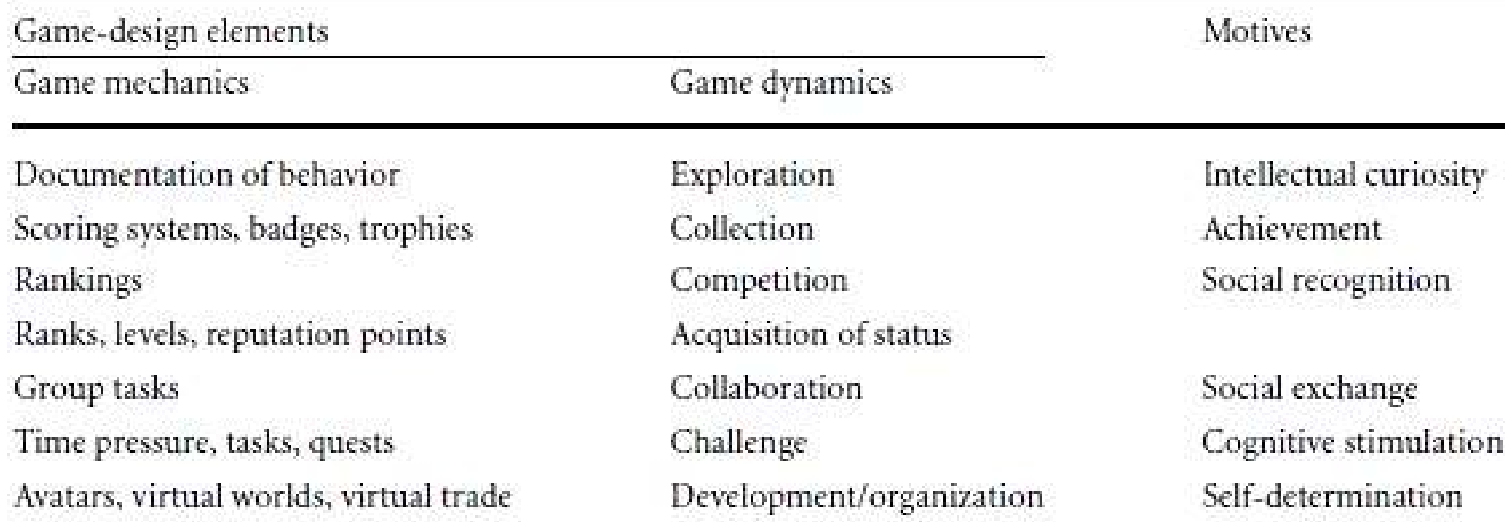 Figure 1: The mapping of game mechanics (scoring, ranking) to psychological motives (achievement, competition).
Results: The Paradox of Participation
The empirical evidence was striking. While 42.8% of students claimed the ranking board motivated them in surveys, the hard data told a different story:
- Decreased Engagement: Platform access fell from 932 visits (Semester 1) to 854 visits (Semester 2).
- The "Elite Gap": A major insight was that the top 4 students became so far ahead that the rest of the group lost the "will to compete," viewing the goal as unattainable.
- Cyclical Trends: Despite gamification, student behavior remained tied to traditional exam cycles, peaking only during finals.
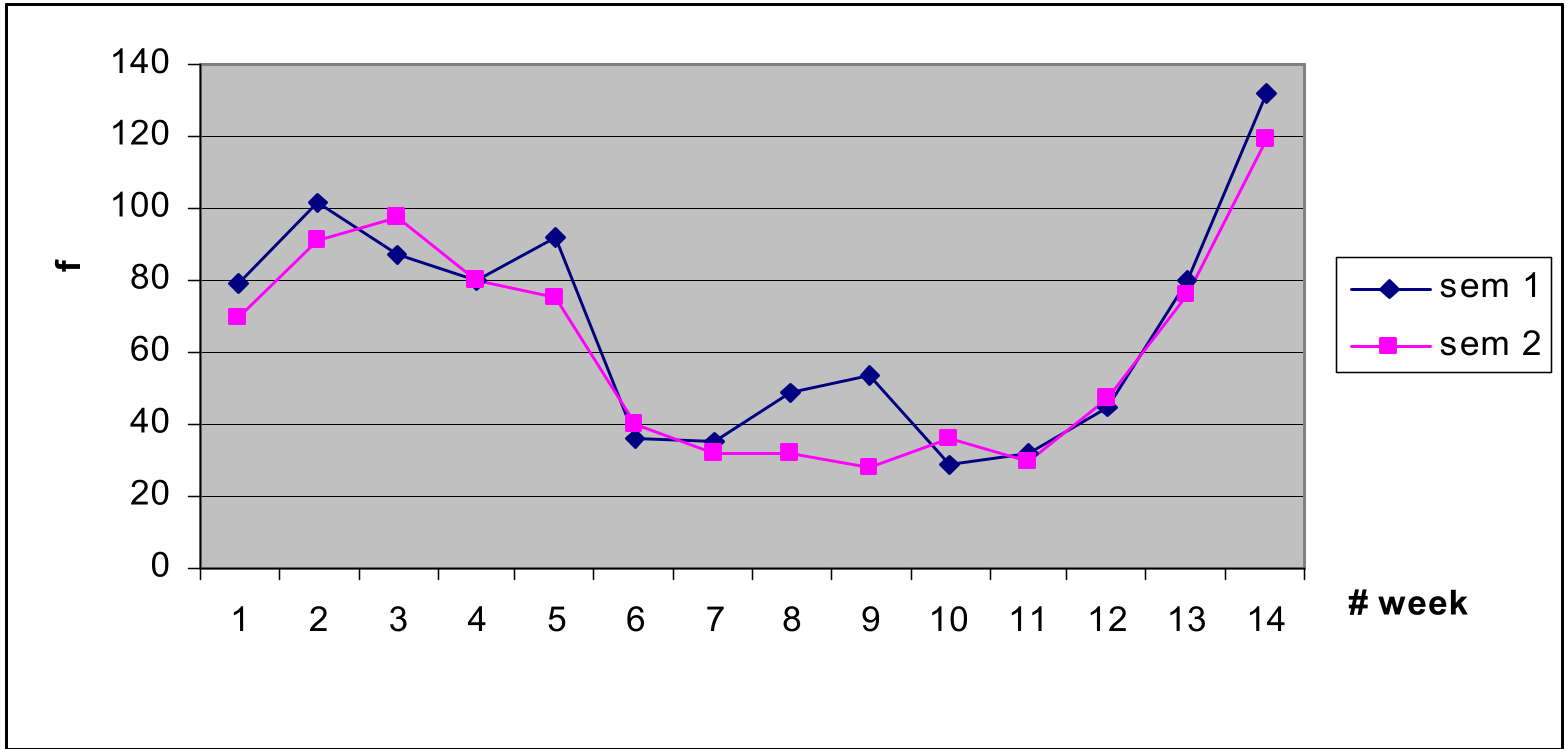 Figure 2: Weekly platform visits showing the decline in engagement during the second (gamified) semester.
Critical Insight: Effort vs. Mastery
The core takeaway for educators and EdTech developers is that Gamification must reward effort and mastery, not just ranking.
The authors suggest that:
- Neutrality is Key: Challenges must be designed to be neither trivial nor impossible.
- Inclusive Design: Points and leaderboards fail students who are not naturally competitive. For these learners, the system feels "mandatory," which strips the "fun" from the learning process and mimics the stress of traditional grading.
Conclusion & Future Outlook
This work concludes that leaderboards can be demotivating in a university setting if not carefully balanced. Future research should look into "recovery trends"—whether engagement returns if the rankings are removed—and explore collaborative gamification (group tasks) rather than purely individualistic competition. For practitioners, the message is clear: before adding a leaderboard, consider if you are building a ladder or a wall.