
ProHTA: Navigating the Future of Healthcare with Multi-Paradigm Simulation
Prospective healthcare decision-making by combined system dynamics, discrete-event and agent-based simulation
This paper introduces a multi-paradigm simulation framework for Prospective Health Technology Assessment (ProHTA). It integrates System Dynamics (SD), Agent-Based Simulation (ABS), and Discrete-Event Simulation (DES) to predict the impact of medical innovations on public health systems.
TL;DR
Evaluating new medical technologies before they hit the market is notoriously difficult—often described as "looking into a crystal ball." This paper presents ProHTA, a sophisticated simulation framework that combines System Dynamics (SD), Agent-Based Simulation (ABS), and Discrete-Event Simulation (DES). By bridging the gap between national-level population trends and specific hospital workflows, it allows decision-makers to optimize medical products before the first prototype is even built.
Problem: The "Post-Mortem" HTA Trap
Current Health Technology Assessment (HTA) is largely retrospective. Products are analyzed after development, clinical trials, and market launch. If the technology fails to show cost-effectiveness or clinical value at this stage, the manufacturer faces catastrophic financial loss.
Furthermore, modeling healthcare is a multi-scale nightmare:
- Macro level: How does the aging population affect disease incidence? (Best for SD)
- Micro level: How does an individual patient's age or location affect their treatment outcome? (Best for ABS)
- Process level: How do hospital bottlenecks like waiting rooms or scanner availability delay care? (Best for DES)
Prior works often chose one paradigm, sacrificing either the "big picture" or the "fine detail."
Methodology: The Triple-Paradigm Integration
The authors' core insight is a Level-Based Architecture (LBA) that allows these three paradigms to "talk" to each other in a common environment (AnyLogic).
1. Dynamic Agent Generation from SD
Instead of modeling millions of agents (which would crash most simulations), the model uses SD to track the "affected" population. It then dynamically "picks up" numbers from SD stocks to instantiate individual agents only when they enter a critical clinical phase.
2. Hospital Workflows via DES
Unlike their previous work where workflows were attached to patients, this model treats hospitals as institutional processes. Patients (Agents) are "packed" into a temporary AgentEntity along with a Health Record.
- They traverse the DES workflow (queues, delays, resource usage).
- Their attributes are updated based on the clinical outcome.
- They are "unpacked" and resume their individual behavior in the macro environment.
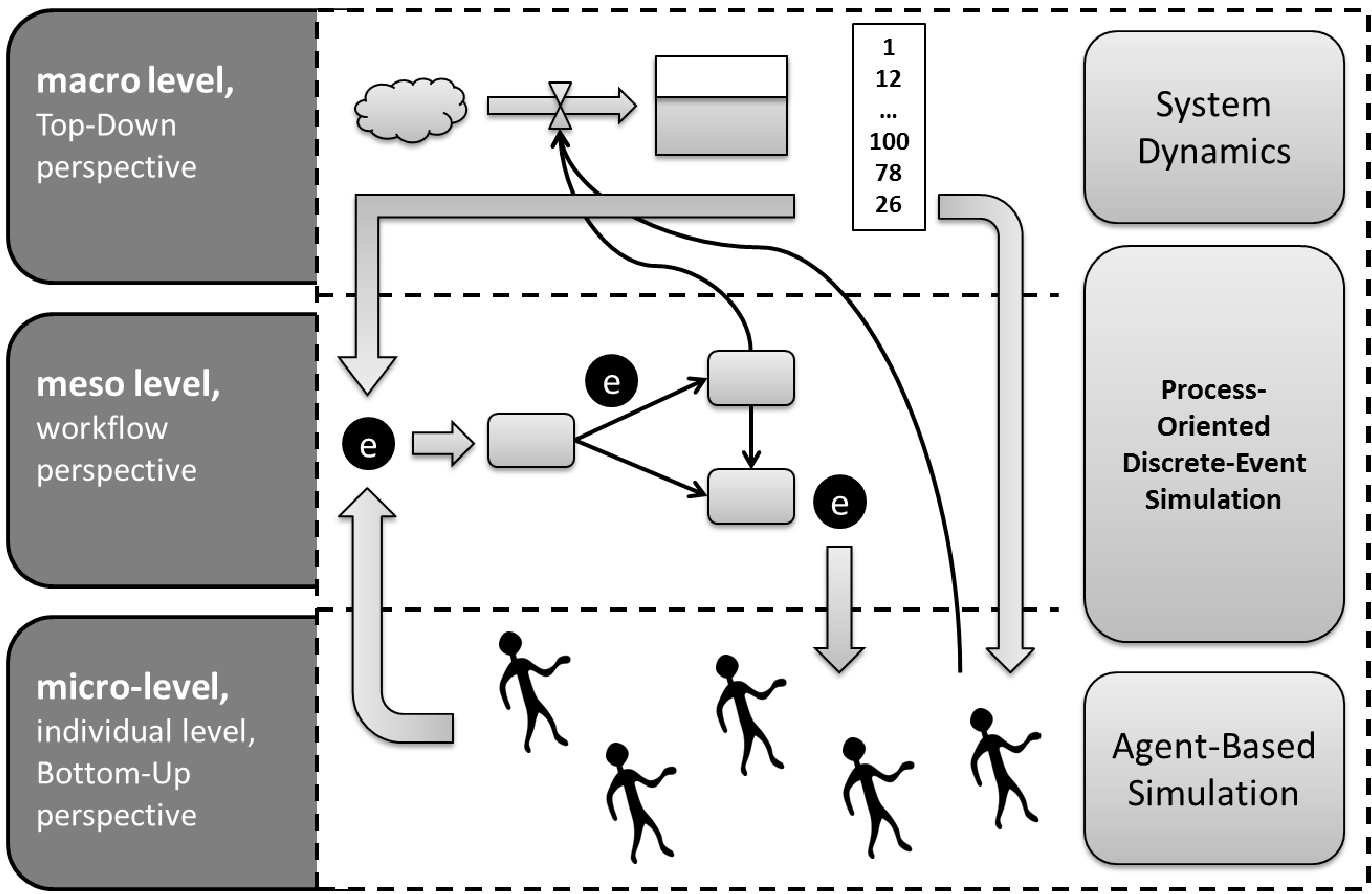 Figure 1: The interaction between population dynamics (SD) and individual logic (ABS/DES).
Case Studies: MSUs and Cancer Screening
Example 1: Mobile Stroke Units (MSU)
The "What-If" scenario: Does putting CT scanners in ambulances (MSUs) save lives? The simulation modeled the spatial distribution of patients and vehicles. It found that the positioning of MSUs was as critical as the technology itself. By optimizing locations, a significantly higher proportion of people reached therapy in the 0-90 minute window.
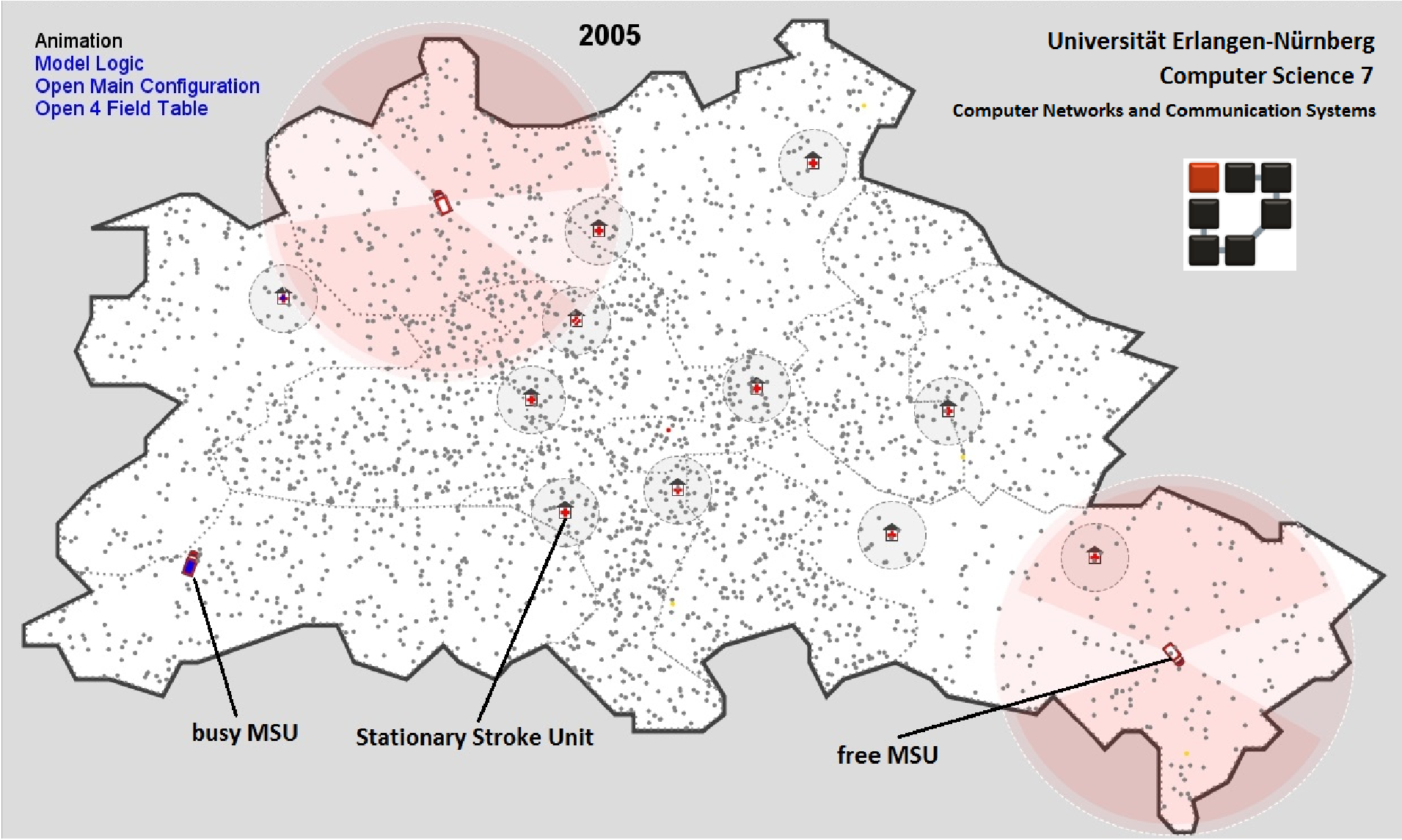 Figure 2: Spatial visualization of MSUs and affected patients within the simulation.
Example 2: Prostate Cancer Markers
The "How-To" scenario: How accurate does a new diagnostic marker need to be to replace a painful biopsy? By varying sensitivity and specificity as parameters, the researchers could work backward to find the "sweet spot" where a new technology becomes cost-effective for a healthcare system.
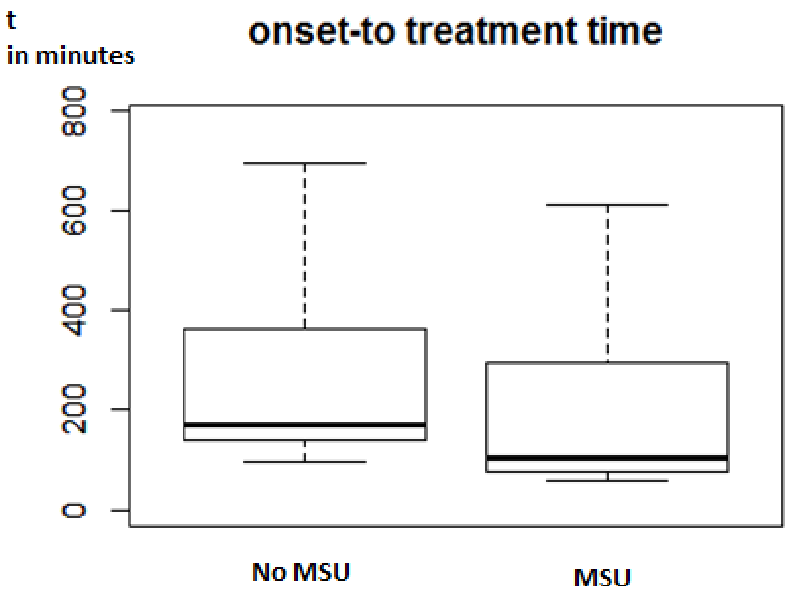 Figure 3: Distribution of treatment times showing the impact of innovative MSU interventions.
Critical Analysis
Takeaway: ProHTA transforms HTA from a regulatory hurdle into a design tool. It allows for "Failure in Silico"—testing a bad idea in a computer model is infinitely cheaper than testing it in a clinical trial.
Limitations:
- Data Dependency: The quality of the "crystal ball" is only as good as the input data (incidence rates, cost matrices).
- Complexity: Managing three paradigms simultaneously requires high computational overhead and expert-level domain knowledge to validate the interactions.
Future Outlook: As we move toward "Digital Twins" of entire healthcare systems, the ProHTA approach of multi-paradigm coupling will likely become the industry standard for both policy makers and med-tech innovators.