
The Social Media Double-Edged Sword: Safeguarding Knowledge in High-Stakes Finance
Protecting Knowledge in the Financial Sector: An Analysis of Knowledge Risks Arising from Social Media
This study investigates the specific knowledge protection risks that social media introduces to the European financial sector. Through interviews with professionals across ten institutions, it identifies three primary risks—Easier Knowledge Identification, Lack of Control, and Huge Impact Spread—and maps how different adoption strategies (Late Adopters, Followers, Innovators) correlate with these risks.
TL;DR
In the hyper-regulated world of finance, knowledge is the ultimate currency. However, the intrusion of social media has turned employees into unwitting agents of "knowledge leakage." This research analyzes how European banks are struggling to balance the collaborative benefits of social media against three existential risks: identification of experts by rivals, loss of data control, and the viral spread of misinterpreted information.
Context: Why Finance is Different
The financial sector is a "laggard" by design. Reliability and compliance trump innovation. Yet, competitive pressure is forcing even the most conservative banks to adopt social media for marketing and internal collaboration. The problem? Unlike a physical document, knowledge shared on social media is "liquid"—it flows across boundaries instantly and irreversibly.
The Three Pillars of Risk
The authors categorize the threat landscape into three specific domains:
- Easier Knowledge Identification: Platforms like LinkedIn and XING allow competitors to map an institution’s human capital. By identifying the "who," rivals can deduce the "what"—the secret projects and proprietary workflows being handled by specific experts.
- Lack of Control: With the rise of the "Generation Y" workforce, the lines between personal and professional identities are blurred. Banks cannot monitor what an employee posts on a private smartphone during a coffee break, yet an "innocent" status update can reveal confidential internal moods or pivots.
- Huge Impact Spread: In finance, speed is everything. A leaked insight or "fake news" can go viral in seconds, triggering a localized crisis that evolves into a global market fluctuation before the bank can even issue a retraction.
Methodology: Insights from the Field
The researchers interviewed 12 veterans from 10 European institutions. The study utilized a structured coding approach to synthesize these first-hand accounts into a strategic map.
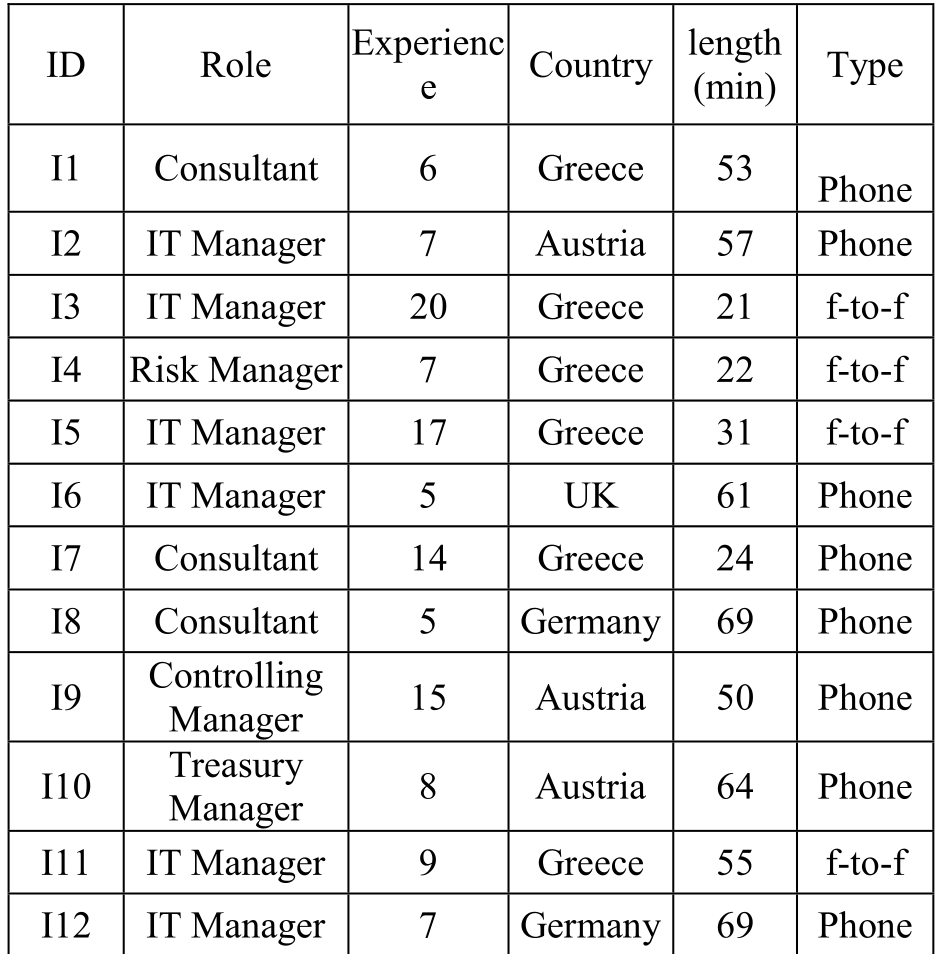 The diverse background of participants—spanning IT, Risk Management, and Consulting—provides a multi-dimensional view of the risk.
Strategies for the Digital Age
The paper uncovers a fascinating correlation between an institution's "Innovation Profile" and its perceived risks:
- Late Adopters: Their motto is "Social media is for fun, not work." They use technical bans to prevent Lack of Control.
- Followers: They allow professional networks (LinkedIn/XING) but block "fun" sites (Facebook). They rely on a mix of technical blocks and basic training.
- Innovators: They recognize that banning is futile in the age of 5G and smartphones. They allow open access but focus heavily on mitigating Huge Impact Spread through advanced monitoring and deep-rooted organizational culture.
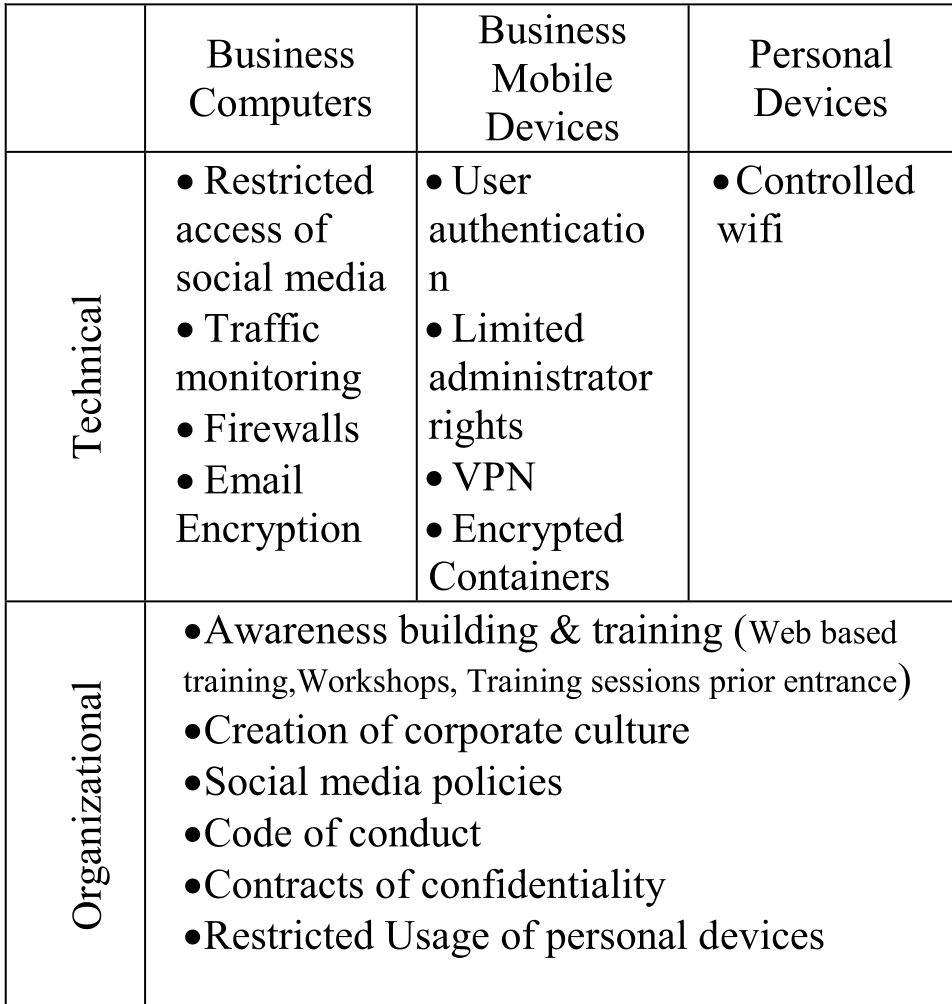 Countermeasures span from technical (Email encryption, VPNs) to organizational (Social media policies, Awareness sessions).
Critical Insight: The Human Firewall
The most striking takeaway is the limitation of technology. While IT departments can block sites on company PCs, they cannot touch personal devices without infringing on privacy. Therefore, the "Innovators" in the study are moving away from Technical Restrictions and toward Behavioral Modification.
As one interviewee (I4) noted: "It’s not about restrictions and controls, it’s about the creation of a corporate culture."
Conclusion & Future Outlook
The study concludes that the financial sector's skepticism toward social media is justified but increasingly unsustainable. Banning social media is a short-term patch for a long-term cultural shift. The future of financial knowledge protection lies not in better firewalls, but in "Social Media Literacy"—teaching employees that they are 24/7 ambassadors of the firm's intellectual capital.
Takeaway for Managers: If your strategy is still focused on blocking URLs, you are already losing the knowledge war. Shift your budget from "Software Restrictions" to "Awareness and Cultural Alignment."