
Protecting Link Privacy for Large Correlated Social Networks: Beyond Independent Data Assumptions
Protecting Link Privacy for Large Correlated Social Networks
The paper proposes a novel perturbation-based algorithm to protect link privacy in large correlated social networks. By modeling social correlation through shortest paths, common neighbors, and node degrees, the method replaces original edges with new links generated via random walks to decouple highly correlated vertices while maintaining graph utility and topological structure.
TL;DR
In the landscape of social data, "no user is an island." Most privacy algorithms treat social links as independent events, but real-world networks are ripples of correlation. This paper introduces an improved perturbation-based approach that identifies "invisible" social ties using a tri-factor correlation model. By swapping edges based on these correlations, the authors achieve a more robust privacy shield without destroying the network’s statistical utility.
Problem & Motivation: The Myth of Independence
In graph data, privacy is often synonymous with "Edge Perturbation"—swapping link for . However, if and are highly correlated (e.g., they share 15 mutual friends), the adversary can easily infer that is likely connected to even if the direct link is hidden.
The authors argue that previous works, such as those by Mittal et al., simply choose new neighbors from local structures. This fails because:
- Structural Estimation: Sparse data can be used to estimate sensitive links.
- Correlation Neglect: Indirect social ties (the "friends of friends" effect) are often ignored, leaving a trail for de-anonymization.
Methodology: Quantifying the Social "Gravity"
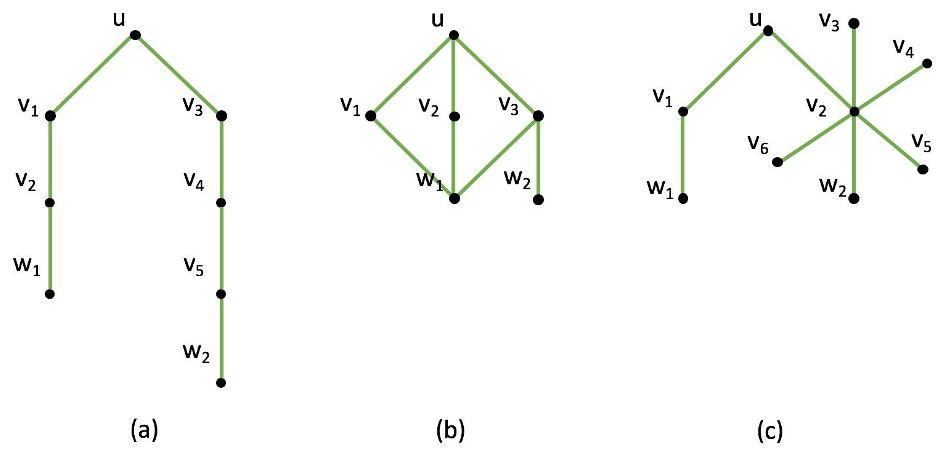
The core of the proposed method is a transition probability matrix that factors in three distinct social dimensions to define how "close" two people actually are:
- Shortest Path Length (): Based on "Six Degrees of Separation."
- Common Neighbors (): The more mutual friends, the higher the correlation.
- Degree Punishment Factor: High-degree nodes (influencers) are treated as "weaker" individual ties because they connect to everyone, reducing the specific correlation between any two of their neighbors.
The Perturbation Workflow
For each vertex , the algorithm:
- Deletes an existing edge .
- Initiates a random walk from to a terminal vertex , governed by the calculated transition probabilities.
- Adds a new edge .
This process ensures that the "social distance" in the perturbed graph is balanced, making it difficult for an adversary to distinguish sensitive links from noise.
Experiments & Results: Winning in the Dense Crowd
The authors tested their approach on three datasets: CA-GrQc (Arxiv collaboration), CA-HepTh (High Energy Physics), and Wiki-Vote (Wikipedia voting).
Performance Gains
The most striking results occurred in dense graphs (Wiki-Vote). In sparse graphs, the lack of candidate paths makes perturbation difficult. However, in dense settings:
- Privacy Improvement: Lower "Privacy" scores (representing lower predictability for adversaries) were consistently achieved compared to standard random walks.
- Utility Preservation: Global properties like Average Degree and Degree Standard Deviation remained almost identical to the original graph, ensuring the data remains useful for research.
 Table: Comparison of various parameter settings () on the Wiki-Vote dataset.
Critical Analysis & Conclusion
Takeaway
The paper successfully demonstrates that link privacy is a multi-dimensional problem. By effectively "balancing" the graph—reducing the variance of distances between nodes—the authors make the structural signal and the noise indistinguishable.
Limitations
- Sparsity Issues: As the authors admit, the algorithm struggles with very sparse graphs (random graphs) where few edges exist to provide alternative paths.
- Weight Sensitivity: The performance relies heavily on the weights . While (focusing on common neighbors) worked best for dense graphs, there isn't a "one-size-fits-all" setting for every network type.
Future Outlook
As we move toward a more connected world, privacy methods must evolve to handle the correlation of everything. This work serves as a foundational step toward "correlation-aware" privacy, which could eventually be integrated into larger frameworks like Differential Privacy to provide formal mathematical guarantees alongside structural utility.