
SCOPE: Decentralizing the Social Graph via Spontaneous P2P Networks
SCOPE: A prototype for spontaneous P2P social networking
This paper introduces SCOPE, a prototype architecture for spontaneous Peer-to-Peer (P2P) social networking in infrastructure-less environments. Utilizing a hierarchical DHT model and 802.11 ad-hoc mode, SCOPE achieves decentralized data management and session-based communication services like VoIP without internet access.
TL;DR
SCOPE (Spontaneous P2P Social Networking) is a research prototype that brings social networking to environments where the internet doesn't reach. By combining Bamboo DHT with P2PSIP, the authors built a system that supports everything from text sharing to VoIP calls over local 802.11 ad-hoc connections, eliminating the need for central servers.
Perspective: The Need for Localized Social Fabric
While platforms like Facebook dominate the global web, they fail in specialized, localized contexts such as stadiums, galleries, or emergency zones where infrastructure is unavailable. The challenge isn't just connectivity; it's the management of data and sessions in a dynamic, high-mobility environment. SCOPE addresses this by turning high-capacity local devices into a distributed backbone.
Methodology: The Hierarchical Pulse of SCOPE
The architecture is built on two tiers:
- Super-Nodes (SNs): High-capability devices that run the DHT logic, route requests, and manage storage (Berkeley DB).
- Client Nodes (CNs): Standard devices that attach to SNs to access services without the overhead of maintaining the DHT.
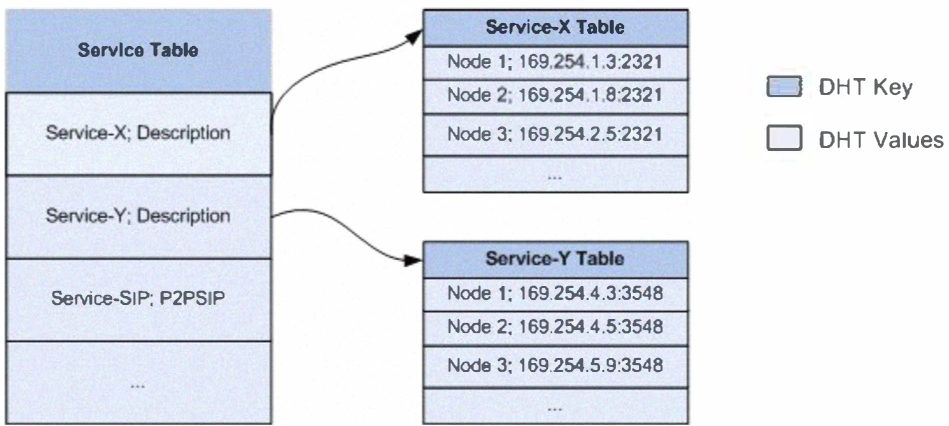
The technical "secret sauce" is the Service Classified Overlay. Instead of one giant, messy network, SCOPE uses a Global Overlay to index Service-IDs. Each specific service (like SIP for calls) then operates on its own virtual overlay, allowing for high modularity and the ability for users to "plug in" new applications via an XML-RPC API.
Integrating SIP: Telephony without Telcos
A standout feature is the Hybrid P2PSIP architecture. By mapping SIP User Agents (UAs) to DHT keys, the system allows standard VOIP software to operate in a decentralized way.
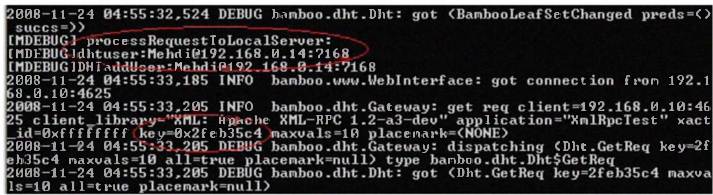
- Registration: A SIP REGISTER message is intercepted, hashed into a key, and "Put" into the DHT.
- Call Setup: An INVITE request triggers a DHT "Get" to find the callee's current IP address, effectively turning the network into its own registrar.
Performance: Can Ad-Hoc Handle Real-Time?
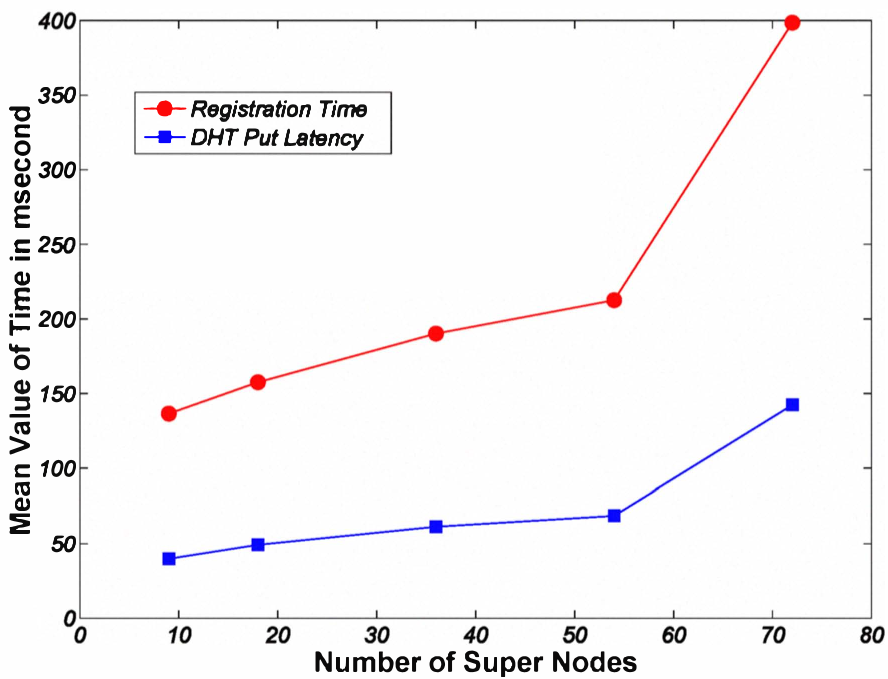
One of the primary concerns with P2P is Latency. The authors tested the system on a 3x3 grid, scaling from 9 to 72 super-nodes.
- DHT Latency: Measured between 8ms and 32ms.
- Session Setup: While DHT lookup adds overhead, it only accounts for roughly 20% of the total call setup time.
- Reliability: The use of UDPCC (UDP with Congestion Control) ensures that high-volume social data doesn't overwhelm the unstable ad-hoc links.
Critical Insight & Conclusion
SCOPE reveals that the bottleneck for localized P2P isn't just the raw throughput of 802.11, but the efficiency of the Distributed Hash Table. By optimizing the Bamboo protocol for ad-hoc modes, SCOPE successfully proves that social interaction can be both spontaneous and robust.
Future Work: While the prototype is solid, the next frontier for SCOPE would be handling High Churn (nodes entering/leaving rapidly) and implementing robust Identity Management to prevent spoofing in an open ad-hoc environment.