
Smart Pruning: Reducing Social Network Noise Without Losing the Signal
Pruning Social Networks Using Structural Properties and Descriptive Attributes
This paper introduces systematic methods for pruning large-scale social networks by identifying the most influential actors and relationships. By leveraging structural properties (hubs and brokers) and descriptive attributes, the authors achieve significant network compression while maintaining or even improving predictive accuracy for target attributes.
TL;DR
As social networks grow to massive scales, they become "noisy" and computationally prohibitive. This paper presents a principled approach to network pruning, demonstrating that we can remove up to 95-99% of a network's edges while maintaining—or even exceeding—the predictive accuracy of the full graph. The secret lies in identifying "Hubs" and "Brokers" or filtering by high-value descriptive attributes rather than relying on random sampling.
Problem & Motivation: The Curse of Scale
In the world of social network analysis, more data is not always better. Large-scale networks (like corporate executive boards or bibliographic databases) contain a significant amount of "background noise"—marginal relationships that contribute little to understanding the core dynamics.
The authors identify two main pain points:
- Computational Cost: Large graphs are expensive to store, traverse, and model.
- Information Dilution: Including every single actor and event can obscure the most informative patterns needed for predictive tasks (e.g., predicting a company's sector or a paper's citation count).
Methodology: Pruning with Intent
The paper shifts the focus from "How much data can we keep?" to "Which roles are most informative?". They define two primary lenses for pruning:
1. Structural Pruning (Graph Topology)
This method treats the network as a pure graph and identifies nodes based on their connectivity patterns:
- Hubs: High-degree nodes that act as central activity points.
- Brokers: High-betweenness nodes that bridge different clusters (cliques).
2. Descriptive Attribute Pruning (Domain Context)
Instead of just looking at the "lines," this method looks at the "labels." For a corporate network, this might mean keeping only "CEOs" or "Chairs." For a research network, it might mean filtering by authors with a specific number of publications.
The Classification Pipeline
To prove these pruned networks are still useful, the authors use Relational Aggregation. They take the local neighborhood of an event (like a board meeting or a publication), aggregate the features of the connected actors (mean, max, mode), and feed them into an SVM or Decision Tree to predict target attributes.
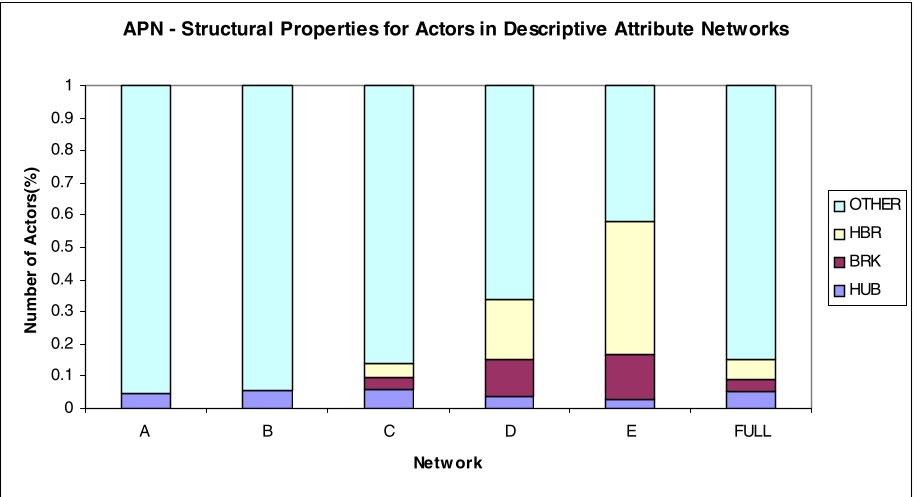 Figure 1: Comparison of different pruning strategies across datasets.
Experiments & Results: Less is More
The findings across two major datasets—ECN (Company Executives) and APN (Author Publications)—were striking:
- High Compression, High Accuracy: In the ECN dataset, keeping only "Chairs" (a descriptive prune) yielded 94% compression while maintaining an accuracy of 72.3% (virtually identical to the full network's 72.4%).
- Structural Superiority: In the APN dataset, keeping only nodes that were both hubs and brokers often led to better accuracy than using the entire raw dataset.
- Failure of Random Sampling: In every single test, random sampling (the standard baseline) was the worst performer, proving that network importance is non-uniformly distributed.
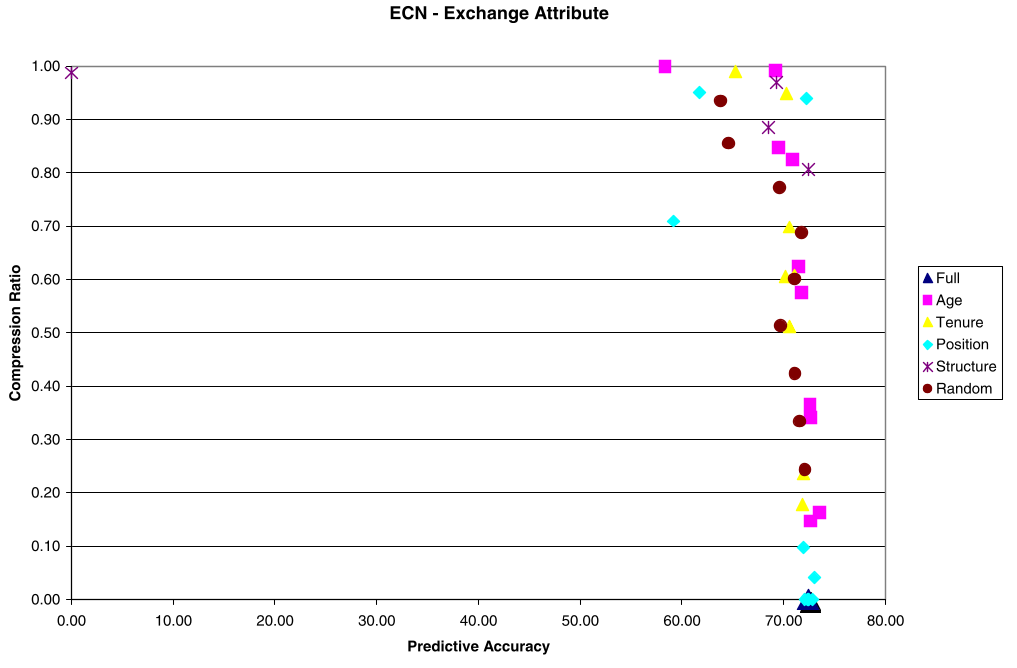 Figure 2: Plotting Accuracy vs. Compression. The 'sweet spot' is the top right corner.
Critical Analysis & Conclusion
Takeaway
The core insight is that structural roles and descriptive attributes provide complementary information. While a broker might be structurally important for information flow, their specific attribute (e.g., being a CEO) provides the social context required for accurate prediction.
Limitations & Future Work
The study primarily uses traditional machine learning (SVMs, Naive Bayes). A modern extension would involve testing these pruning techniques as a pre-processing step for Graph Neural Networks (GNNs), where reducing the number of edges could significantly mitigate the "over-smoothing" problem and speed up training.
Overall, this work provides a robust framework for anyone dealing with "Big Graph" problems: don't just sample—prune with purpose.