
Web Crawlers in the DCEP Era: Balancing Technical Power and Legal Boundaries
Research on Application of Python Web Crawler Technology in DCEP and Legal Risk
This research explores the application of Python-based web crawler technology within the context of Digital Currency Electronic Payment (DCEP) and its associated legal risks. It analyzes how crawlers can provide technical support for real-time supervision of digital currency flows while navigating the complex boundaries of intellectual property and competition law.
TL;DR
As the Central Bank of China moves toward the full implementation of DCEP (Digital Currency Electronic Payment), web crawler technology has emerged as a vital tool for real-time financial supervision. However, this "double-edged sword" carries significant risks. This paper dissects the Python-based crawler workflow and establishes a legal checklist to prevent data mining from crossing into unfair competition or criminal liability.
Background: Why Crawlers Matter for DCEP
The traditional financial regulatory system faces unprecedented challenges from the anonymity and cross-border nature of digital currencies. DCEP, as a sovereign digital currency, requires robust infrastructure for tracking capital flows to prevent tax evasion and money laundering. Web crawlers serve as the "sensory organs" of this infrastructure, capable of traversing the web to gather transaction evidence and monitor service providers.
Methodology: The Technical Engine
The paper categorizes Python crawlers into two main types:
- General Purpose Web Crawlers: These build a massive index of the web (like Google).
- Focused Web Crawlers: These use specific algorithms to filter URLs, ensuring high relevance to a specific topic—crucial for pinpointing specific DCEP transaction patterns.
Workflow Architecture
The standard Python crawler follows a rigorous cycle of URL management, page parsing via libraries like requests and BeautifulSoup, and data storage.
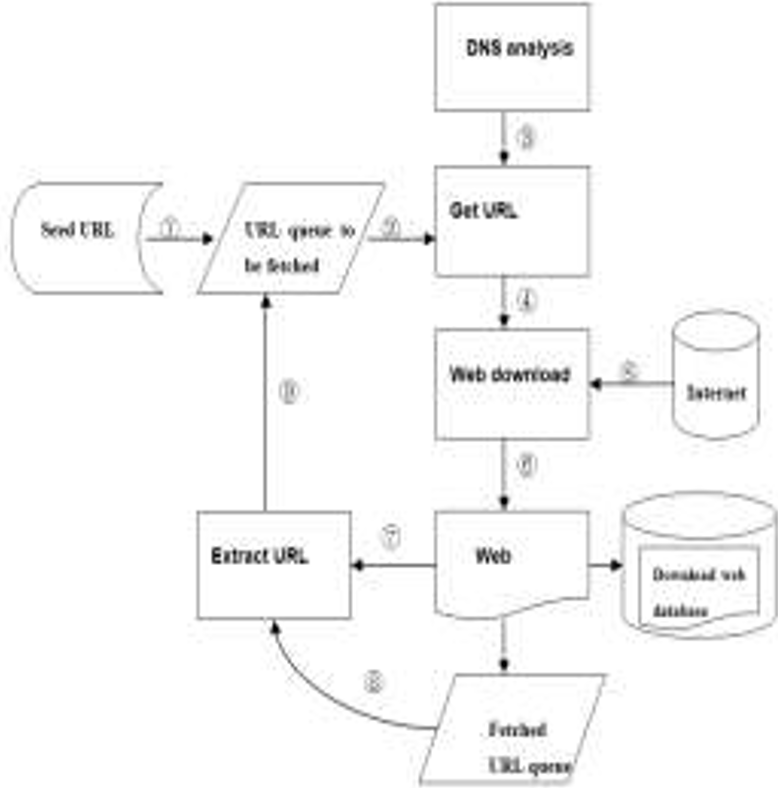 Figure 1: The logical flow from seed URLs to structured data storage.
The Legal Red Line: When Mining Becomes Crime
The core of the paper focuses on the Robots Protocol (the "exclusion standard"). While not a law itself, it acts as a "No Trespassing" sign.
1. Unfair Competition
The author highlights the Gumi v. Yuanguang case. Yuanguang used crawlers to scrape real-time bus data from Gumi's servers to populate their own app. The court ruled this as unfair competition because it:
- Bypassed encryption.
- Weakened the original provider's competitive advantage.
- Violated the principle of "Good Faith."
2. Criminal Liability
Under Article 285 of the Criminal Law, "illegally obtaining computer information system data" is a serious offense. The paper cites a Beijing case where developers used the tt_spider to bypass identity verification on the "Today's Headlines" (ByteDance) servers.
The Result: Fines of 200,000 yuan and prison sentences of up to one year. This serves as a stark warning: Bypassing anti-crawling measures is often viewed as a criminal act.
Global Perspectives: US, Germany, and China
The author provides a comparative analysis of how different jurisdictions handle these "spiders":
- United States: Generally follows the "Safe Harbor" principle (e.g., Field v. Google), where if no firewall or Robots Protocol exists, consent is often implied.
- Germany: Views the act of putting work online without a crawler agreement as an "implicit permission," yet remains cautious about copyright abuse.
- China: Currently relies heavily on Criminal Law, but is shifting toward administrative and civil regulation through the Data Security Management Measures.
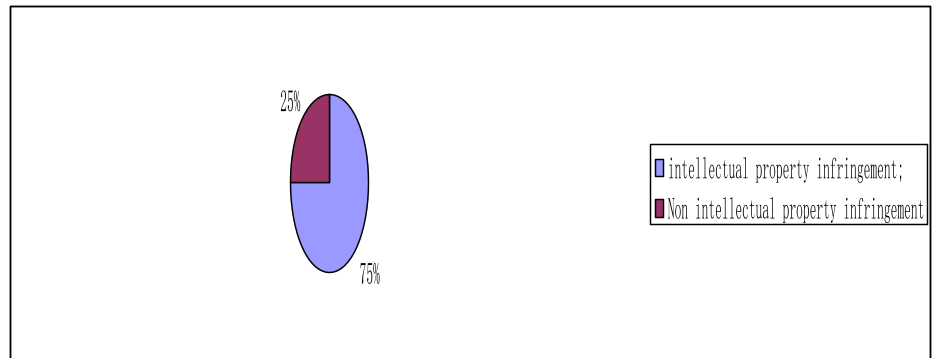 Figure 2: Statistical context of IP and network information disputes.
Critical Insight & Conclusion
Takeaway for Developers & Regulators
The transition to DCEP necessitates a "regulated freedom." To stay safe, crawler users must:
- Strictly adhere to the Robots Protocol.
- Avoid breaking encryption/technical barriers.
- Ensure speed limits so as not to cause a "Denial of Service" (DoS) effect on the target server.
Limitations
While the paper provides a solid legal overview, it lacks a technical deep-dive into the specific Python libraries (such as Scrapy or Selenium) that are often the focal point of legal disputes regarding "headless browsing" and automated interactions.
Future Outlook
As China’s Data Security Law matures, we expect to see a more nuanced "standard of harm" evaluation. The goal is to allow crawlers to enhance the DCEP ecosystem's transparency without cannibalizing the commercial value of the data sources they crawl.