
Toward Social SOA: Defining the Quality of Social Network (QoSN) for Web Services
Towards a Quality of Social N etwork (QoSN ) Model in the Context of Social Web Services
This paper introduces the Quality of Social Network (QoSN) model, a framework for evaluating social networks specifically designed for "social Web services." It defines three network types—competition, collaboration, and substitution—and evaluates them using four core selection criteria: privacy, trust, fairness, and traceability.
TL;DR
The landscape of Web services is shifting from static, isolated components to "Social Web Services" that proactively collaborate, compete, and substitute for one another. This paper proposes a Quality of Social Network (QoSN) model, providing a mathematical and policy-driven framework to evaluate the safety and efficiency of these service-based social networks through the lenses of Privacy, Trust, Fairness, and Traceability.
Context: Web Services as Social Entities
In traditional Service-Oriented Architecture (SOA), services are "dumb" endpoints. In the Social Web Services paradigm, however, services exhibit behaviors similar to human social actors:
- Collaboration: Services with different functionalities team up for complex compositions.
- Substitution: Similar services stand by to replace others in case of failure.
- Competition: Services vie for selection based on efficiency and reputation.
The problem is that joining such networks exposes a service to risks. A competitor might steal functional details, or a substitute might fail to deliver. Hence, a model for Quality of Social Network (QoSN) is required to help services decide where to "sign up."
Methodology: The Four Pillars of QoSN
The authors define four critical criteria that determine the quality of a service network. These are not just abstract concepts but are backed by mathematical foundations:
1. Privacy (The Defense Shield)
In a competition network, privacy is measured by the network's ability to resist attacks.
- Logic: The ratio of failed attacks over total attacks.
- Application: Services label their metadata as private, protected, or public.
2. Trust (The Authority Reliability)
This measures the probability that the central network authority will not leak a service's private details to its rivals.
- Formula Insight: It aggregates the weighted leakage probability of every private detail processed by the authority.
3. Fairness (Equitable Benefits)
Based on Jain’s fairness index, this ensures that the authority doesn’t favor specific nodes (e.g., providing better visibility to a few services while marginalizing others).
4. Traceability (Accountability)
This tracks interactions to ensure services can be held accountable for irregularities like "flooding" the network or providing false QoS metadata.
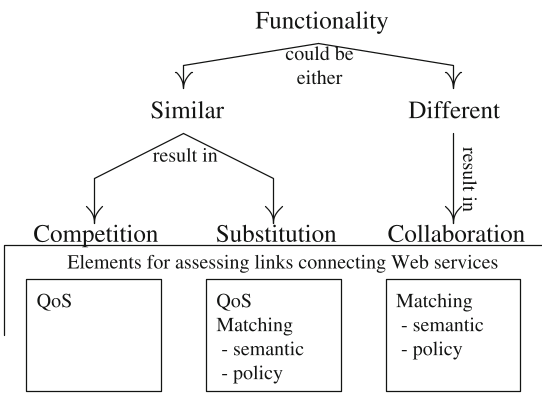 Figure 1: The intersection of Social and Service-Oriented Computing.
Linking Criteria to Policies
The paper’s core innovation is the feedback loop between Selection Criteria and Management Policies.
- If the Privacy metric drops (e.g., many successful attacks), the authority must implement stricter encryption or "Credential Checking" policies ().
- If Traceability reveals a service is ignoring corrective advice, a "Punishment" policy () is triggered.
Example: Substitution Networks
In a substitution network, trust is measured by the success rate of actual substitutions. If a service frequently fails to take over for a peer, its trust score drops, leading to its eventual expulsion from the network to maintain high QoSN.
Critical Analysis & Conclusion
Takeaway
The QoSN model provides a much-needed governance layer for autonomous Web services. By quantifying social factors, it allows services to make data-driven decisions about the reliability of their "contacts."
Limitations
- Centralization: The model relies on an "Authority Component" (sn_auth). In a true Web 2.0 or 3.0 environment, a decentralized governance (like a DAO) might be more appropriate.
- Cold Start: For new networks, calculating "Leakage Probability" or "Attack Ratios" is difficult due to a lack of historical data.
Future Outlook
The authors suggest that future work will involve developing a proof-of-concept tool. Integrating this with modern Service Meshes (like Istio) could allow for real-time QoSN monitoring in large-scale microservice deployments, effectively creating a "LinkedIn for Microservices."