
Decoding Global Virality: Using Entropy to Quantify the Limits of Social Media Predictability
18579_On Quantifying Predictability in Online Social Media Cascades Using Entropy.
This paper introduces an information-theoretic framework to quantify the predictability of online social media cascades (MemeTracker and Twitter hashtags). By applying multiple entropy measures and Fano's Inequality, it establishes "maximal predictability" limits, demonstrating that temporal correlations and external node information are the primary drivers of cascade volume forecastability.
TL;DR
Is the next viral "meme" a result of pure chaos or hidden patterns? This paper treats social media cascades as time-series data and uses Information Theory—specifically Entropy and Fano's Inequality—to prove that cascades are highly predictable (up to 94%) when temporal order and influential node behavior are taken into account.
The "Black Box" of Cascade Accuracy
For years, researchers have proposed various models like the Linear Influence Model (LIM) or ARMA to predict how many times a hashtag or phrase will be shared. However, a fundamental question remained: is a 70% accuracy rate actually "good," or is there a theoretical ceiling of 95% that we haven't reached?
The authors argue that we cannot evaluate algorithms without knowing the Maximal Predictability ()—the absolute limit of what is "knowable" given the available data.
Methodology: The Four Flavors of Entropy
The researchers break down the uncertainty of a cascade into four stages, moving from total ignorance to deep contextual understanding:
- Random Entropy (): If the cascade were a roll of the dice.
- Temporally-uncorrelated Entropy (): Accounts for the frequency of sizes but ignores the order (e.g., "how often" but not "when").
- Temporally-correlated Entropy (): Uses the Lempel-Ziv estimator to find patterns in the order of volumes. This captures the "momentum" of a meme.
- Conditional Entropy (): Factors in external "X-factors," such as whether a high-influence media site (like the New York Times) has joined the cascade.
 The Lempel-Ziv estimator used to bridge the gap between simple probability and temporal sequence.
Key Insights: Why Time Matters More Than Frequency
The results from the MemeTracker and Twitter Hashtag datasets reveal a striking shift:
- The Temporal Jump: For MemeTracker phrases, predictability jumps from a measly 30% (using just frequency) to 83% when the temporal sequence is considered.
- The Influence Factor: When you add the knowledge of a small subset of "seed" nodes or major media blogs, predictability climbs to 94%.
- Twitter Consistency: Interestingly, Twitter hashtags showed a narrower distribution of predictability, suggesting that hashtag adoption follows a more continuous and less heterogeneous process than general memes.
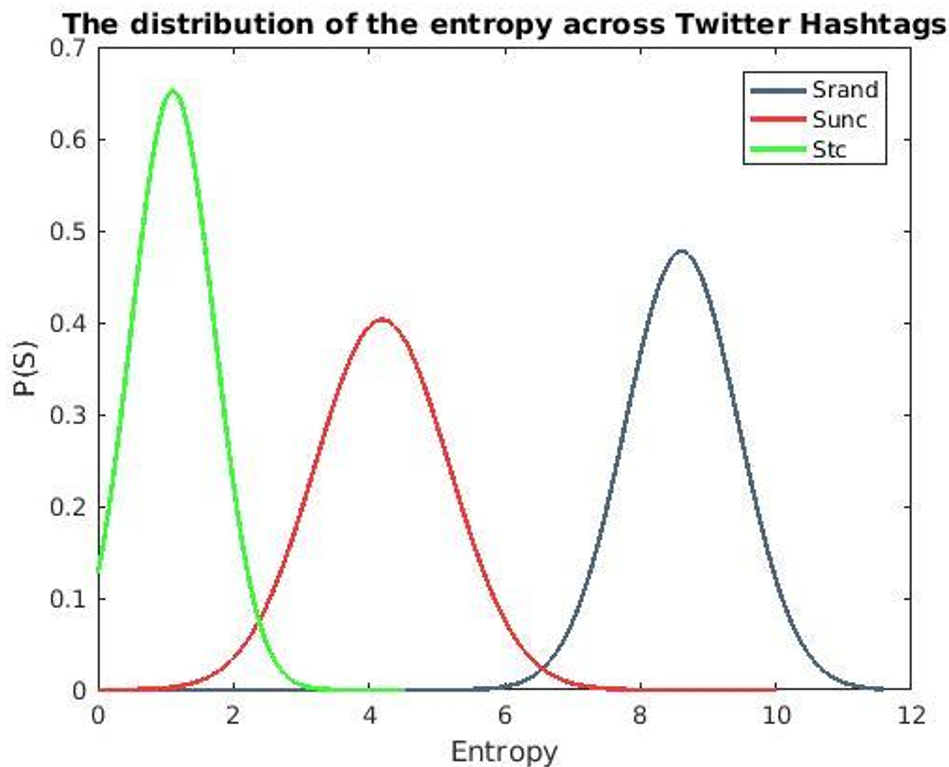 Figure 3: Note the dramatic leftward shift from to . Lower entropy means higher certainty.
Critical Analysis: The Gap Between Theory and Practice
The paper effectively explains why certain models, like Yang and Leskovec's LIM, outperform others—they successfully tap into the Conditional Entropy provided by influential nodes.
Limitations: While the framework is elegant, its current application relies on historical data to estimate entropy. In a real-world "cold start" scenario (where a meme just started five minutes ago), calculating remains a challenge due to the lack of sequence length.
Future Outlook
This work sets a theoretical "North Star" for social media marketing and homeland security. By knowing that the limit is 94%, researchers can now stop trying to improve models once they hit that ceiling and instead focus on acquiring different types of information (like structural graph features) to push the entropy even lower.
The next frontier? Applying this to 5G network traffic and human mobility, where similar temporal patterns might hide beneath the surface of seemingly random human crowds.
Citation: Kolli, N., Balakrishnan, N., & Ramakrishnan, K. R. (2017). On Quantifying Predictability in Online Social Media Cascades Using Entropy. ASONAM '17.