
Beyond Gut Feeling: Quantifying Trust in Social Networks via Data Mining
Quantitative analysis of trust factors on social network using data mining approach
This paper proposes a data mining framework to quantitatively calculate trust factors in social networks, specifically for the M-CFTN recommender system. By utilizing seven Feature Selection (FS) algorithms, it transforms qualitative user perceptions into objective "Relative Importance Factors" (RIFs) to weight hierarchical trust metrics.
TL;DR
Determining how much one user trusts another on a platform like Facebook has historically been a matter of subjective surveys or "best guess" weighting. This paper changes the paradigm by using Feature Selection (FS) algorithms to mathematically extract the "Relative Importance" of trust factors. The result is a rigorous way to parameterize recommendation engines like M-CFTN, identifying User Profiles and Privacy Settings as the primary pillars of digital trust.
Background: The Trust Estimation Gap
In the world of online social networks (OSNs), trust is the "glue" that makes recommendation systems work. If your friend recommends a product, you are more likely to buy it—but only if the system accurately captures the strength of that friendship.
The problem? Most systems either treat all interactions as equal or ask users to rate trust on a scale of 1 to 5. This is inefficient and prone to human bias. The authors posit that we should instead look at the data footprint of a relationship (tags, common groups, wall posts) and let machine learning decide which features actually predict a trustworthy bond.
Methodology: The Hierarchical Trust Model
The authors adopt a Hierarchical Trust Metrics Model, where "Trust" is not a single value but a composite of several groups:
- Profile: Personal information completeness.
- Privacy: How a user manages their data visibility.
- Intra-activity: Direct interactions between a specific pair of users.
- Inter-activity: Interactions involving the broader circle of mutual friends.
To turn these categories into a formula, the paper uses seven different FS algorithms (including Information Gain, ReliefF, and Symmetrical Uncertainty). Each algorithm evaluates how well an attribute predicts a target outcome.
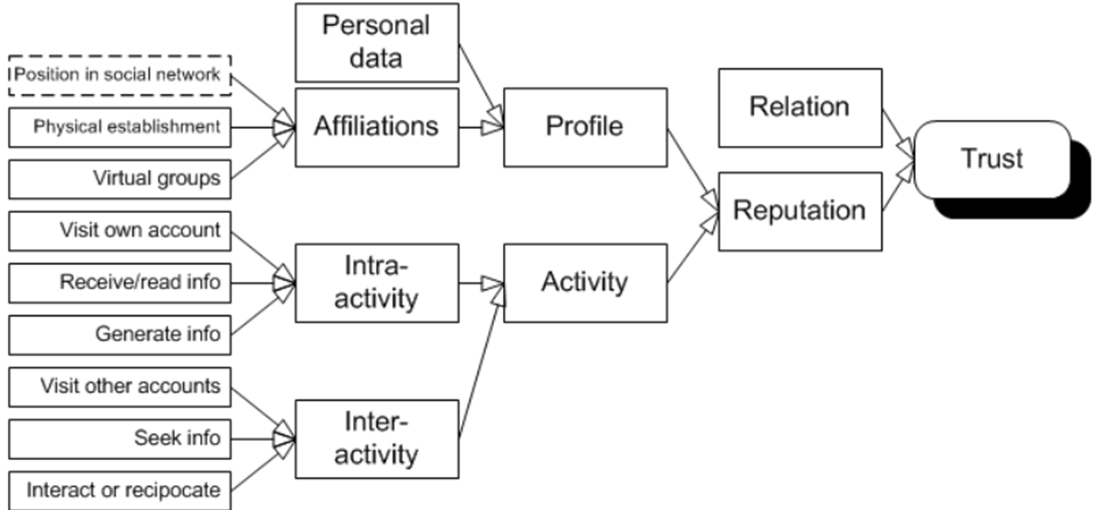 Figure 1: The hierarchy used to decompose "Trust" into measurable data points.
Experiments & Quantitative Insights
Using a dataset from "The Facebook Project" (University of Illinois), the researchers ran their FS suite to generate Normalized Group Scores.
Key Findings:
- Profile is King: With a normalized weight of 0.41, the completeness and openness of a user's profile are the strongest predictors of trust. This aligns with psychological theories of intimacy.
- Privacy as a Trust Signal: Privacy management ranked second (0.23), suggesting that how a user protects their space influences how others perceive their reliability.
- The Formula defined: These weights () can be directly plugged into the M-CFTN equation to refine product recommendations.
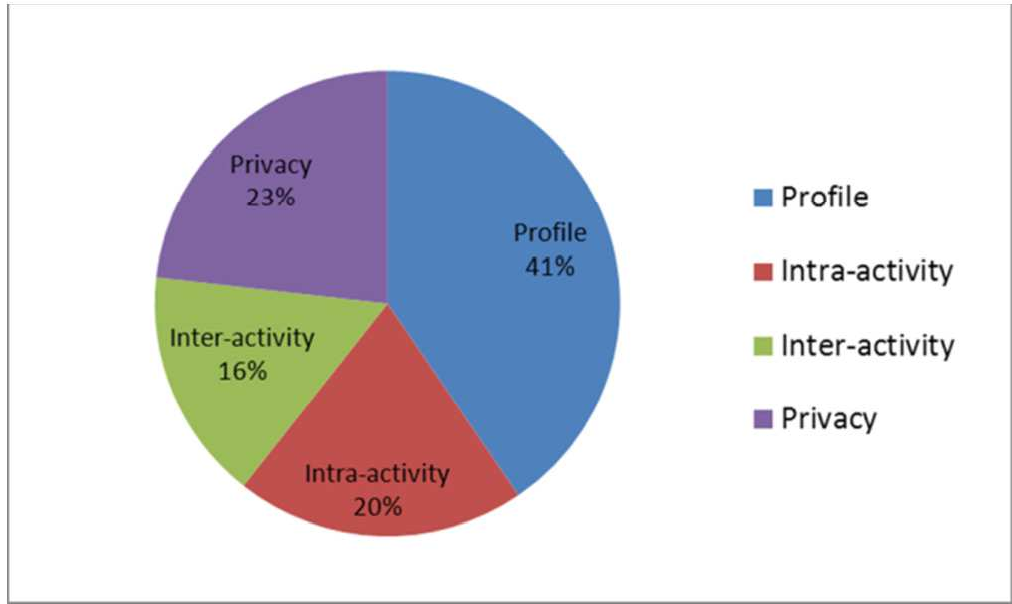 Figure 2: The relative weight distribution derived from the data mining process.
Visualization: The "Social Distance" Star Chart
To make these abstract numbers intuitive, the authors used the Java Prefuse toolkit to create star charts. In these visualizations, the length of the "ray" represents the relative importance (or inverse social distance). A shorter path indicates a factor that is more integral to the core concept of Trust.
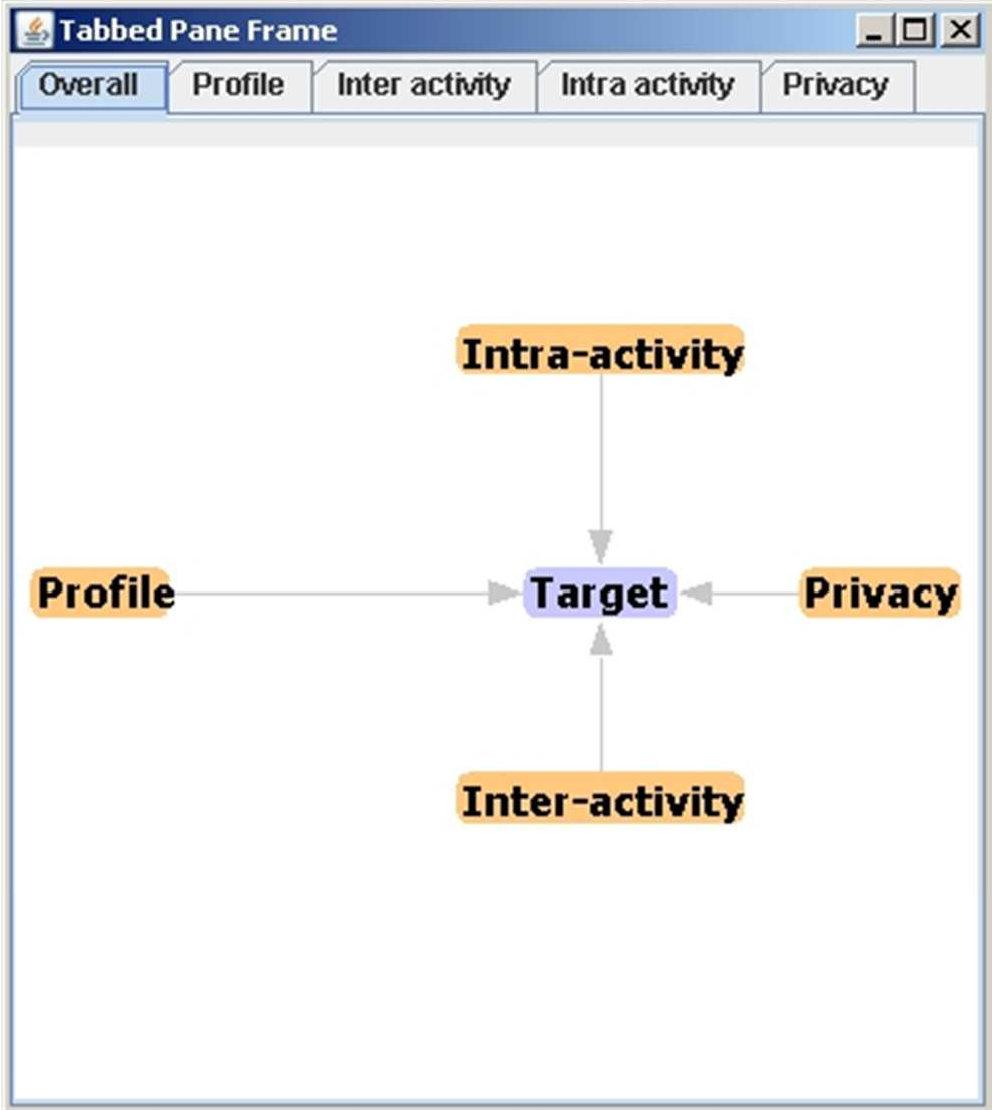 Figure 3: Visualizing the "proximity" of different factor groups to the central concept of Trust.
Critical Insight & Future Outlook
This work provides a bridge between qualitative social science and hard data science. By treating feature selection as a "weight discovery" tool rather than just a pre-processing step for classification, the authors show how we can build more "human-aware" algorithms.
Limitations: The study uses a relatively small dataset (73 undergraduate students). In a modern context, trust factors may shift significantly across different demographics (e.g., Gen Z vs. Boomers) or platforms (e.g., LinkedIn vs. TikTok).
Future Work: Integrating these weights into real-time collaborative filtering could lead to "Trust-Aware" AI that understands not just what we like, but who we listen to.