
Quantitative Models for Direct Marketing: A Systems Perspective Review
Quantitative models for direct marketing: A review from systems perspective
This paper provides a comprehensive review of quantitative models for direct marketing through a systems perspective (input-processing-output). It categorizes and evaluates traditional statistical methods and modern machine learning approaches while addressing the critical role of data selection and performance metrics like profitability and accuracy.
Executive Summary
Direct marketing has evolved from simple mailouts to a multi-billion dollar data-driven industry. This seminal review by Bose and Chen reframes direct marketing as a System—comprising input (data), processing (modeling), and output (evaluation). By moving beyond the "what" of marketing activities to the "how" of quantitative optimization, the authors demonstrate that the marriage of behavioral data with advanced machine learning can yield an average profit margin of 1 spent.
Problem & Motivation: The Shift from Mass to Micro
The fundamental pain point addressed is the inefficiency of mass marketing. Traditional approaches broadcast uniform messages to large groups, ignoring individual preferences. Direct marketing seeks to solve this by targeting individuals, but this introduces three core technical challenges:
- Data Scalability: How to process hundreds of attributes per customer without falling into the "curse of dimensionality."
- Model Selection: Choosing between the interpretability of Statistical Models (Logit, Probit) and the raw power of Machine Learning (ANN, SVM).
- Optimization Gap: Prior work often focused on "Accuracy" (Can we predict a response?) instead of "Profitability" (Does the response cover the cost of solicitation?).
Methodology: The Systems View
The paper categorizes the direct marketing workflow into a structured pipeline.
1. Inputs: The Supremacy of Behavior
The authors categorize data into External (demographics, lifestyle) and Internal/Behavioral (RFM - Recency, Frequency, Monetary). A critical insight is that while demographic data is easier to acquire, behavioral data has significantly higher Interpretability and predictive power.
 Note: Interpretability increases with the level of detail and behavioral focus.
2. Processing: Statistics vs. Machine Learning
The review draws a sharp distinction between two paradigms:
- Statistical Models: (Logit, Tobit, Latent Class) These require explicit mathematical functions and distributional assumptions. They are highly interpretable—marketers can see why a customer is being targeted.
- Data Mining/ML: (ANN, DT, SVM, GA) These are "black boxes" that learn non-linear relationships. They handle high-dimensional data better and are generally more accurate but harder to explain to stakeholders.
3. Hybrid and Ensemble Approaches
The authors highlight Hybridization as the current frontier. By combining Genetic Algorithms (GA) for feature selection and Neural Networks (ANN) for scoring, models can optimize for multiple objectives simultaneously, such as maximizing response rate while minimizing mailing depth.
Experiments & Results: What Actually Works?
The paper synthesizes evidence from several decades of research.
Key Metrics: Lift and ROC Curves
Instead of simple accuracy, the authors argue for Lift Curves. A lift curve (or "Banana Chart") shows how much better a model performs compared to random targeting.
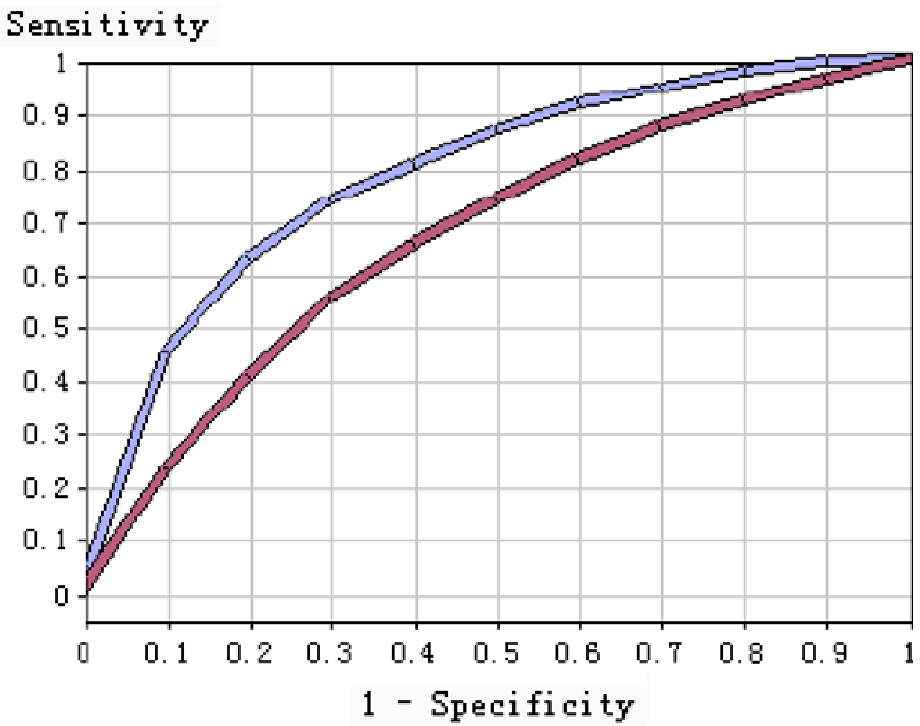 A high lift at the top deciles (left side of the x-axis) is critical because marketers rarely mail to the entire list.
Key Findings:
- ANN Supremacy: In most head-to-head comparisons, Artificial Neural Networks (ANN) outperformed Logistic Regression by significant margins (up to 21.5% in some cases).
- The Power of RFM: Models using RFM variables consistently outperformed those using only demographic variables.
- Multi-solicitation: Using Markov Decision Processes to plan a series of mailings (rather than a one-off) leads to superior long-term profitability and higher Customer Lifetime Value (LTV).
Critical Analysis & Conclusion
Takeaway
The paper concludes that while Data Mining offers superior performance, its lack of interpretability remains a barrier. The most successful modern strategies utilize Ensemble techniques (like Bagging and Boosting) to stabilize predictions and incorporate Asymmetric Loss Functions—acknowledging that the cost of missing a potential buyer (False Negative) is usually much higher than the cost of mailing a non-responder (False Positive).
Limitations and Future Work
The authors identify several gaps:
- Scalability: Most ML models are tested on "toy" datasets. Real-world performance on terabyte-scale databases (like Wal-Mart’s 43TB system) requires more focus on computational efficiency.
- Up-selling: While Cross-selling is well-researched, quantitative models for Up-selling (moving a customer to a higher-tier product) are still in their infancy.
- Real-time Adaptation: Future research needs to focus on how models can adapt to real-time Web browsing patterns vs. static historical records.
This review serves as a roadmap for any data scientist or marketer looking to transition from heuristics to high-performance quantitative systems.