
Queermuseu and the MBL: How Digitally Framed Populism Shut Down a National Art Exhibition
Queermuseu – Frameworks in Social Network
This study investigates digital activism through the case of the Queermuseu exhibition shutdown in Brazil (2017). It identifies how the Movimento Brasil Livre (MBL) leveraged Facebook to deploy populist "connective action" frameworks, transforming artistic controversy into a polarized political battle.
TL;DR
In 2017, Brazil's pioneering Queermuseu exhibition was shuttered prematurely not by legal decree, but by a viral Facebook campaign. This paper analyzes how the Movimento Brasil Livre (MBL) used populist framing—simplification, emotionalization, and negativity—to mobilize a digital "logic of connective action" that forced a 180-degree turn from one of Brazil's largest financial entities.
Academic Positioning: This work bridges social movement theory and digital communication, focusing on the "new right's" ability to transform social networks into ideological battlefields.
Problem & Motivation: The Power Shift in Cyberspace
The authors argue that the traditional "gatekeepers" of information (journalists and academics) have lost their monopoly. This has created a vacuum where digital activist groups can create "fictional narratives" based on real facts.
The motivation behind the study is to understand why a large segment of the Brazilian population—92% of whom have never visited a museum—became so vehemently engaged in a debate about an art exhibition. The research suggests that the "new right" exploited this lack of arts education by framing contemporary art as a direct threat to "traditional Christian family values."
Methodology: Analyzing the "Interactive Spectacle"
The study utilizes a case study approach focused on the peak of the mobilization (August to October 2017).
Key Metrics & Tools:
- Tool: Netvizz (Facebook data extraction).
- Metric: Engagement (Sum of likes, comments, and shares).
- Analytical Lens: Engesser’s three categories of populist strategy:
- Simplification: Reducing complex artistic themes to "pedophilia" or "zoophilia."
- Emotionalization: Using outrage and indignation to drive shares.
- Negativity: Framing the exhibition as a "criminal" attack on society.
 The study notes that the debates do not follow a hierarchy but move in a rhizomatic manner across platforms.
The Anatomy of an Attack: Experiments & Results
The empirical evidence shows a sharp spike in engagement that directly correlated with institutional surrender.
The Viral Catalyst
A single video titled "Exposição criminosa no Santander" became the epicenter, reaching 1.2 million views. MBL amplified this by adopting "personal action frameworks," which allow individual users to feel like they are leading a grassroots movement rather than following a party line.
Performance Metrics
The researchers analyzed 22 specific posts. The results show a massive mobilization effort:
- Sept 9, 2017: Initial attack post reaches 1.6 million engagements.
- Sept 11, 2017: Six rapid-fire posts celebrating the "boycott success" generate over 120,000 interactions.
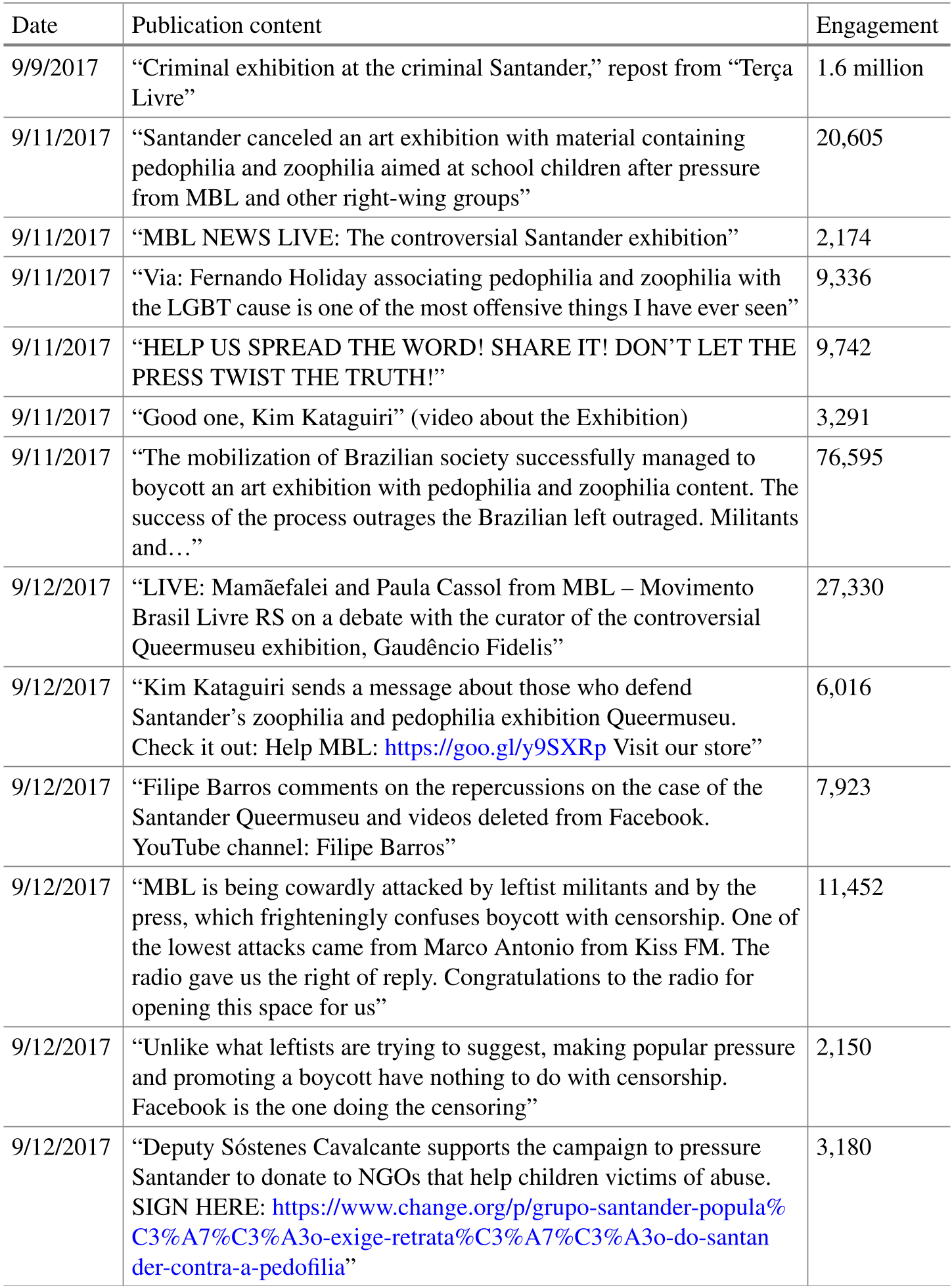 Table 1: Log of MBL Facebook activity showing the rapid succession of high-engagement posts during the peak of the controversy.
Critical Insight & Conclusion
The Queermuseu case is a textbook example of "connective action." The MBL succeeded by:
- Exploiting Taboos: Linking artistic diversity to societal taboos through distorted frameworks.
- Professionalizing Friction: Using amateur-style intimate videos to create a sense of authenticity and "truth" that resonates more than institutional statements.
- Strategic Cohesion: Keeping the group unified through moral identity while expanding its reach through viral, sensationalist content.
Limitations & Future Work
The authors acknowledge that while digital mobilization is fleeting ("liquid"), its consequences—like the closure of an exhibition—are very real and permanent. They advocate for a transdisciplinary approach to future research, combining art education, political science, and data ethics to combat the "manipulation of the population" in digital spaces.
Takeaway: In the age of digital populism, the battle is no longer over the quality of the art, but over who controls the narrative surrounding it in the social feed.