
Vegas: Navigating the Privacy-Efficiency Trade-off in Decentralized Social Search
An Analysis of Query Forwarding Strategies for Secure and Privacy-Preserving Social Networks
The paper presents an in-depth analysis of query forwarding strategies for secure, decentralized P2P Online Social Networks (OSNs), specifically focusing on the "Vegas" architecture. It evaluates various social graph metrics—ranging from local egocentric measures to global centrality—to enable efficient social search while maintaining user privacy and data control.
TL;DR
In the quest to reclaim data sovereignty from centralized giants like Facebook, decentralized P2P Online Social Networks (OSNs) face a massive hurdle: how do you find information if you can only see your immediate friends? This paper analyzes the Vegas system and evaluates which routing strategies—ranging from "global-knowledge" centralities to "ego-network" heuristics—allow for efficient social search without compromising the user's "need-to-know" privacy constraints.
Background: The Decentralization Paradox
Privacy-focused P2P OSNs like Vegas rest on a strict principle: user knowledge is restricted to their ego network (the 1-hop neighborhood). While this prevents unauthorized profile scraping and social engineering, it breaks traditional search. In a globalized network, we find things via "six degrees of separation," but if you only know one degree, how do you decide where to send a query so it reaches a person five hops away?
Methodology: Informed Prioritized Walks (IPW)
The authors propose a generic Informed Prioritized Walk (IPW). Unlike a blind random walk, IPW ranks a node's neighbors based on specific metrics and forwards queries to the "best" candidates first.
The study compares strategies across three categories:
- Global Metrics (The Gold Standard): Closeness and Betweenness centrality. These require knowing the full graph—impractical for privacy but useful as a performance ceiling.
- Local/Egocentric Metrics (The Realistic Candidates): Egocentric Closeness, Egocentric Betweenness, and the Clustering Coefficient. These only require knowledge of the 2nd or 3rd-order zone.
- Social/Heuristic Metrics: Node Similarity (common interests) and Weak Ties (prioritizing friends who have fewer mutual acquaintances).
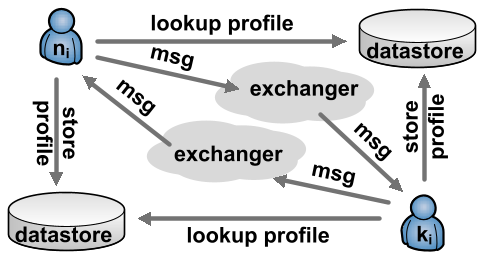 Fig 1: The architecture of Vegas (left) and the restricted local view of a node (right).
Experimental Insights: Power Laws and Power Users
The researchers tested these strategies on four datasets: synthetic models (Random, Barabási-Albert) and real-world crawls (Flickr, Lastfm).
1. The Success of Local Intuition
The most striking finding is that Egocentric Betweenness—which only looks at links between a node's immediate neighbors—performs nearly as well as sociocentric (global) betweenness in high-clustering networks like Flickr. This proves that we don't need a "god's eye view" of the internet to route queries efficiently; local structural traits are strong proxies for global positioning.
2. The Danger of Being "Popular" (Hot Spots)
Metrics like HIGHDEG (priority to high-degree "hub" nodes) are highly effective but dangerous. In the Lastfm dataset, some nodes ended up receiving 85% of all network traffic. These "hot spots" are prime targets for Denial of Service (DoS) attacks and graph deanonymization.
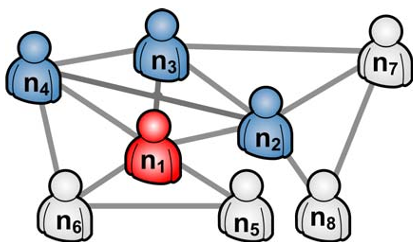 Fig 2: Success rates across different datasets. HIGHDEG and global metrics are consistently strong, but local egocentric versions stay competitive.
Why Similarity Isn't Enough
Counter-intuitively, Node Similarity (forwarding to people who like the same music/books) performed poorly—even worse than random walks in some cases. Why?
- Redundancy: If your friend is exactly like you, they probably know the same things you do. They aren't likely to have the "missing" piece of info you're searching for.
- Non-transitivity: Just because Alice is like Bob, and Bob is like Charlie, doesn't mean Alice is like Charlie. After 2-3 hops, the similarity signal vanishes.
Critical Analysis & Conclusion
This paper provides a sobering look at the "privacy vs. utility" spectrum.
- The Good: Local knowledge (ego-networks) is sufficient for effective social search. This validates the feasibility of restrictive P2P OSNs.
- The Bad: The most efficient routing algorithms create massive centralizing forces (hot spots), which ironically threatens the very "decentralization" these networks strive for.
Takeaway for Future Research
Future P2P architectures should likely adopt Weak Tie strategies. While they are slightly less efficient (higher hop counts), they distribute load more equitably, preventing the emergence of vulnerable super-hubs. The next frontier will be merging these structural metrics with active privacy techniques like k-anonymity to ensure that even the act of routing a query doesn't leak the social graph's structure to malicious observers.