
Aranea: Taming the Web for Question Answering through Hybrid Mining
Question answering from the web using knowledge annotation and knowledge mining techniques
The paper introduces Aranea, an open-domain question answering (QA) system that extracts fact-based answers from the Web. It achieves State-of-the-Art (SOTA) performance in the TREC-2002 QA track by combining "Knowledge Annotation" for structured data and "Knowledge Mining" for unstructured redundancy-based extraction.
TL;DR
Aranea is a pioneering open-domain Question Answering (QA) system developed by MIT CSAIL that treats the Web as both a structured database and a massive, redundant text corpus. By integrating Knowledge Annotation (structured) and Knowledge Mining (statistical), it overcomes the limitations of traditional NLP, providing concise, exact answers to factoid questions—a strategy that eventually became a precursor to modern search engine behaviors.
Contextualizing the Work
In the early 2000s, search engines were primarily keyword-based, dumping thousands of documents on users. Aranea shifted the paradigm from "Information Retrieval" to "Question Answering." In the academic landscape, this work represents a crucial bridge between rule-based linguistic systems and the data-driven statistical methods that dominate the field today.
Problem & Motivation: The Zipf’s Law Paradox
The authors observed a critical pattern: user queries quantitatively obey Zipf’s Law. A small fraction of question types (the "head") accounts for a massive portion of all instances (e.g., "What is the population of [Country]?").
However, there is also a "long tail" of unique, complex questions. Traditional systems failed because they either lacked the data to handle the tail or the precision to handle the head efficiently. Aranea’s insight was to stop trying to solve both with a single algorithm and instead use a hybrid framework.
Methodology: The Two Pillars of Aranea
1. Knowledge Annotation (The High-Precision Head)
This module targets specific, high-frequency question classes. It uses "Database Access Schemata" to map natural language to structured Web resources like the CIA World Factbook or Biography.com.
- The Logic: If a user asks "When was Gerald Ford born?", the system recognizes a "Person-Birthdate" pattern and queries a pre-wrapped site.
- The Intuition: It treats the Web as a "uniform database" via manually crafted or semi-automatic wrappers.
2. Knowledge Mining (The Robust Tail)
For the unclassifiable "long tail," Aranea leverages Data Redundancy.
- The Logic: On the massive Web, a fact is likely stated in multiple ways. Instead of complex parsing, Aranea uses N-gram generation and voting.
- The Process: It queries Google for snippets, breaks them into unigrams/bigrams, and counts frequencies. The logic is simple: the more a particular N-gram appears in different documents as a potential answer, the more likely it is to be correct.
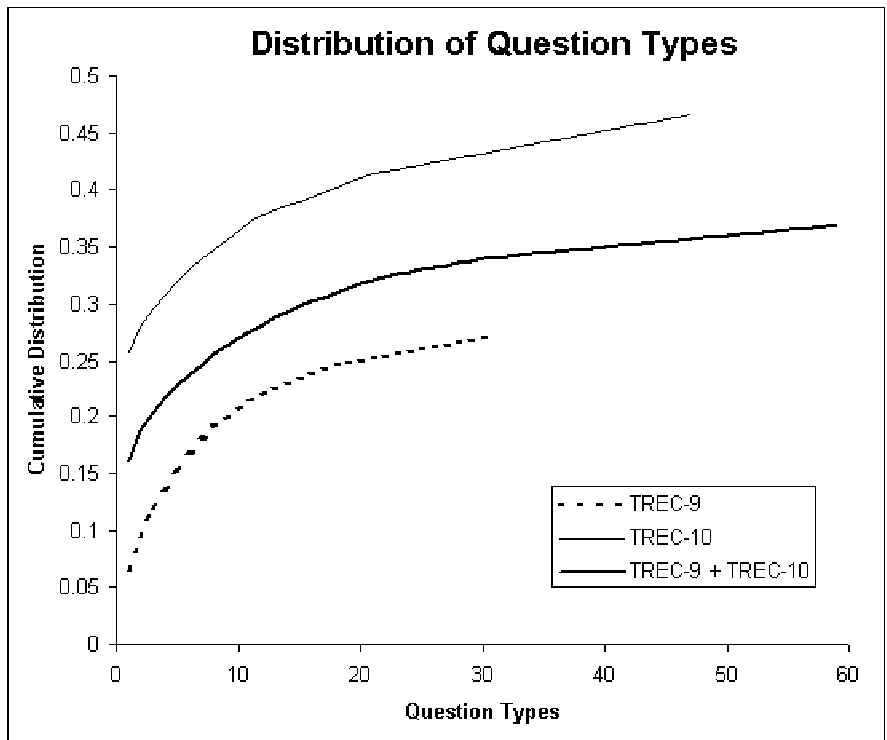 Figure 1: The modular architecture of Aranea, showcasing the dual-path processing flow.
Experiments & Results
Aranea was evaluated at TREC-2002. The results validated the hybrid approach:
- Knowledge Annotation was remarkably effective, providing 16% of the system's total correct answers with only 28 schemata. Its accuracy was 71.4% on the questions it attempted.
- Knowledge Mining provided the necessary coverage for the remaining queries, achieving a 33.4% accuracy rate on a much larger set of questions.
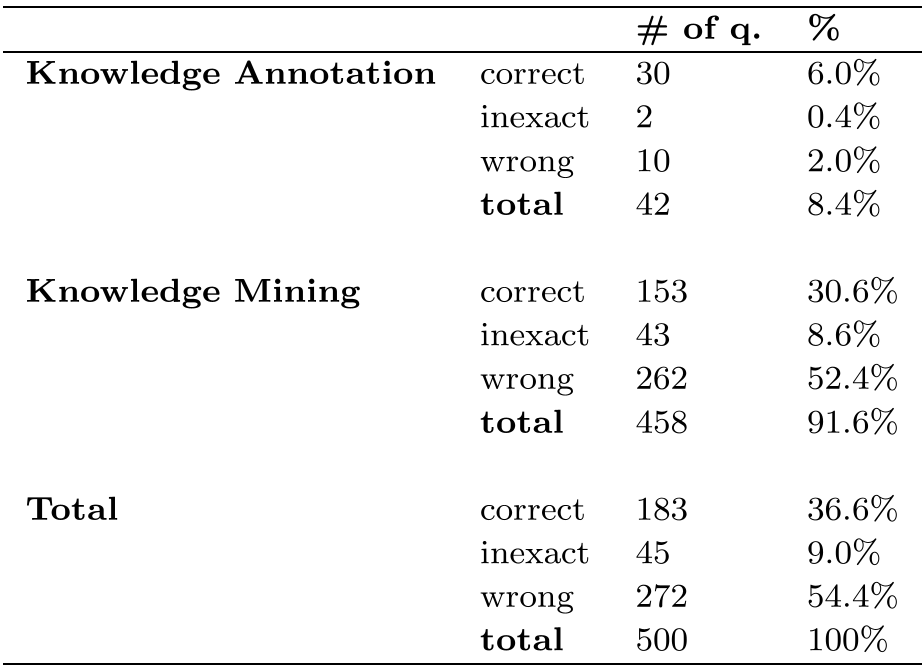 Table 1: Performance breakdown showing the trade-off between coverage and accuracy.
Critical Analysis & Conclusion
Takeaway
Aranea proved that "more data can substitute for deeper intelligence." By using the Web's redundancy as a surrogate for complex NLP reasoning, it achieved performance that rule-bound systems could not match.
Limitations
- Temporal Sensitivity: Aranea struggled with questions like "Who was the prime minister in 1979?" because it defaulted to current Web data.
- Semantic Modifiers: It often ignored words like "first" or "third," prioritizing statistical frequency over semantic constraints (e.g., answering "Who was the first man on the moon?" with "Neil Armstrong" mostly because his name appears most frequently near the moon landing keywords).
Future Outlook
Aranea's legacy lives on in modern Retrieval-Augmented Generation (RAG). The core philosophy—retrieving external facts to ground a system's output—remains the gold standard for reducing hallucinations in AI today.