
Queuing for Waste: The Hidden Labor of Food Activism
Qeuing for Waste: Sociotechnical Interactions within a Food Sharing Community
This paper investigates the sociotechnical interactions within "Foodsharing Copenhagen," a volunteer-run grassroots initiative in Denmark that redistributes surplus food. Through ethnographic fieldwork, the authors analyze how queuing mechanisms act as vital tools for organizing activism and transforming "waste" commodities into communal "gifts."
TL;DR
This study dives into Foodsharing Copenhagen (FS-CPH), a community where "waste" is repurposed as a "gift." The researchers argue that queuing isn't just a wait-time problem to be solved with an app; it is a critical site of social negotiation. By analyzing how different queuing systems (from lines to picture-cards) affect community values, the paper challenges designers to prioritize collective care over individual efficiency.
Context: Beyond the "Free Supermarket"
In a world where apps like Too Good To Go or Karma turn food saving into a quick commercial transaction, FS-CPH stands as a site of resistance. Here, food isn't just "rescued"; it’s "gifted" unconditionally. However, this creates a major sociotechnical headache: How do you handle 250 people showing up for a limited supply of "ugly" vegetables without it turning into a chaotic free-for-all?
The authors identify a core tension: Activism vs. Practice. While volunteers want to save the planet, they often spend most of their energy micro-managing lines and dealing with "customers" who mistake an activist event for a free supermarket.
Methodology: The Evolution of the Queue
The heart of the paper explores the iterative design of "fairness" through three queuing mechanisms:
- The Line System (First-Come, First-Served): The "standard" way. Problem: Created huge inequality, as the last person in line got nothing.
- The Numbered System (Randomized Sequential): Tickets were handed out randomly. Problem: People still expected numerical order, and it led to "cheating" where attendees kept tickets from previous weeks.
- The Picture-Based System (Grouped): Attendees get a card with a picture (e.g., a "Carrot" or "Apple"). Groups are called in random order.
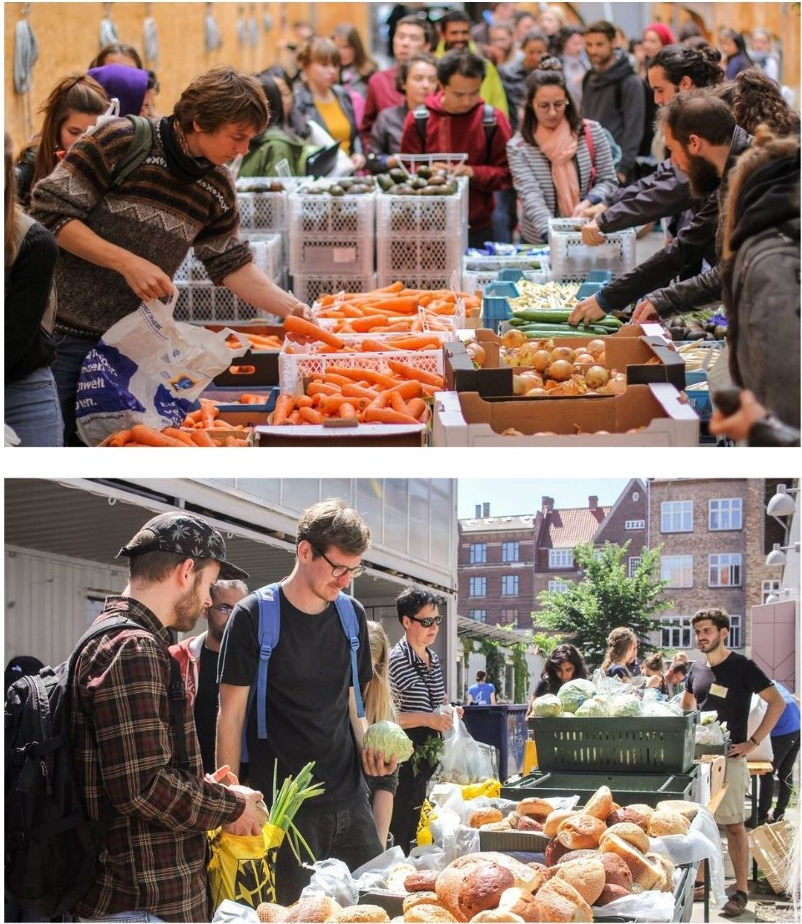 Figure 1: Volunteers and attendees interacting during a food redistribution event.
This third system is the "social winner." Why? Because it removes the "I was here first" mentality and allows people to relax and talk while waiting for their "fruit group" to be called.
From Commodity to Gift
The transition of food follows a fascinating path:
- Commodity: Food in the supermarket.
- Waste: Food deemed "unsellable" (bruised, past best-before).
- Gift: Food sorted by volunteers and shared at the event.
The authors argue that when food becomes a gift, the "transaction" changes. Volunteers don't want money; they want reciprocity in the form of appreciation and shared activism. When attendees treat the event like a retail experience (complaining about wait times), it breaks the social contract of the community.
Design Insight: "Commoning" vs. "Othering"
A significant contribution of this work is the critique of "efficient" design. In many digital platforms, we see Othering: separating people into "donors" and "the needy." FS-CPH avoids this by making sharing unconditional—anyone can join the queue.
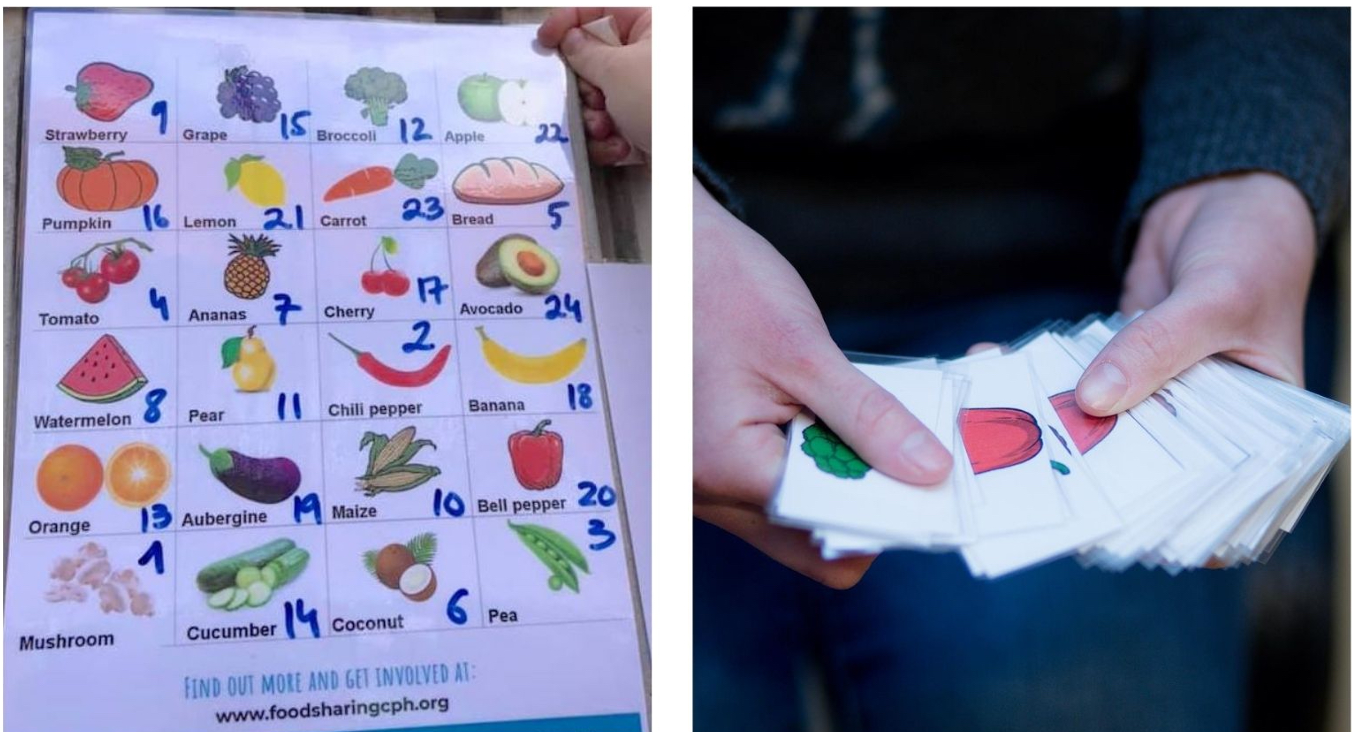 Figure 2: The picture tickets (right) and the randomized calling poster (left) used to manage the flow of attendees.
The paper warns that if we were to simply "digitize" this with an app, we might lose the:
- Face-to-face introductory speech that explains why the food is being saved.
- Informal social ties formed while standing in the "Carrot" group.
- Transparency of the sorting process, which proves the food is safe and valuable.
Conclusion: Designing for the Collective
The takeaway for the HCI community is profound: Technology should support "Commoning"—the collective management of resources. Instead of building apps that let individuals skip lines or browse "stock" from home, we should design for the "labor of organizing."
True sustainable food systems aren't built on efficient algorithms alone, but on the "messy," sociotechnical work of people coming together to care for what would otherwise be thrown away.
Limitations & Future Work
The study focuses heavily on the volunteer perspective. Future research should perhaps explore the "cheaters"—those who intentionally break the queuing rules—to understand if their behavior stems from actual food insecurity or a lack of alignment with activist goals.