
Qwen3.5-Omni: Redefining the Omnimodal Agent with ARIA and Hybrid-MoE
Qwen3.5-Omni Technical Report
Qwen3.5-Omni is a state-of-the-art end-to-end omnimodal large language model that unifies text, image, audio, and video processing. It employs a Thinker-Talker architecture with Hybrid Mixture-of-Experts (MoE), supporting a 256k context length and achieving SOTA results across 215 audio-visual benchmarks, specifically surpassing Gemini-3.1 Pro in key audio tasks.
TL;DR
Qwen3.5-Omni represents a massive leap in "omni-modality," evolving beyond simple sensory perception to become a natively agentic model. By scaling to hundreds of billions of parameters and supporting massive context lengths (256k), it masters text, audio, images, and video simultaneously. Key highlights include the ARIA alignment technology for silky-smooth voice interaction and a Hybrid MoE architecture that ensures high-throughput inference without sacrificing specialized reasoning.
The Problem: The "Broken" Interaction Loop
Existing multimodal models usually treat audio and video as "second-class citizens" compared to text. This leads to two critical failures:
- Response Disparity: A model might reason perfectly when given a text transcript but fail the same logic when listening to the raw audio.
- Streaming Instability: Speech tokenizers often have different data rates than text tokenizers. During real-time conversation, this causes "stuttering" or skipped words because the model can't synchronize what it "thinks" (text) with what it "says" (audio) fast enough.
Methodology: The Thinker-Talker Evolution
Qwen3.5-Omni solves these via a refined Thinker-Talker pipeline.
1. Hybrid MoE & Long Context
The Thinker (the brain) and the Talker (the voice) both use a Hybrid Mixture-of-Experts architecture. This allows the model to activate only the relevant "neurons" for a task (e.g., coding vs. audio synthesis), keeping latency low. It supports a staggering 256k context, enabling it to watch 400 seconds of 720p video or listen to 10 hours of audio in one go.
2. ARIA: The Secret to Natural Speech
The most significant technical contribution is ARIA (Adaptive Rate Interleave Alignment). Instead of using fixed alignment rates, ARIA dynamically constrains speech-to-text token ratios. This ensures that the generated voice feels expressive and emotionally nuanced, supporting 36 languages and zero-shot voice cloning from just a tiny user sample.
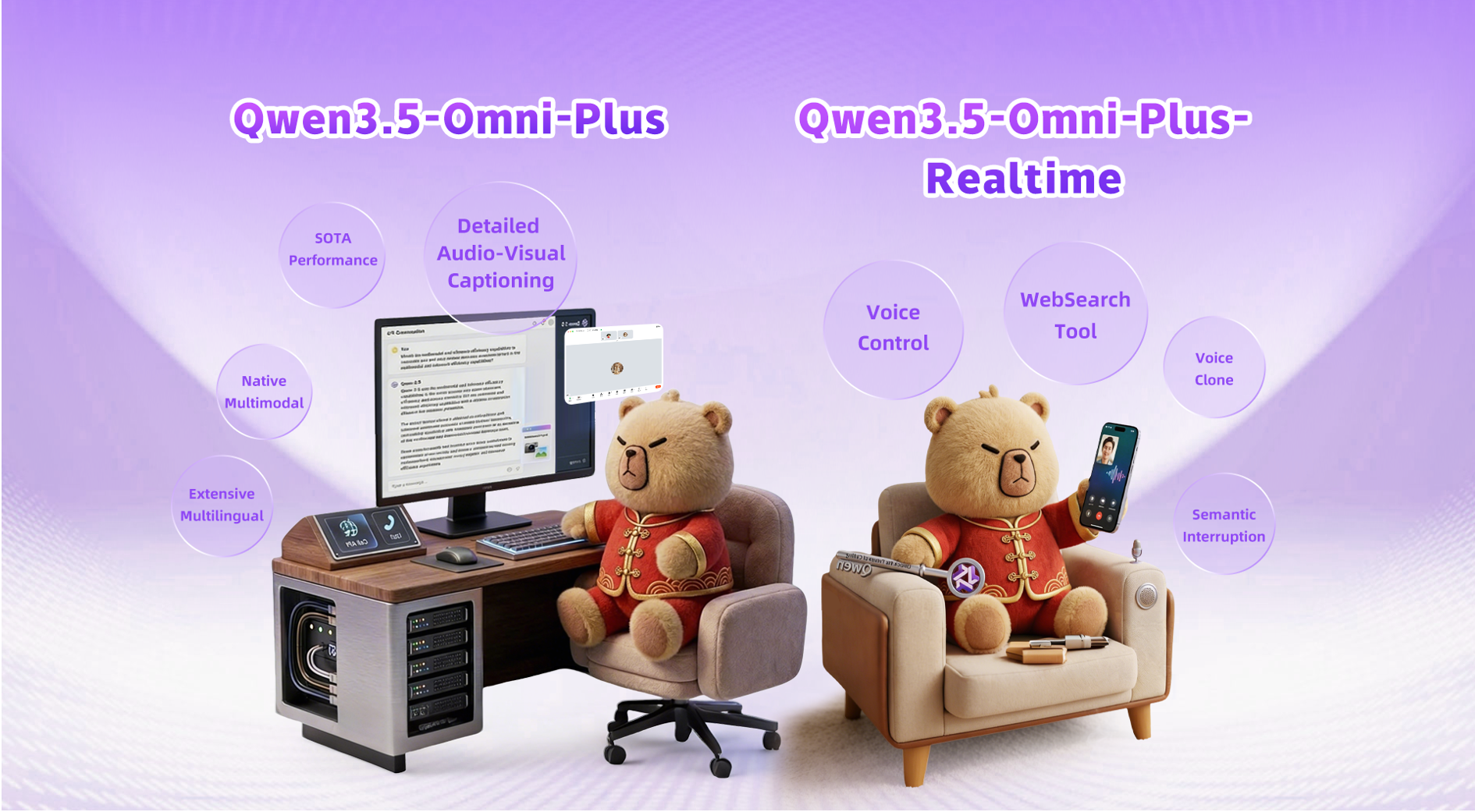 Figure 1: The Unified end-to-end architecture supporting multi-turn voice and video reasoning.
SOTA Performance and Emergent "Vibe Coding"
The results are clear: Qwen3.5-Omni-Plus is now the benchmark to beat.
- Audio Power: It surpasses Gemini-3.1 Pro across general audio understanding and ASR (6.6% WER vs 7.3%).
- Video Mastery: It handles complex temporal reasoning, generating script-level captions with precise timestamps.
- Vibe Coding: An emergent capability where the model writes code based on "audiovisual instructions" (e.g., "Look at this UI and make the button sound like this...").
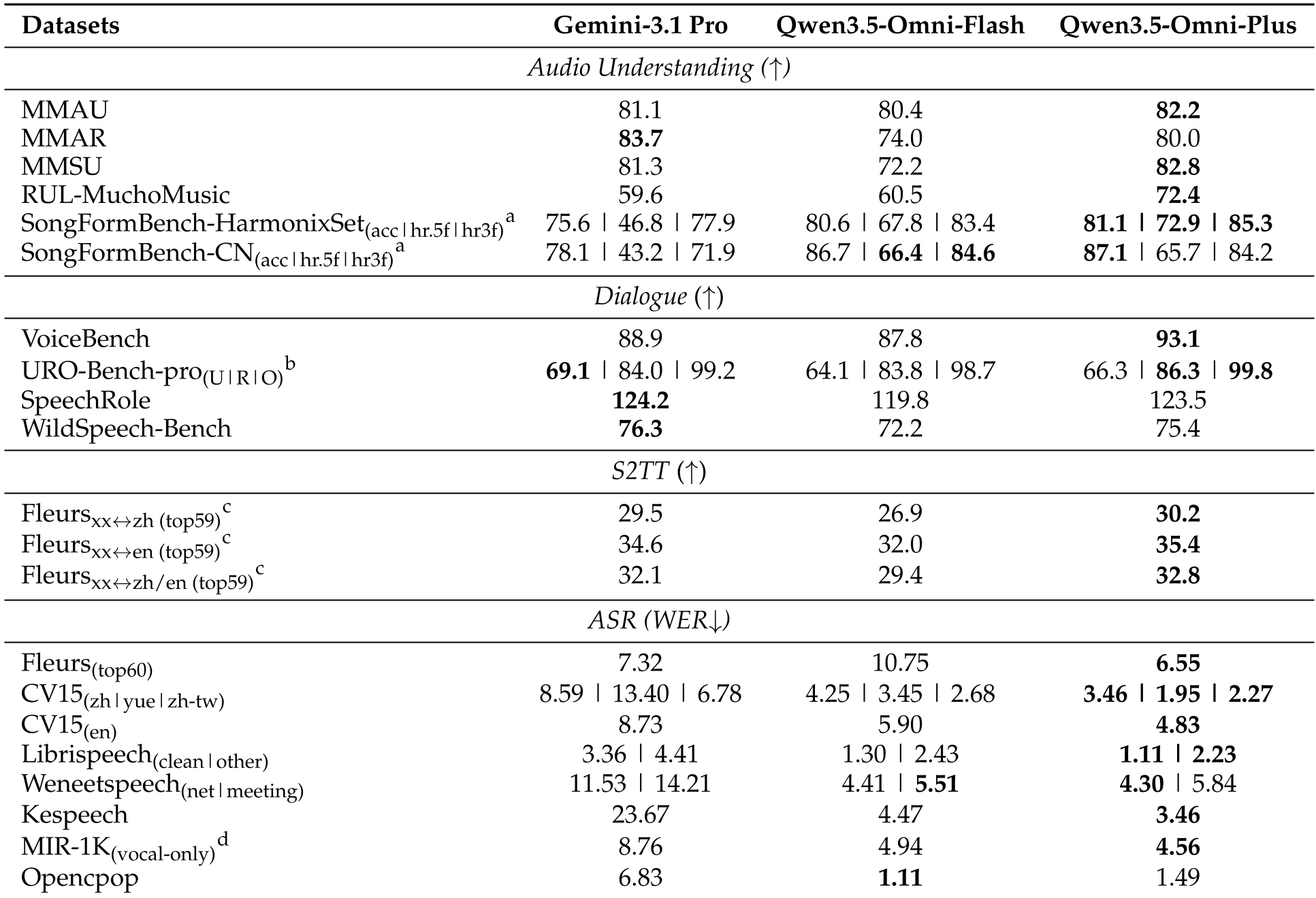 Figure 2: Qwen3.5-Omni outperforming industry leaders across multilingual and audio benchmarks.
Critical Insights
Unlike previous iterations, Qwen3.5-Omni doesn't suffer from "knowledge dilution" when adding new modalities; its performance on pure text tasks remains as strong as the base Qwen3.5 models. This suggests that Native Omnimodal Training—teaching the model to see, hear, and read at the same time from day one—is actually synergistic.
However, the 256k context for video comes at a high computational cost. While the MoE architecture mitigates this, the "First-Packet Latency" for video (approx. 651ms) still leaves room for improvement for truly instantaneous "eyes-on" wearable AI.
Conclusion
Qwen3.5-Omni moves us closer to the "Her" (OS1) scenario—a digital entity that can see what you see, hear the emotion in your voice, and act autonomously via tool-use and coding. It is a robust foundation for the next generation of real-time AI agents.