
Beyond the Screen: How Qzone Gratifications Boost Adolescent Mood
The effect of gratifications derived from use of the social networking site Qzone on Chinese adolescents’ positive mood
This study applies Uses and Gratifications (U&G) Theory to examine how the Chinese social networking site (SNS) Qzone influences the emotional states of adolescents. Using structural equation modeling (SEM) on a sample of 220 users, the research identifies that gratifications from socializing, information-seeking, and entertainment significantly enhance positive mood.
TL;DR
While public discourse often fixates on the negative impacts of social media, this study shifts the lens toward the positive psychological benefits for Chinese adolescents. By analyzing Qzone users, the researchers found that three specific gratifications—Socializing, Information-seeking, and Entertainment—directly contribute to a more "Positive Mood," with entertainment playing the most significant role in emotional uplifting.
Background: The Uncharted Territory of Qzone
In the landscape of Social Networking Sites (SNS), Facebook often dominates academic discussion. However, in China, local platforms like Qzone (with over 600 million users at the time of study) represent a unique cultural ecosystem. Unlike the individualistic orientation of Western SNS, Qzone sits within a collectivist culture characterized by tighter social bonds and indirect communication. This study seeks to understand if the "benefits" seen in Western studies translate to this massive Eastern user base.
Psychological Motivation: Why do they log in?
The research utilizes the Uses and Gratifications (U&G) Theory, which views users as active agents who choose media to satisfy specific needs. The authors hypothesize that when these needs are met, the result isn't just "satisfaction" with the app, but a literal enhancement of the user's Positive Affect (PA)—a state of energy, enthusiasm, and confidence.
Methodology & Architecture
The researchers surveyed 220 Chinese teenagers (ages 14-19) and validated their results using Structural Equation Modeling (SEM). They focused on three pillars of gratification:
- Socializing: Maintaining and deepening existing friendships.
- Information-seeking: Staying updated on trends, music, and news.
- Entertainment: Seeking enjoyment and "escapism" through games and interaction.
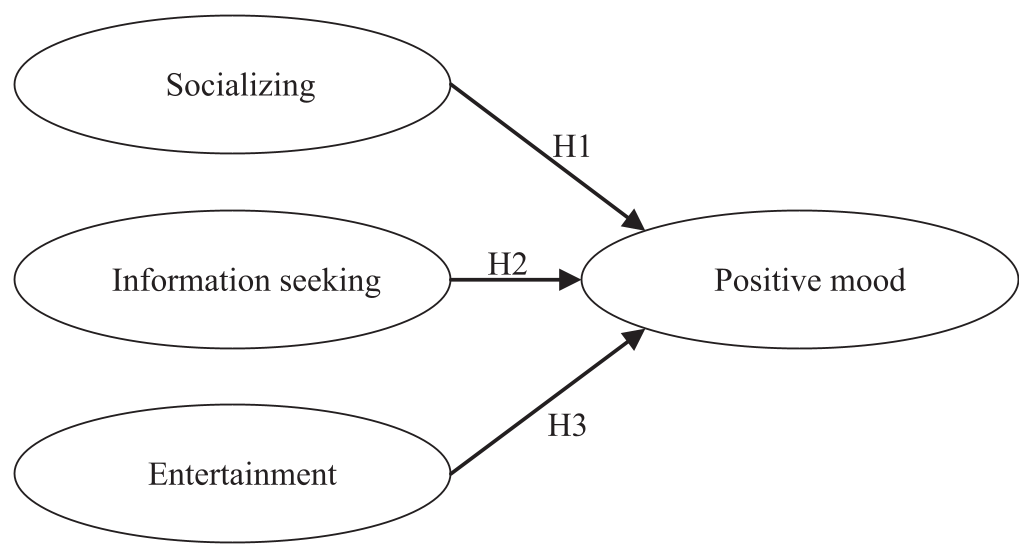 The theoretical framework linking specific SNS uses to positive emotional outcomes.
The Results: Entertainment is King
The data confirmed that all three categories of gratification successfully predicted an improved mood.
- Entertainment (β = 0.36): This was the strongest driver. For adolescents facing academic and social stress, the "playful" nature of Qzone (games, gossip, shared media) acts as a powerful mood regulator.
- Information-seeking (β = 0.25): Finding relevant content helps adolescents feel connected to the world, reducing feelings of isolation.
- Socializing (β = 0.23): Strengthening "bonding social capital" provides a safety net of social support.
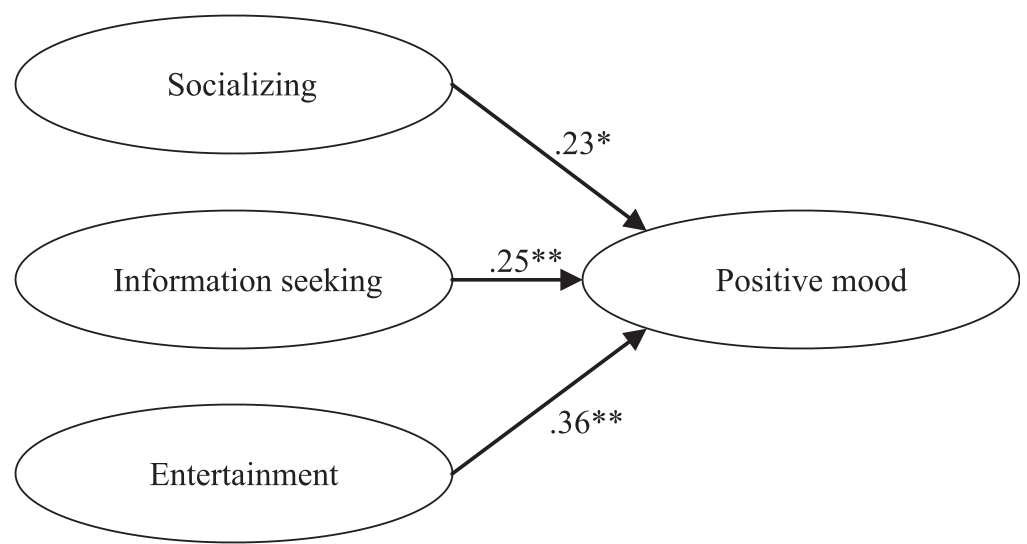 Standardized regression coefficients showing the impact of each factor on Positive Mood.
Critical Insight: Mood Regulation as a Resource
Adolescence is a volatile period characterized by "emotional anxiety." This study suggests that SNS platforms serve as a resource for personal renewal. Instead of being purely decorative or distractive, these digital spaces allow teenagers to manage their stress levels actively through distraction and social support.
Limitations to Consider
- Culture Specificity: The results might differ significantly in more individualistic cultures.
- Self-Reporting: The study relies on self-administered questionnaires, which can be subject to social desirability bias.
- Platform Evolution: As users migrate from "bulletin board" styles (Qzone) to "short video" styles (Douyin), the nature of these gratifications may shift.
Conclusion
This research provides a necessary counterweight to the "panic" surrounding teen social media use. When adolescents find socializing, information, and entertainment on platforms like Qzone, they aren't just wasting time—they are engaging in a sophisticated form of mood management that contributes to their overall transient psychological well-being.