
The (R)Evolution of Social Media in Software Engineering: From Water Coolers to Social Coding
The (R) Evolution of social media in soware engineering
The paper "The (R)Evolution of Social Media in Software Engineering" explores how social media has catalyzed a paradigm shift in developer collaboration. It introduces a historical taxonomy of media use since 1968 and presents a large-scale survey of 1,516 GitHub developers to establish a research roadmap for the "Social Era" of software engineering.
TL;DR
This seminal 2014 paper by Margaret-Anne Storey et al. maps the transition of software engineering from the "Electronic Era" to the "Social Era." By surveying over 1,500 GitHub developers, it reveals that the modern engineer is a "Social Programmer" balancing a median of 12 different media channels to learn, coordinate, and build their professional identity.
Background: Beyond the Binary of Code
Since the 1968 NATO conference where "Software Engineering" was coined, programming has been mischaracterized as a solitary activity. This paper argues that the rise of platforms like GitHub and Stack Overflow hasn't just added new tools; it has fundamentally altered the Psychology of Computer Programming. We are moving toward a Participatory Culture where transparency, crowdsourced content, and social ecosystems define technical success.
The Evolution of Knowledge Transfer
The authors categorize the history of developer communication into four distinct knowledge types:
- Tacit Knowledge (In the Head): Originally handled by F2F and phone, now supplemented by video chat.
- Artifact Knowledge (In the Code): Evolved from printed workbooks to IDEs, Wikis, and Social Coding sites.
- Community Knowledge (In the Crowd): From Usenet newsgroups to the gamified Q&A of Stack Overflow.
- Social Network Knowledge (About People): A new frontier where developer profiles (GitHub, Coderwall) act as living resumes.
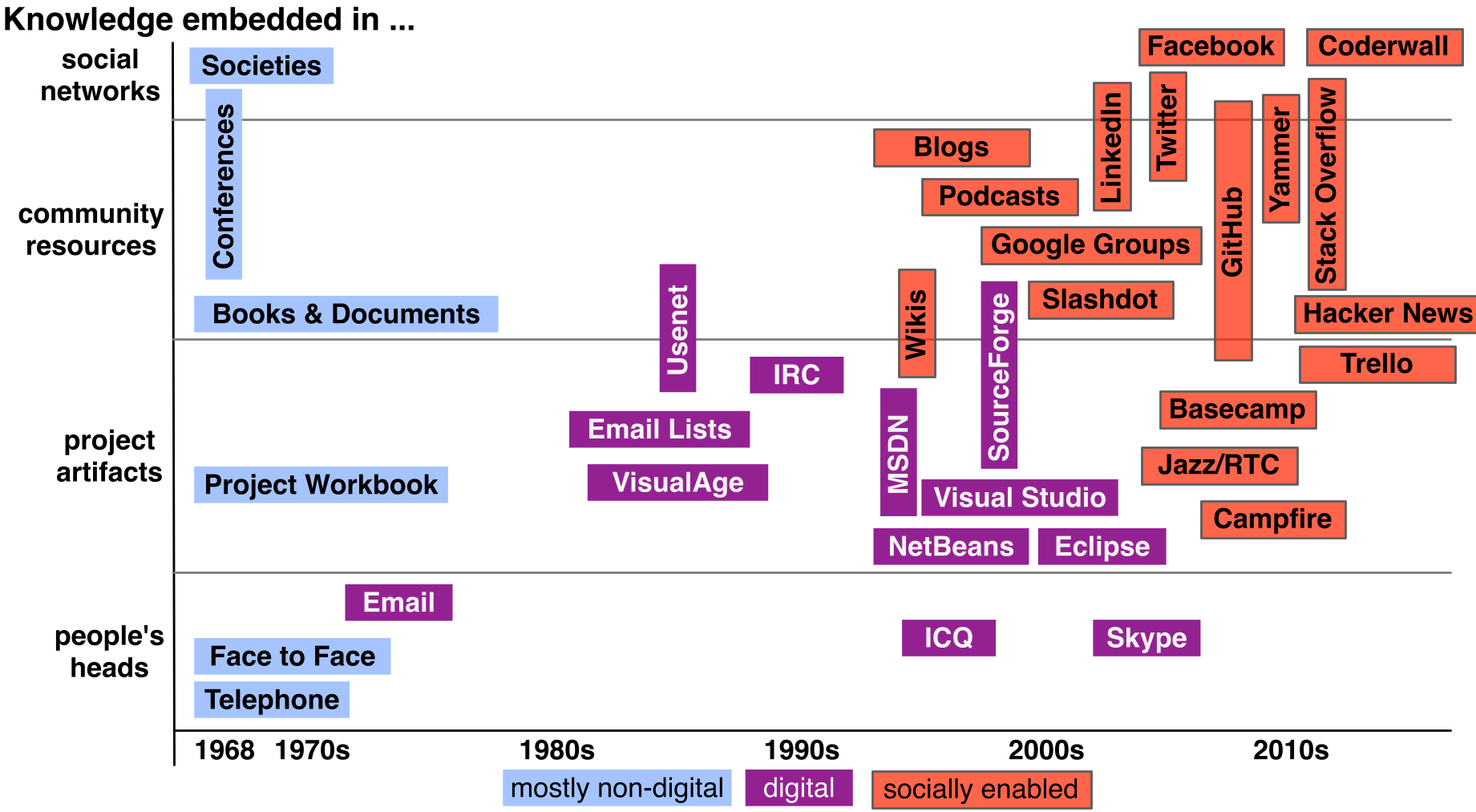 Figure 1: The evolution of channels across different knowledge domains.
Survey Insights: The 12-Channel Burden
The study polled 1,516 developers to find out what actually matters in the trenches.
Key Findings:
- The Persistence of F2F: Despite the digital revolution, Face-to-Face communication remains a top-3 critical channel for team problem-solving.
- Information Overload: A majority of developers feel overwhelmed by the sheer volume of notifications and the "noise" of social channels.
- The Social Credential: Public activity on GitHub is increasingly seen as a more reliable signal of proficiency than a traditional resume.
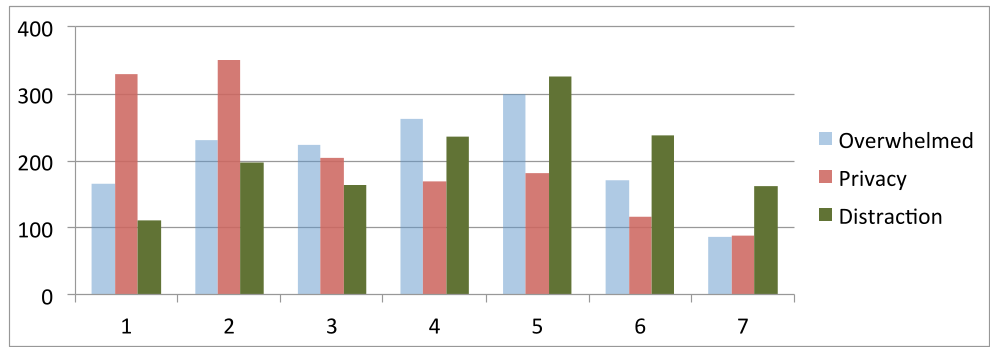 Figure 2: Developers' feelings on being overwhelmed, privacy, and distraction.
Methodology: The Media Ecology Perspective
The researchers utilize the "Media Ecology" framework to analyze how different tools buttress or cancel each other out. They highlight that social media brings about "Context Collapse"—where professional and personal boundaries blur—and create "Digital Tattoos" (permanent records of past technical mistakes or conduct).
Critical Analysis & Future Roadmap
The paper identifies several "Dark Sides" and opportunities for future research:
- "Forking Hell": The difficulty of finding the "best" version of a project when GitHub makes forking trivial.
- Anti-Social Behavior: The risk of "personal attacks" or intimidation in transparent environments, which disproportionately affects minorities.
- Vendor Lock-in: The precariousness of relying on "free" proprietary tools like Google or Twitter for mission-critical community knowledge.
The Takeaway
The (R)Evolution of social media has turned software development into a Global Village. For practitioners, the challenge is no longer just writing code, but mastering Social Media Literacy: the ability to navigate, sample, and remix information across a fragmented ecosystem without losing focus.
Conclusion
Margaret-Anne Storey and her colleagues have provided a roadmap that is still strikingly relevant. As AI-driven social tools emerge, the focus shifts back to the human element: How do we foster a "Participatory Culture" that remains inclusive, trustworthy, and efficient?
Future Work Note: Researchers are encouraged to look into "Dark Matter Developers"—those who benefit from the social ecosystem but remain invisible participants.