
RLGA: Accelerating Cloud Job Control with R-Learning and Gaussian Process Regression
R-Learning and Gaussian Process Regression Algorithm for Cloud Job Access Control
This paper introduces RLGA, a hybrid framework combining R-learning with Gaussian Process Regression (GPR) to optimize job access control in cloud computing. By using GPR as a value function approximator, the model effectively manages large-scale state spaces and accelerates policy convergence in dynamic Virtual Machine (VM) environments.
Executive Summary
TL;DR: In the hyper-elastic world of cloud computing, deciding which jobs to accept to maximize revenue while balancing resources is an optimization nightmare. High-dimensional state spaces usually cripple standard Reinforcement Learning (RL). This paper proposes RLGA, a framework that marries R-learning (ideal for continuous, non-episodic tasks) with Gaussian Process Regression (GPR). By "filling in the blanks" for unvisited states using GPR, the system reaches optimal policies 50% faster than traditional methods.
Positioning: This work is a targeted refinement of RL convergence strategies, specifically applied to the "Job Access Control" niche within Cloud Resource Management.
The Pain Point: The Curse of Dimensionality in the Cloud
Cloud environments are dynamic. The number of active Virtual Machines (VMs), arrival rates, and job priorities create a massive state-action space.
- Lookup Table Limitations: Traditional RL agents can't learn what they haven't seen. In a cloud with thousands of potential configurations, many "states" remain unvisited.
- Convergence Latency: Cloud operators cannot afford millions of trial-and-error steps where the system performs poorly before becoming "smart."
The authors' insight is rooted in Value Function Approximation: if we can treat the Q-value table not as a collection of isolated points, but as a continuous surface, we can use regression to predict the value of unknown states.
Methodology: The Fusion of R-learning and GPR
The paper utilizes R-learning, a variant of RL that optimizes for average reward per time step rather than discounted future rewards. This is particularly suitable for cloud job queues which are "continuing tasks" rather than "episodic" ones.
1. The R-learning Objective
The goal is to maximize the average expected reward :
2. GPR as the "Brain"
When the agent experiences a transition , it updates its knowledge. However, instead of just updating one cell, the RLGA algorithm periodically uses GPR to regress the entire Q-value table. Since GPR is a Bayesian technique, it doesn't just provide a guess; it provides a probabilistic distribution over the state-value space, allowing the agent to generalize from known experiences to unknown ones.
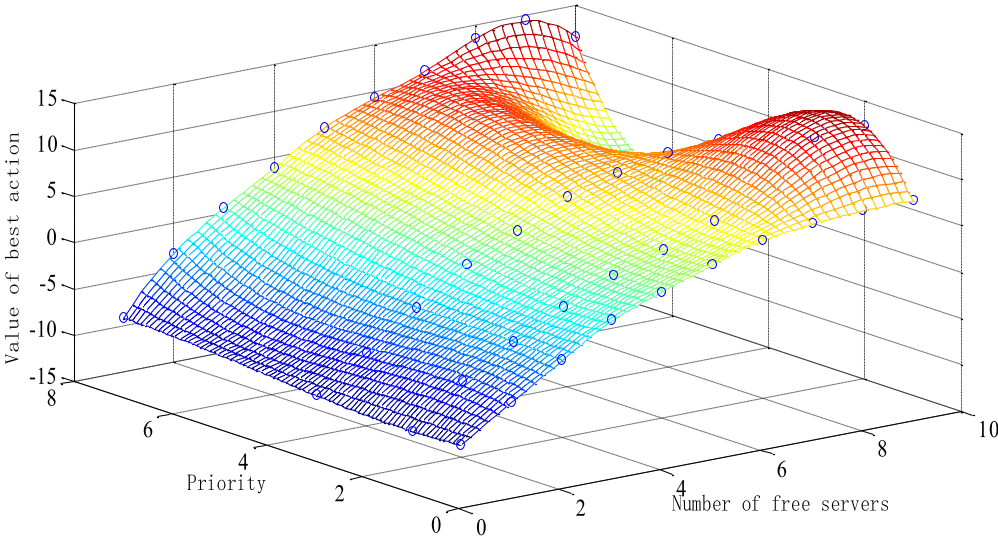 Fig 1: Contrast between raw R-learning (a) and GPR-smoothed R-learning (b), illustrating the closing of "data gaps."
Experimental Evidence
Using CloudSim, the authors benchmarked RLGA against standard R-learning (RLA).
- Faster Convergence: As shown in the (rho) value comparison, RLGA reaches the mean reward threshold in 200 jobs, whereas RLA requires 400 jobs.
- Higher Efficiency: Because the agent generalizes better, it makes fewer mistakes during the learning phase, leading to higher accumulated rewards.
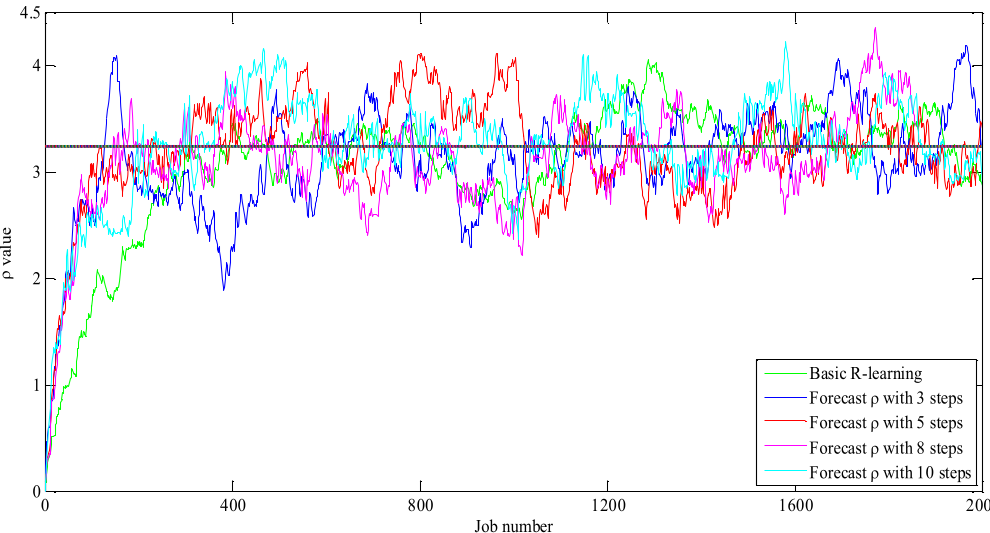 Fig 2: The value convergence comparison—RLGA (red/dotted) stabilizes much earlier than RLA (blue/solid).
Critical Insight & Conclusion
Takeaway
The core value of this research lies in its Inductive Bias. By assuming that the value function for cloud resources is somewhat "smooth" (i.e., a system with 9 idle VMs behaves similarly to one with 10), GPR provides the mathematical scaffolding to make the agent smarter with less data.
Limitations & Future Work
- Computational Overhead: GPR typically has a complexity of , which might become a bottleneck if the number of training samples grows too large. The authors suggest "offline learning" as a mitigation, but real-time scalability remains a question.
- Action Space: The current model uses a simple binary (1/0) action space (Accept/Reject). Expanding this to multi-dimensional resource allocation (CPU vs RAM vs Disk) will be the true test of this algorithm's durability.
Final Thought: RLGA proves that for industry-specific RL applications, "pure" learning is often slower than "informed" learning using statistical regression.