
DCNN Race Classification: Breaking the Accuracy Barrier with Multi-Scale Branching
Race Classification from Face using Deep Convolutional Neural Networks 2018 3rd International Conference on Advanced Robotics and Mechatronics (ICARM)
The paper introduces a multi-scale Deep Convolutional Neural Network (DCNN) for high-accuracy race classification, achieving nearly 99% accuracy across multiple databases. The core method utilizes a branch-structured architecture based on VGGNet to merge features of different depths, supported by a newly collected, large-scale, and balanced race database.
TL;DR
Researchers from Beihang University have developed a Deep Convolutional Neural Network (DCNN) that achieves a staggering 99% accuracy in classifying human races. By moving away from brittle hand-crafted features and utilizing a novel branch-structured architecture based on VGGNet, the model effectively captures both global textures and local facial details. This work is supported by one of the most balanced race datasets to date (130k+ images), ensuring high generalization across diverse real-world conditions.
Background & Motivation: Why is Race Classification Hard?
In the landscape of face analysis, attributes like identity and gender often steal the spotlight. Race classification has historically lagged behind due to two critical bottlenecks:
- Feature Inadequacy: Traditional methods relied on LBP (Local Binary Patterns) or WLD (Weber Local Descriptors), which often fail under varying illumination or "in-the-wild" conditions.
- Dataset Bias: Public databases are often heavily skewed toward specific ethnicities, leading to classifiers that perform well on one group but fail miserably on others.
The authors recognized that to achieve human-level (or better) performance, the network needs to "see" at multiple scales—understanding the global geometry of the face while simultaneously analyzing local features like the nose, eyes, and mouth.
Methodology: The Power of Multi-Depth Branching
1. Architecture Design
The core innovation is a dual-pathway network. Instead of a single linear stack of layers, the model splits into two branches after a shared "Trunk_1":
- Sub-network 1 (16 layers): Captures deeper, more abstract semantic features.
- Sub-network 2 (13 layers): Captures features at a slightly more intermediate scale.
These branches are merged via a Fully Connected (FC) layer. Unlike simple element-wise addition, the FC layer allows the network to learn the optimal weights for combining these multi-scale features.
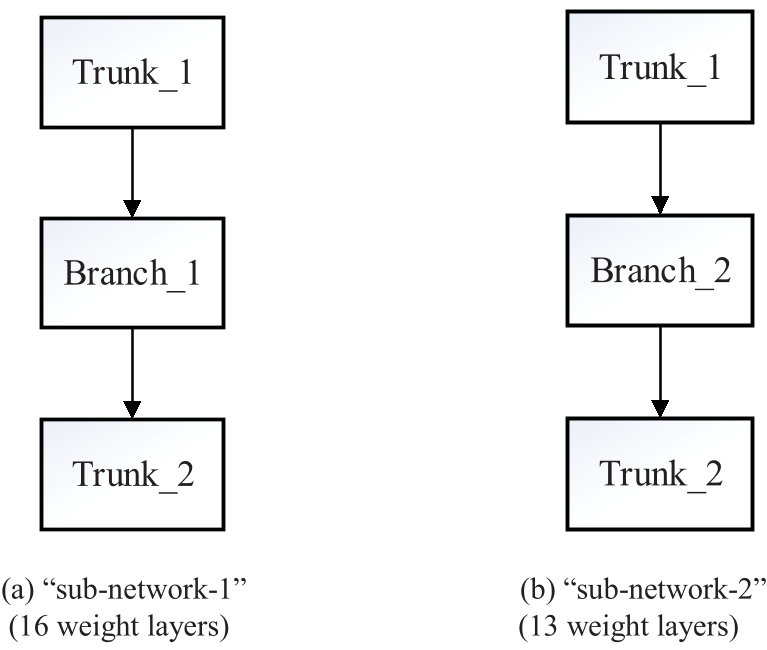 Fig 1: The proposed DCNN architecture showing the Trunk and Branch structure.
2. The Training Pipeline & Transfer Learning
The authors didn't start from scratch. They utilized a VGG-16 model pre-trained on 2 million images for face recognition. This provides a "head start," as the filters are already tuned to recognize facial landmarks. The pipeline involves fine-tuning the sub-networks separately before merging them into the final DCNN.
3. Preprocessing: The "Seetaface" Advantage
A significant portion of the performance boost comes from meticulous preprocessing. By using Seetaface for detection and alignment, the model ensures that facial landmarks (eyes, nose, mouth) are always in predefined positions. Expanding the face crop by 20% was also found to be a key trick for preserving peripheral facial information.
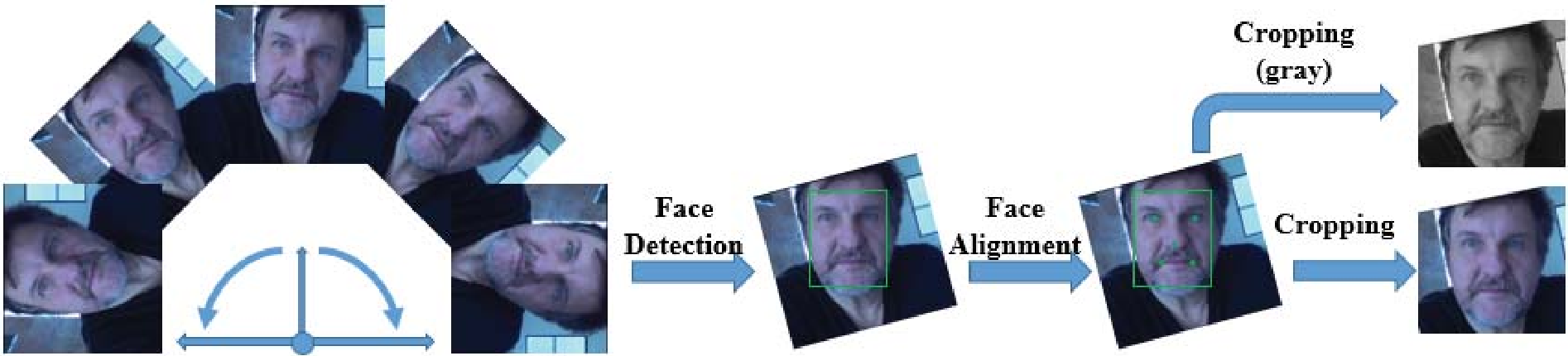 Fig 2: The step-by-step pipeline from raw image to aligned 224x224 input.
Experimental Excellence
The results show a clear hierarchy of improvement. Ablation studies (Table I) reveal that moving from a standard sub-network to the proposed DCNN increased accuracy, but the combination of Pre-training + Alignment + Data Augmentation pushed the results beyond the 99% mark.
Performance Comparison
Compared to previous SOTA (State-of-the-Art) methods like those using BIF or KCFA, this DCNN consistently outperforms others on every major public benchmark:
- LFW: Increased Asian/Black/White accuracy to 98-99%.
- FERET: Reached 98.8% average accuracy.
- Efficiency: The model runs at ~122 FPS (8.14ms per image), making it viable for live video stream analysis.
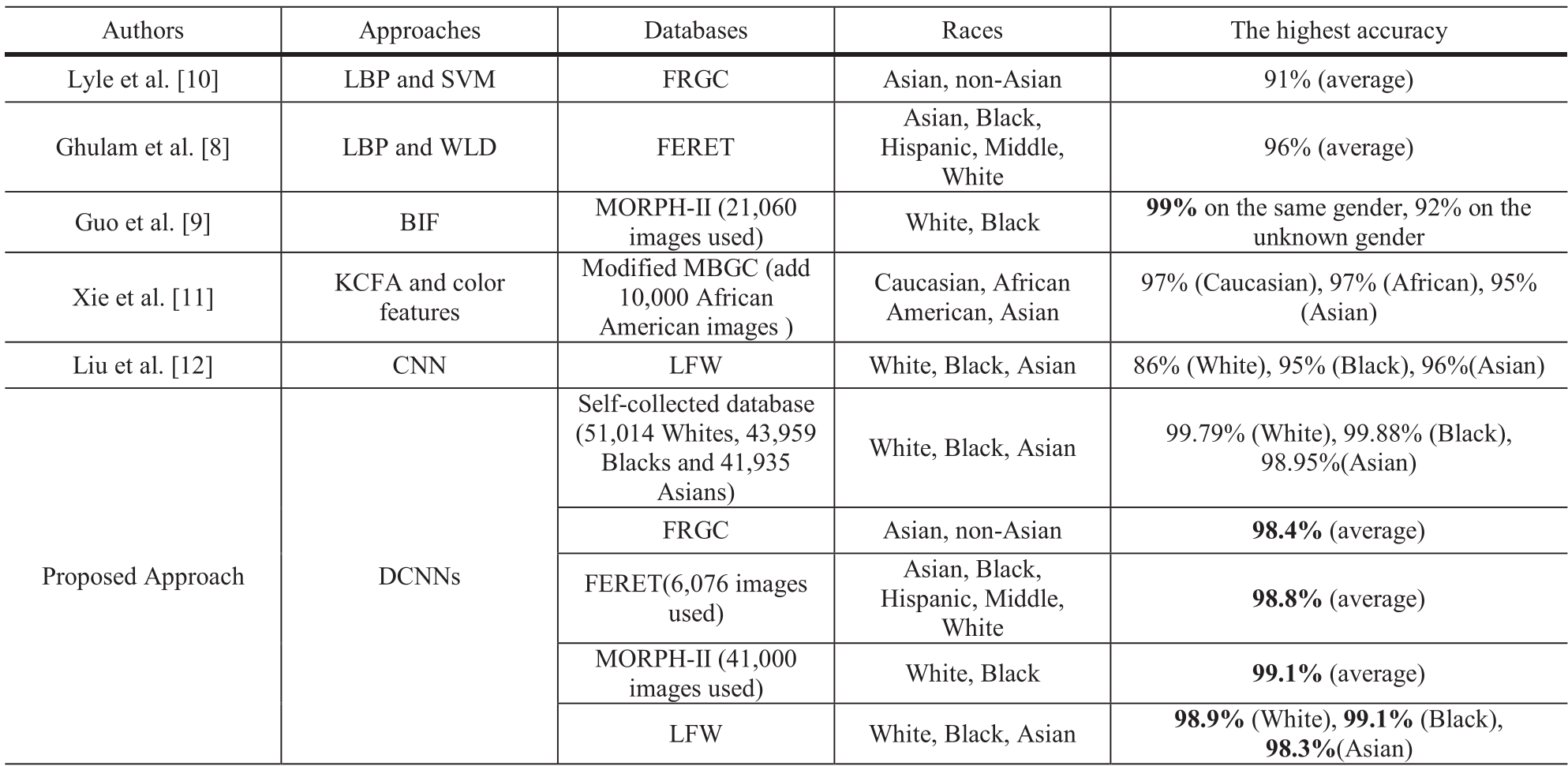 Table 1: Comparison with previous approaches showing systemic superiority across all datasets.
Deep Insight: Is it Just Skin Color?
One of the most fascinating experiments involved grayscale preprocessing. Humans often rely heavily on skin tone for race perception. However, the authors found that training on grayscale images only dropped accuracy by 0.1% (99.6% down to 99.5%). This proves that the DCNN is learning complex geometric and structural features rather than just performing a simple "color check." This provides the model with incredible robustness against poor lighting (e.g., night-time surveillance).
Critical Analysis & Conclusion
Takeaway
The success of this work lies in the synergy between specialized architecture (branching) and high-quality data engineering (balanced datasets and alignment). It moves race classification from a "secondary attribute" to a highly reliable biometric tool.
Limitations & Future Work
- Diversity: While the dataset is large, it primarily focuses on White, Black, and Asian categories. Future work should expand to more granular ethnicities (e.g., Hispanic, Middle Eastern, etc.) to avoid over-simplification.
- Extreme Occlusion: The paper notes that robustness against heavy occlusion (masks, sunglasses) and extreme lighting is the next frontier.
In conclusion, Beihang University's approach demonstrates that with proper multi-scale feature fusion, deep learning can achieve nearly flawless performance in race classification, providing a robust foundation for more complex identity verification systems.