
The Convergent Path to 5G: How LTE and Wi-Fi Are Merging
The Race to 5G Era; LTE and Wi-Fi
2018-01-01
Summary
Problem
Method
Results
Takeaways
Abstract
This comprehensive survey explores the evolution of LTE and Wi-Fi standards toward the 5G era, focusing on PHY and MAC layer advancements. It highlights how 3GPP and IEEE 802.11 technologies are converging into a unified system to meet 5G's enhanced Mobile Broadband (eMBB), massive Machine Type Communications (mMTC), and Ultra-Reliable Low Latency Communications (URLLC) requirements.
## Executive Summary
**TL;DR**: The transition to 5G represents a fundamental shift from isolated wireless protocols to a unified, multi-layered ecosystem. This paper provides a deep dive into the "Race to 5G," detailing how 3GPP (LTE/NR) and IEEE (802.11) are adopting each other's strengths—such as LTE using unlicensed bands and Wi-Fi adopting OFDMA—to deliver gigabit speeds and support the Internet of Things (IoT).
**Background**: Positioned as a definitive academic roadmap, this work situates 5G as the first "network of networks," addressing the triad of eMBB, mMTC, and URLLC.
## Problem & Motivation: Beyond the Limits of 4G
Legacy 4G systems were primarily optimized for Human-Type Communications (HTC)—high-bandwidth video and voice. However, the rise of the "Industrial Internet" and autonomous systems introduced a two-pronged crisis:
1. **The Spectrum Crunch**: Below 6 GHz, bands are overcrowded, leading to inter-cell interference.
2. **The Connectivity Paradox**: Massive IoT devices send tiny data packets, yet the signaling overhead of traditional LTE/Wi-Fi consumes more energy and bandwidth than the data itself.
The research intuition here is that single-standard dominance is over. The "Race" is now about which technology can best adapt to the widest range of frequencies (from sub-1 GHz to 100 GHz).
## Methodology: The Architecture of Next-Gen RAN
### 1. Harnessing mmWave through Beamforming
To combat the severe atmospheric attenuation of mmWave (60 GHz), 5G NR and 802.11ay utilize concentrated directional beams. The paper identifies **Hybrid Beamforming** as the industry's "sweet spot," balancing the high performance of Digital Precoding with the low power consumption of Analogue Phase Shifters.
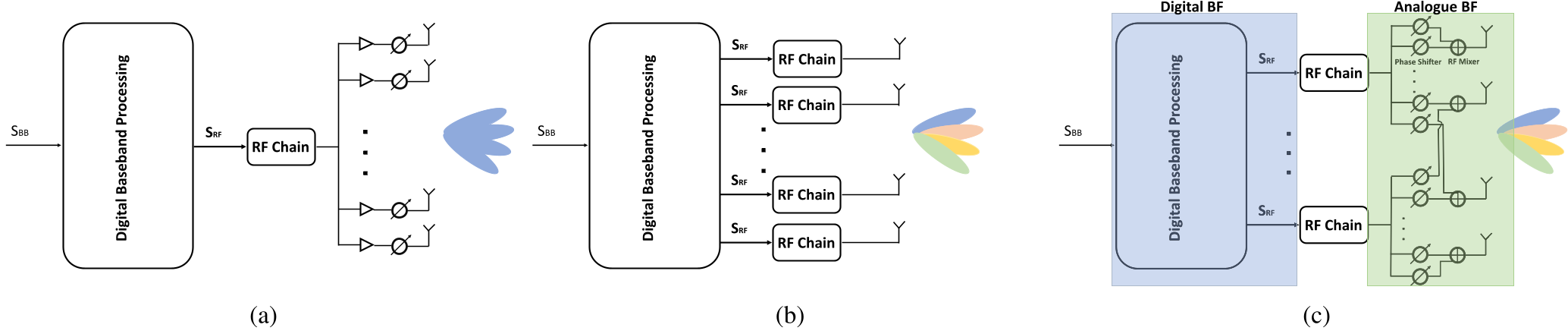
*Figure 1: Comparison of Analogue, Digital, and Hybrid Beamforming.*
### 2. Wi-Fi 6: The "LTE-ification" of WLAN
The most significant evolution in IEEE 802.11ax (Wi-Fi 6) is the shift from asynchronous CSMA/CA to **OFDMA (Orthogonal Frequency Division Multiple Access)**. By dividing a 20MHz channel into Resource Units (RUs), Wi-Fi can now serve multiple users simultaneously, a trick borrowed from the cellular playbook to solve the "hidden node" problem in dense environments.
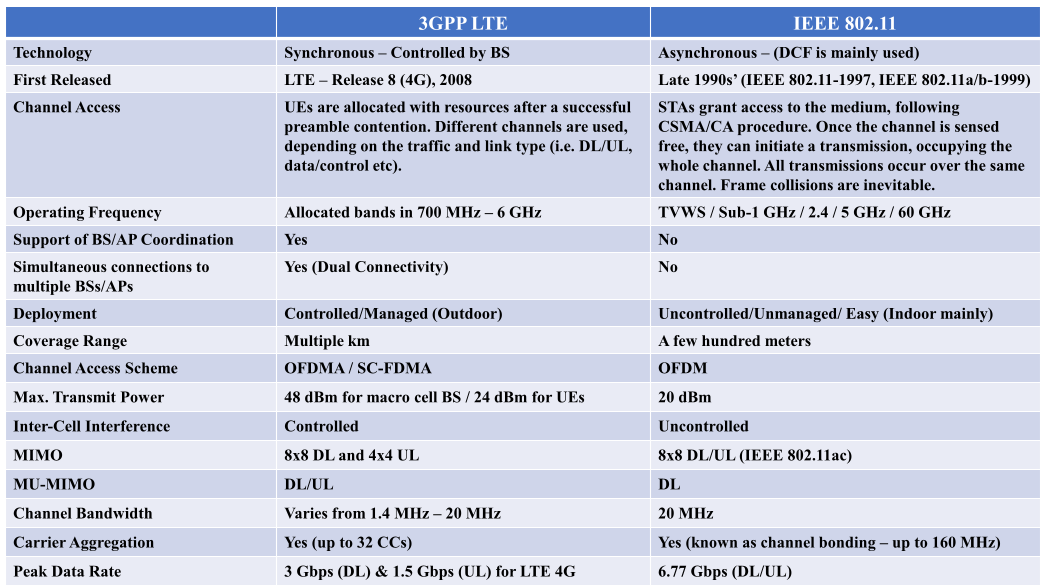
*Table 1: The core technical divergence and convergence between 3GPP and IEEE.*
## Experiments & Results: Quantitative Leaps
The paper highlights crucial SOTA performance benchmarks:
* **Spectral Efficiency**: 5G NR targets a DL efficiency of 30 bit/s/Hz, powered by Massive MIMO.
* **Latency**: 802.11ax and 5G NR focus on the MAC layer to reduce TTI (Transmission Time Interval) and contention windows, aiming for the "Tactile Internet" threshold of 1ms.
* **M2M Dominance**: NB-IoT extends battery life to over 10 years by utilizing deep sleep modes (eDRX) and infrequent tracking updates, outperforming standard LTE-M in rural/deep-indoor coverage.
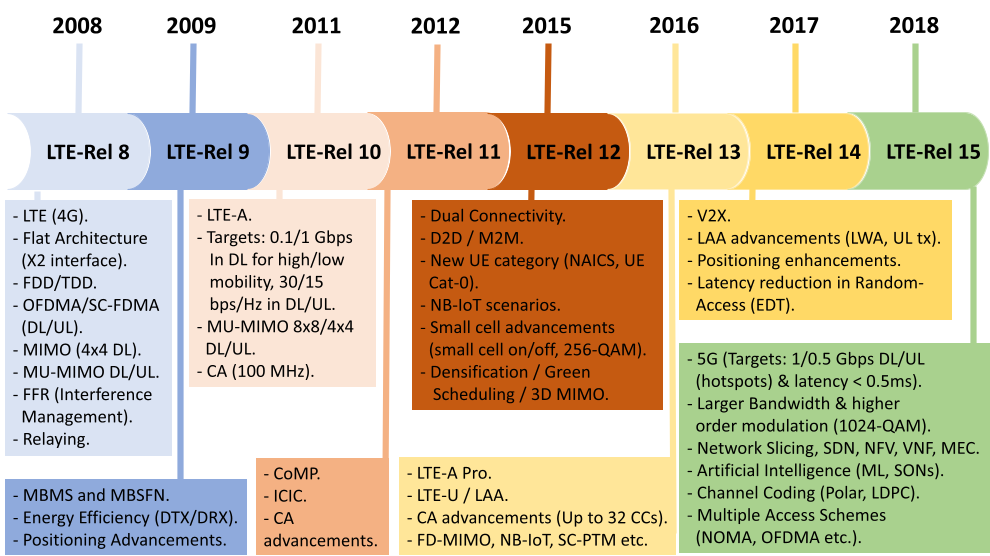
*Figure 2: The trajectory of 3GPP Releases from 4G (Rel-8) to the foundation of 5G (Rel-15).*
## Critical Analysis & Conclusion
**Takeaway**: The "Race to 5G" is not a zero-sum game between LTE and Wi-Fi. Instead, we see a **technological convergence**. Wi-Fi is becoming more "scheduled" (OFDMA), and LTE is becoming more "flexible" (LAA/Unlicensed Access).
**Limitations**: The primary challenge remains **Inter-RAT Synchronization**. Aggregating traffic at the PDCP or RRC layers avoids timing issues but increases latency. Aggregating at the PHY layer is the "Holy Grail" for performance but remains prohibitively complex due to the different clocking and frame structures of LTE and Wi-Fi.
**Future Outlook**: The authors predict that **Machine Learning** will be the next frontier for SON (Self-Organizing Networks), proactively managing handovers between mmWave and sub-6GHz bands before the signal drops, ensuring the "perception of unlimited bandwidth."