
RAIMA: Reimagining Social Matching through Adaptive Egocentric Networks
Relational Attribute Integrated Matching Analysis (RAIMA): A Framework for the Design of Self-Adaptive Egocentric Social Networks
This paper introduces RAIMA (Relational Attribute Integrated Matching Analysis), a modular framework for designing self-adaptive egocentric social networks in pervasive computing environments. It features a linear, multi-criteria matching algorithm and a spatial visualization engine to facilitate spontaneous mobile social interactions.
TL;DR
RAIMA (Relational Attribute Integrated Matching Analysis) is a middleware framework designed to bring people together in physical spaces using mobile ad-hoc networks. Unlike static apps, RAIMA adapts its matching logic in real-time based on the local context—shifting its priorities from "hobbies" at a club to "research interests" at a conference—while visualizing social proximity through intuitive egocentric graphs.
Context is King: The Motivation
Why does a matching algorithm that works for a dating app fail at a business networking event? The core issue is Social Context. Most existing systems define their "Matching Rules" during the design phase. If the environment changes, the system becomes rigid and irrelevant.
The authors argue that human attraction and professional synergy are multicriteria and relative. We don't always need an "exact match" (which Stable Marriage Algorithms prioritize); we need to know who is closest to our current needs.
Methodology: The RAIMA Engine
The heart of the RAIMA framework is the calculation of Conceptual Distance.
1. The Mathematical Intuition
The system maps users into a multi-dimensional space. By multiplying a Weight Matrix (W)—which defines the importance of attributes like Age, Gender, or Expertise—with a Profile Matrix (P), the system generates a linear score representing how "close" two people are.
2. Runtime Adaptation via Templates
RAIMA uses XML-based templates that allow event organizers to inject new rules into the system at run-time. A Bluetooth beacon at a conference can broadcast a template that tells every mobile device: "In this room, prioritise 'Research Interest' with a weight of 75%."
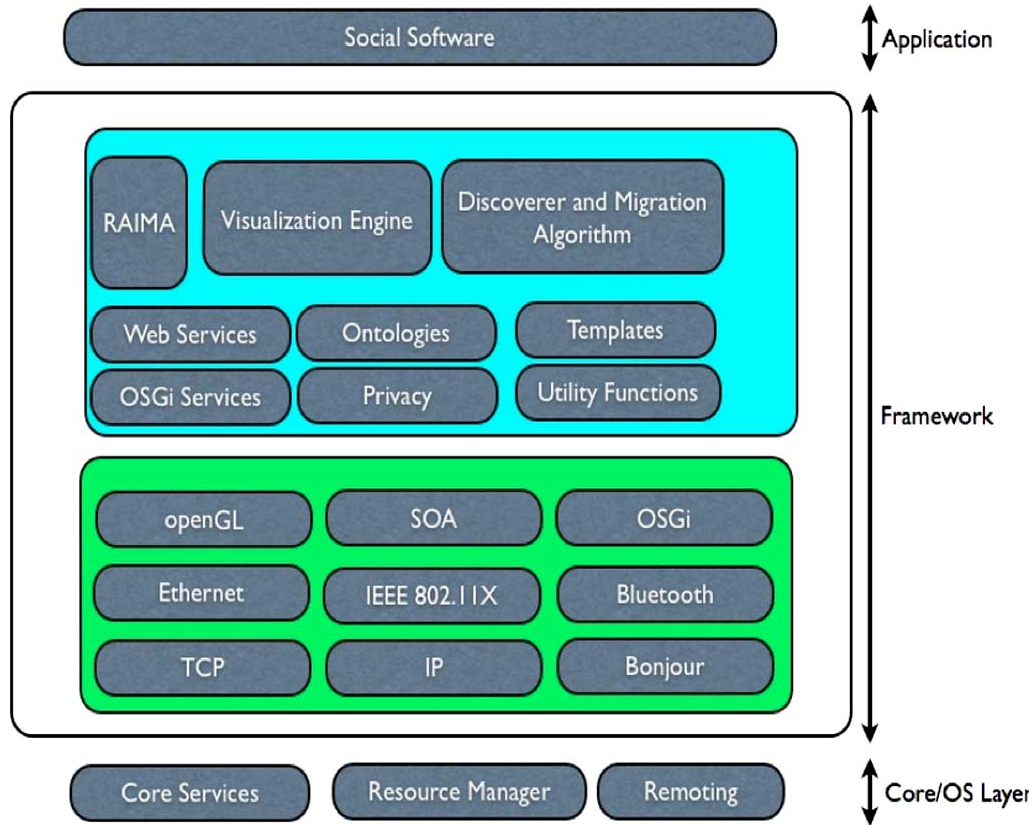 Fig 1: The modular structure of the RAIMA algorithm, separating the matching logic from context templates.
Visualizing Social Space
Instead of boring text lists, RAIMA uses Egocentric Social Graphs. The user is always at the center (the "Ego"), and surrounding nodes are placed at distances proportional to their Conceptual Distance.
- Short Edge: High similarity.
- Long Edge: Low similarity.
This spatial representation protects privacy; it shows you that you are similar to someone without immediately revealing why or exposing their raw data until a trust level is established.
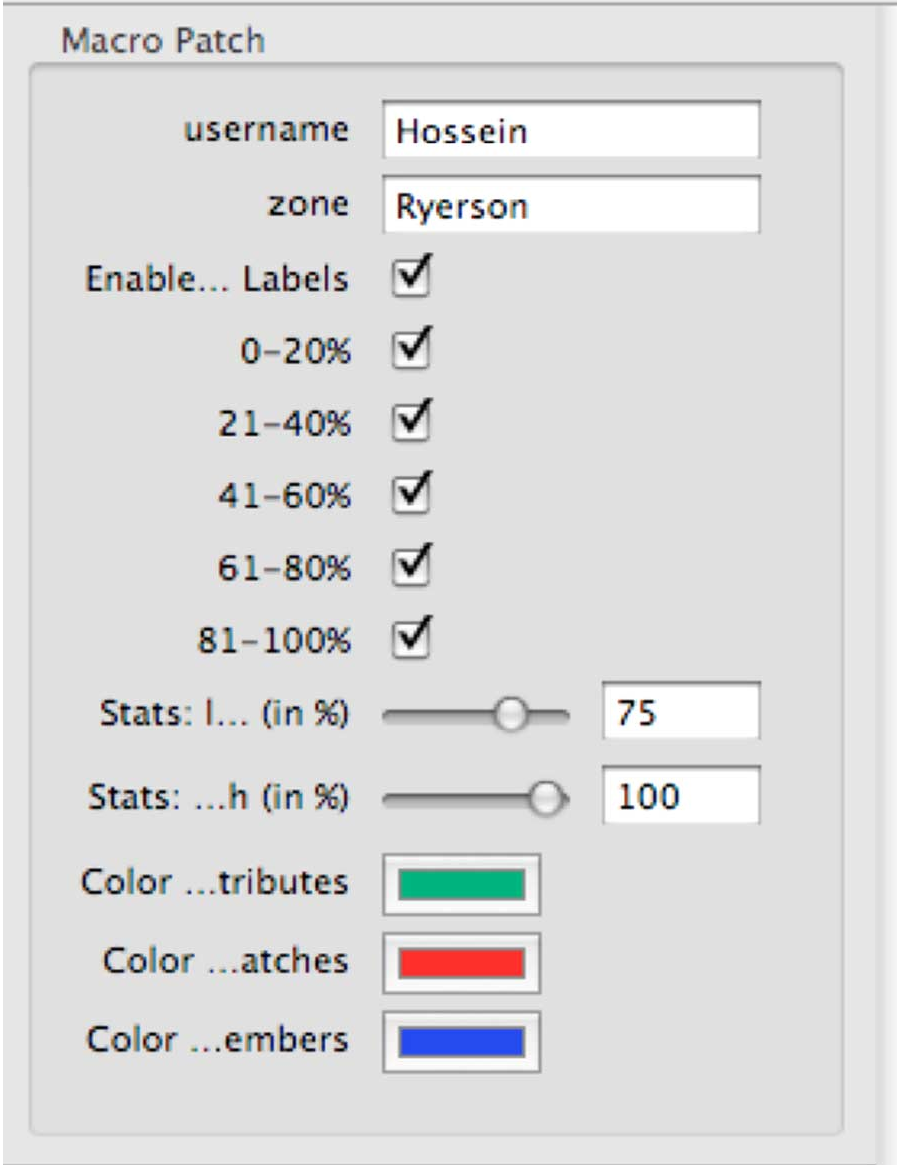 Fig 2: An egocentric graph as seen on a mobile device, showing relative social distances.
Performance: RAIMA vs. SMA
The researchers compared RAIMA against the Stable Marriage Algorithm (SMA). In scenarios with high attribute counts (e.g., 100 attributes per profile), SMA’s success rate plummeted because finding an "exact" stable match becomes statistically nearly impossible in small groups. RAIMA, by contrast, maintained a high probability of finding a "good match" because it looks for relative thresholds.
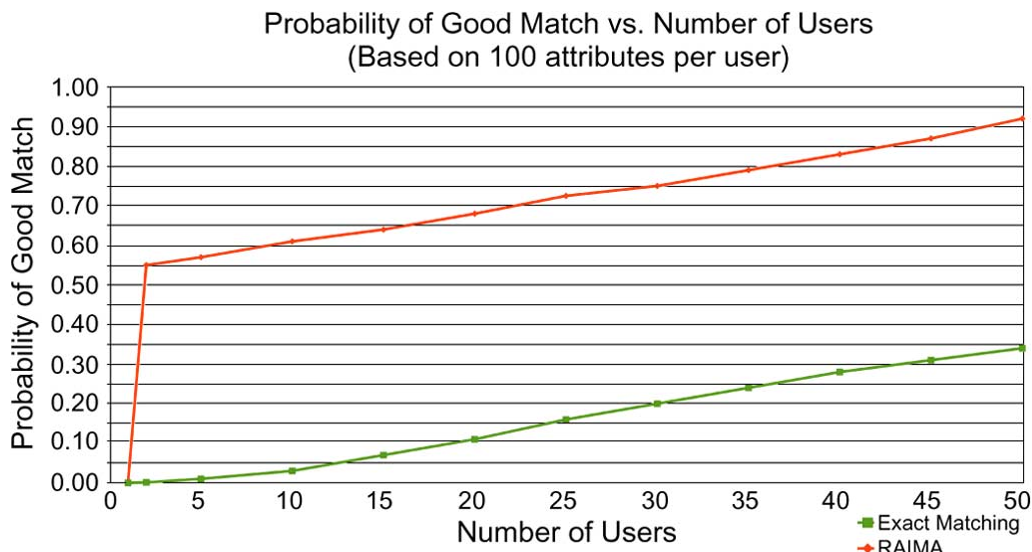 Fig 3: Performance comparison showing RAIMA outperforming SMA as profile complexity grows.
Critical Insight & Future Outlook
RAIMA’s biggest strength is its Inductive Bias toward flexibility. In a world of volatile mobile connections (Bluetooth/Wi-Fi ad-hoc), waiting for a perfect global match is a recipe for failure. RAIMA’s linear model is "cheap" enough for 2006-2010 era mobile hardware while being sophisticated enough to handle complex social nuances.
Limitations: The current model relies on linear scoring. While fast, it doesn't handle the "uncertainty" or "missing data" of social profiles as well as a latent space model (like modern Embeddings) or a Fuzzy-Bayesian approach might.
The Takeaway: RAIMA proves that for pervasive social tools, the user interface should be spatial, and the backend must be context-pluggable. It is a precursor to how we think about modern proximity-based networking.