
Ranking Educational Videos: Why "Social Presence" Outperforms Simple Keywords
Ranking educational videos: The impact of social presence
This paper introduces a hybrid ranking model for educational videos that combines traditional content-based cosine similarity with a "Social Weight" parameter derived from YouTube user feedback. By integrating text transcripts with user sentiment (likes/dislikes), the method significantly improves ranking alignment with human preferences compared to pure text-based retrieval.
TL;DR
Searching for quality educational content is often a hit-or-miss experience. This paper bridges the gap between what a video says (content) and how much users trust it (social presence). By augmenting standard Cosine Similarity with a "Social Weight" parameter (), the authors created a ranking system that aligns 8.11% more closely with real human preferences than traditional keyword searches.
Context & Motivation: The "View Count" Trap
In the realm of educational videos, not all relevance is created equal. A video might mention "Machine Learning" 100 times but be pedagogically useless. Previous systems failed because they either focused purely on text (TF-IDF) or relied on raw view counts.
The authors argue that view counts are a noisy metric—they don't tell you if the viewer learned anything. Instead, they pivot to "Social Presence"—the explicit, registered actions of "Likes" and "Dislikes," which represent a higher-intent qualitative judgment.
Methodology: Fusing Math with Sentiment
The researchers developed a two-step approach to re-rank YouTube lectures:
1. The Content Foundation
First, they convert video transcripts into high-dimensional vectors using TF-IDF. Similarity () is calculated via Cosine Similarity: This provides the baseline "relevance" based on the spoken words in the lecture.
2. The Social Catalyst
To refine this, they introduce the Social Weight (): The final Social-Content Similarity () is: This formula ensures that social weight acts as a "bonus." If a video has perfect social feedback (), its score doubles. If it has no feedback or only dislikes (), it retains its original content score but gains no advantage.
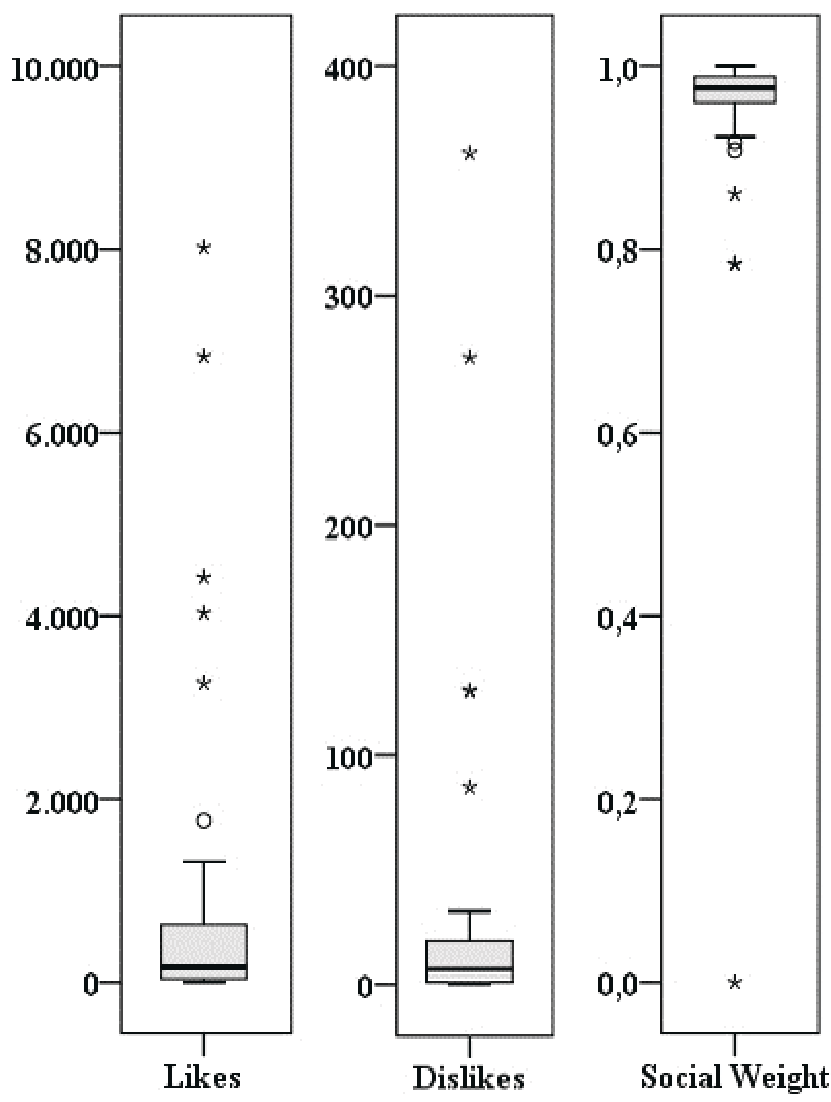 Fig 1: Distribution showing that while likes generally outweigh dislikes in educational content, social weight helps distinguish the "top tier" videos.
Real-World Experiments
The authors tested this on 1,116 English-transcribed YouTube videos across 40 scientific keywords.
- The Stability of Relevance: 43% of rankings remained unchanged, while 57% shifted.
- Gradual Improvement: Most shifts (81.7%) were within 1-4 positions. This is crucial—it means the social weight "nudges" better videos to the top rather than causing chaotic re-ordering.
- The "Floor" Effect: A video with low relevance cannot be "saved" by high social weight, but a highly relevant video can be significantly penalized by high dislikes.
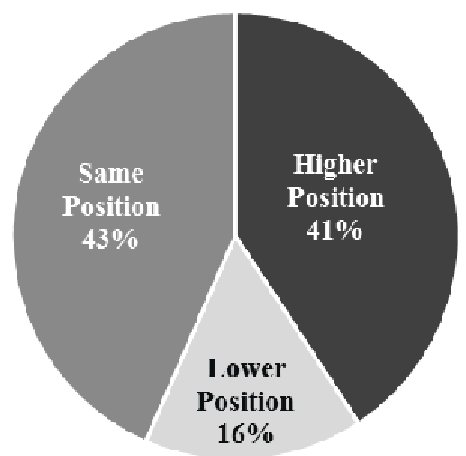 Fig 2: Most videos saw a positive "boost" in ranking, indicating that social signals generally identify high-quality educational content.
Human Evaluation: The Ultimate Litmus Test
Does this actually matter to learners? The authors conducted a user study where 15 rankers evaluated "Database" lectures.
Using Mean Average Precision (MAP), they found:
- Content-Only Prediction: 19.23% accuracy.
- Social-Content Prediction: 27.39% accuracy.
Qualitative interviews revealed a fascinating insight: Users are "lazy" with dislikes but "generous" with likes. People stop watching bad videos without disliking them, but actively hit the "like" button when they find a direct, well-spoken, and simple explanation. This justifies the authors' decision to focus on the ratio of likes rather than raw volume.
Critical Insights & Conclusion
While this paper was written in a specific era of YouTube's API (v2), its core insight remains timeless for the AI age: Human feedback (RLHF-style) is the strongest filter for quality.
Limitations: The model heavily relies on the availability of transcripts. In the current era of Auto-ASR (Automatic Speech Recognition), this is less of a hurdle, but noise in ASR could impact the cosine similarity accuracy.
Future Outlook: Integrating advanced NLP to analyze comment sentiment instead of just "Like/Dislike" buttons would likely bridge the MAP gap even further. As we move toward AI-curated education, blending vector-space semantics with social consensus is the only way to ensure the most "useful"—not just the most "relevant"—content rises to the top.