
Rapid ML Deployment: Scaling Data Science Education with Super-saturated Clouds
Rapid Deployment for Machine Learning in the Educational Cloud
The paper introduces a "Super-saturated" Educational Cloud framework designed for rapid deployment of machine learning environments like Apache Mahout and Hadoop. By utilizing a "Image-based" deployment method, the system enables students to launch pre-configured data science labs significantly faster than traditional virtual machine setups.
TL;DR
To address the bottleneck of setting up complex machine learning environments (Hadoop/Mahout) within a 90-minute class, this paper proposes a Super-saturated Educational Cloud. By over-allocating logical resources and using pre-configured Image-based deployment, the authors reduced setup times from nearly 1.7 hours to just 2.1 minutes, enabling efficient, hands-on data science education.
The "Setup Hell" in Machine Learning Education
In the Big Data era, students must master tools like Apache Mahout and Hadoop. However, the barrier to entry isn't just the math—it's the infrastructure. A standard environment requires:
- JDK and Maven installation.
- Hadoop configuration (HDFS, host mapping).
- Mahout path configuration.
Using traditional Virtual Machine Monitors (VMM) like VirtualBox, students often spend the entire class period troubleshooting installation scripts. Furthermore, universities struggle with the cost of providing high-performance PCs for every student.
Theoretical Insight: Why "Super-saturation" Works
The authors propose a "Lightweight Cloud" based on Super-saturation.
- Concept: Allocation of logical resources (vCores) far exceeding physical resources.
- Educational Logic: Unlike business production environments, student tasks (like small Mahout jobs) involve frequent idle time and small code bursts.
- Value: This allows the university to run 10x more instances on the same hardware, slashing per-student costs by 90%.
Methodology: Stack vs. Image Deployment
The paper evaluates two primary ways to deliver these environments:
- The Stack Method: Uses an install script to layer applications (Hadoop, Mahout) onto a fresh Linux instance at runtime. This offers flexibility (you can mix stacks) but is slower.
- The Image Method: Specialized virtual machine snapshots where the entire stack is pre-baked. This is the fastest route but lacks the modular flexibility of stacks.
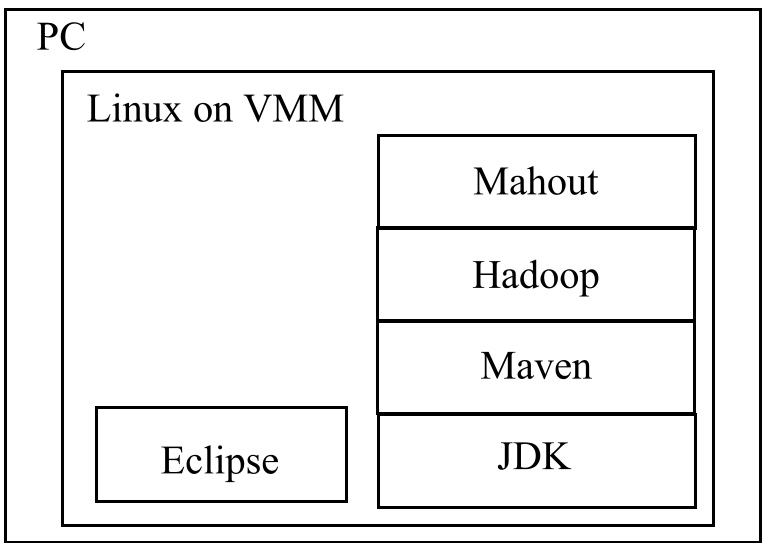 Figure 1: The standalone structure required for a functional Mahout learning environment.
Experiments & Quantifiable Gains
The authors compared their Cloud methods against the conventional VMM (VirtualBox) approach. The results are stark:
| Metric | VMM (Traditional) | Cloud (Stack) | Cloud (Image) |
|---|---|---|---|
| Initial Setup Time | 6,116s (~102 min) | 303s | 136s |
| Subsequent Boot | 242s | 303s | 136s |
The "Image Method" is the clear winner for classroom settings. By developing a specialized configuration script, the authors even optimized the Hadoop IP re-mapping phase, reducing it from 74 seconds to a mere 26 seconds.
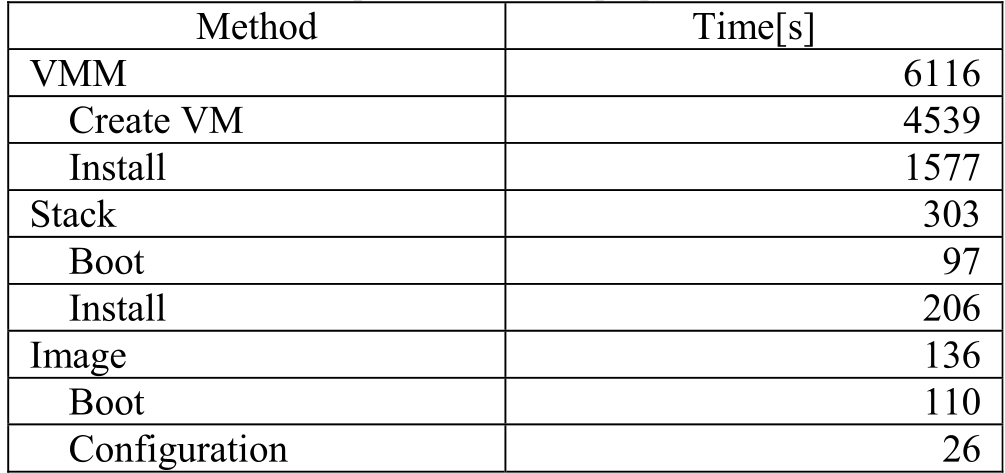 Table 1: Drastic reduction in preparation time using the proposed Cloud Image approach.
Critical Insight & Conclusion
The primary takeaway is that infrastructure is the curriculum when it comes to Big Data. If the environment takes 90 minutes to build, the learning happens elsewhere.
Limitations:
- Resource Contention: In a super-saturated environment, if all 100 students run a heavy Mahout clustering job simultaneously, the "lightweight" nature of the cloud will likely lead to a performance collapse.
- Stale Images: As toolsets like JDK or Mahout update, the Image Method requires manual maintenance by IT staff.
Future Outlook: The authors aim to expand this "Big Data as a Service" by adding Jubatus (real-time processing) and Hive. This research serves as a precursor to modern containerized labs (like JupyterHub on Kubernetes), proving that density and rapid deployment are more vital for education than raw peak performance.