
Engineering the Podium: Rapid Feedback Systems for Elite Sports Training
13341_Rapid Feedback Systems for Elite Sports Training.
This paper presents a suite of "Rapid Feedback Systems" tailored for elite training in rowing, table tennis, and biathlon. By integrating non-invasive sensors (force plates, accelerometers, and computer vision) with mobile computing, the authors achieved real-time performance visualization that directly aids technical optimization for Olympic-level athletes.
TL;DR
In elite sports, the difference between gold and silver is measured in milliseconds and millimeters. This paper details the development of mobile, non-invasive feedback systems for rowing, table tennis, and biathlon. By moving biomechanical analysis out of the lab and into the training field, researchers at the University of Vienna have provided athletes with immediate, objective data to refine their movement patterns in real-time.
Background Positioning: From Lab to Lake
While sports science has long used biomechanical diagnosis, it frequently suffers from "Laboratory Bias"—where the gear is too heavy or the environment too artificial to reflect real competition. This work positions itself as a practical bridge, utilizing mobile DAQ (Data Acquisition) cards, wireless telemetry, and smart sensing to fulfill the Müller Design Principles: precise parameters, high specificity, and minimal interference.
The Problem: The "Feedback Gap"
Coaches face a physical gap. In rowing, a coach in a motorboat cannot see the precise force curve of an oar stroke. In table tennis, the naked eye cannot quantify the exact impact interval of a high-speed spin serve. Prior systems often required attaching sensors directly to the athlete's body, which changes the "feel" of the movement—an unacceptable compromise for elite performers.
Methodology: The Core Mechanics
1. Rowing: Dynamics of the Center of Mass
The authors focus on the "bell-shaped" force curve. By placing a Concept II rowing ergometer onto force plates or using localized foot-stretcher sensors, they measure ground reaction forces.
- The Physics: These forces are directly proportional to the acceleration of the rower's center of mass.
- Real-time Output: Rowers view a screen during the stroke, instantly seeing if their movement shifts the curve away from the ideal efficiency profile.
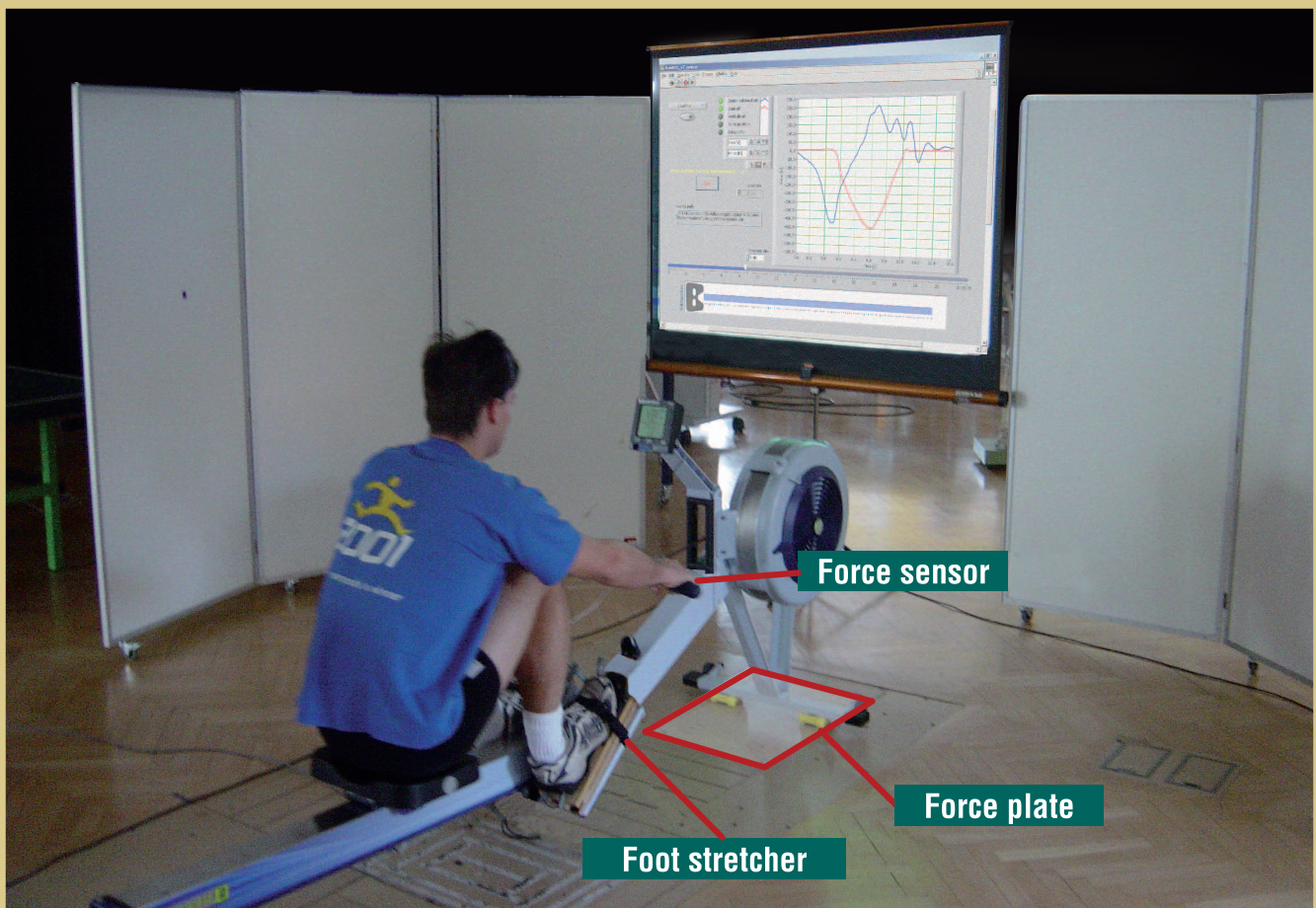 Figure 1: The rowing simulator setup. The rower optimizes the curve shape through visual feedback.
2. Table Tennis: Vibration Triangulation
To track ball impact without high-speed cameras, the team used a clever Acoustic Triangulation method.
- Mechanism: Four accelerometers fixed to the underside of the table detect the vibration wave spreading from the point of impact.
- Precision: By calculating the Time of Arrival (ToA) at each sensor, the system determines the impact point with sub-centimeter accuracy (0.02m) in less than 0.1 seconds.
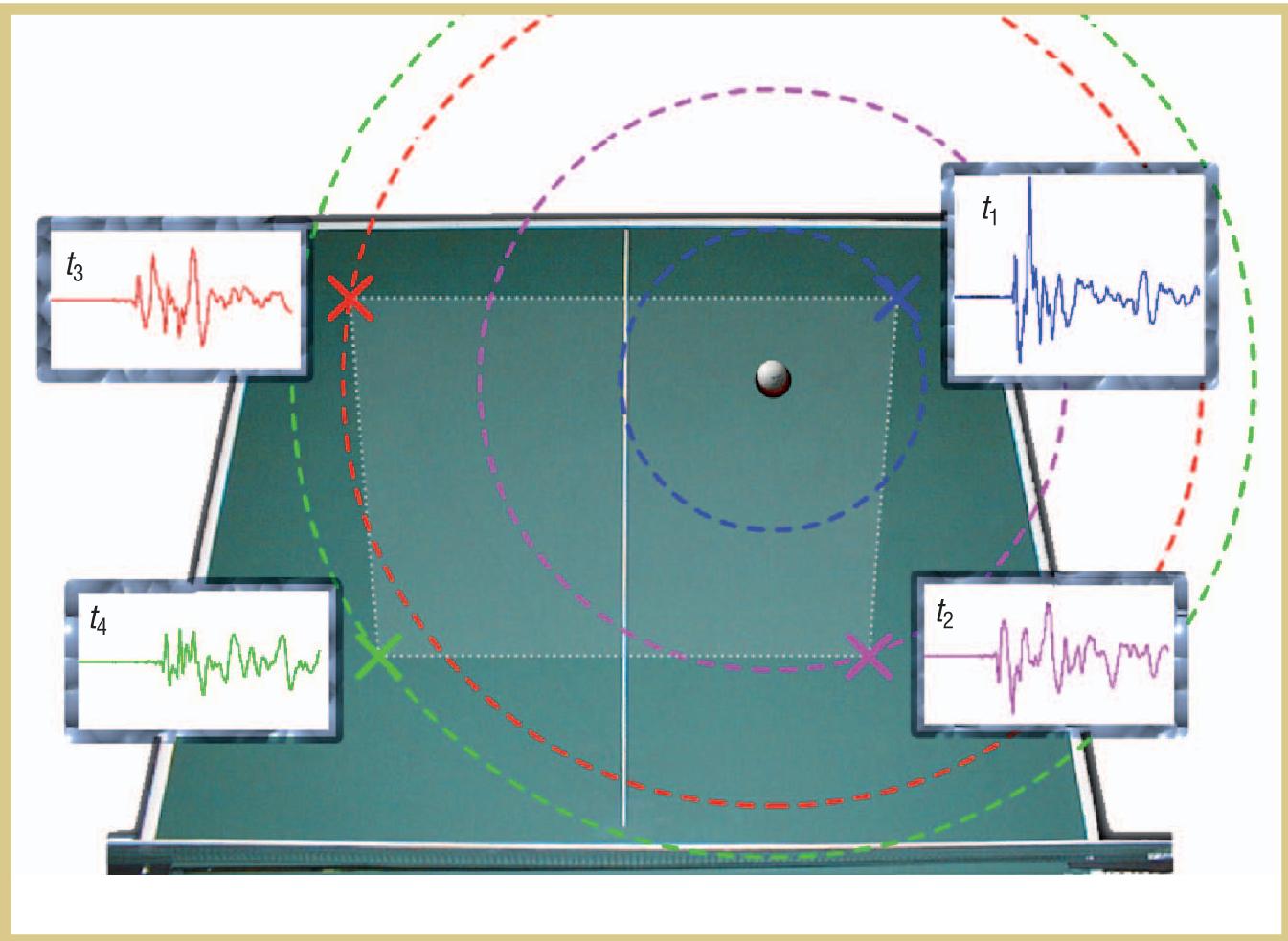 Figure 2: The triangulation method (t1-t4) allows for real-time impact position estimation.
3. Biathlon: Muzzle Tracking
Rifle stability after extreme physical exertion (cross-country skiing) is the biathlon's greatest challenge. The authors deployed a video-based tracking system that reconstructs the muzzle's trajectory in the critical seconds before and after the shot.
Results & Competitive Edge
The impact of these systems was tangible:
- Rowing: The Austrian National Team used the system to prepare for the 2004 Athens Olympics, using the data to objectively select the best crews based on technical synchronicity.
- Table Tennis: The system successfully quantified "spin impact intervals," showing that higher spin leads to shorter intervals, forcing the opponent to react faster.
- Cost Efficiency: By choosing specific sensors over "all-in-one" lab solutions, the cost for a biathlon system dropped to just $400, making it resilient against the accidental damage common in high-intensity training.
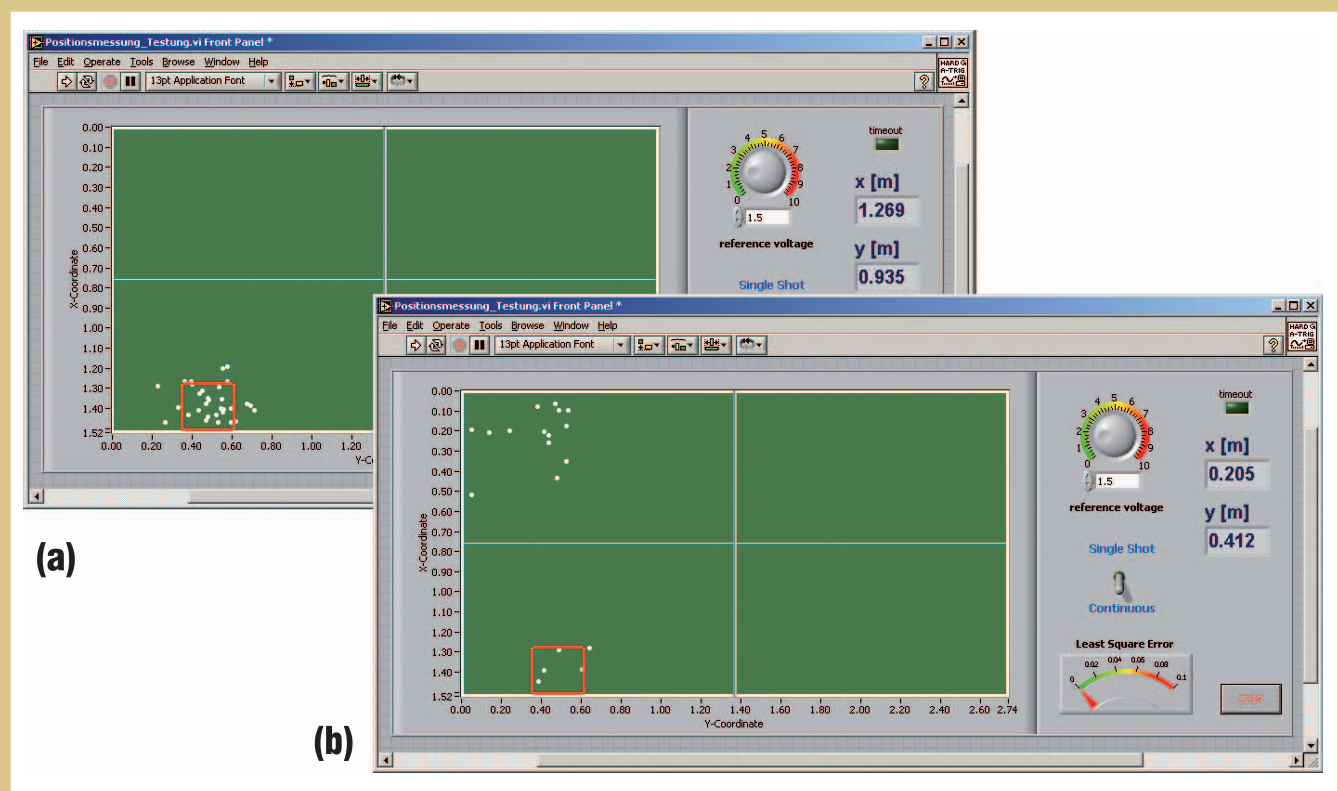 Figure 3: Graphical feedback showing how localized and accurate a player's shots are relative to the target area.
Critical Analysis & Conclusion
Summary (Takeaway)
The brilliance of this work lies not in "new physics," but in pragmatic systems engineering. By prioritizing a "comprehensible GUI" and "zero user intervention" between trials, the researchers ensured that the technology didn't become a burden to the coach.
Limitations
- Environmental Noise: The table tennis system initially struggled with "foot stamping" (a common player habit), which mimicked the acoustic signature of a ball hit.
- Calibration: While the video system for biathlon is cheaper than lasers, it still requires a minute of processing time, which isn't truly instantaneous.
Future Outlook
As we move toward 2026, the logic of this paper—using ambient sensors and mobile processing—paves the way for AR-based (Augmented Reality) coaching, where the "bell curve" of a rowing stroke might be overlaid directly onto a rower's field of vision via smart glasses.