
The Calculus of Privacy: Why We (Don't) Use Facebook Privacy Controls
Rationality-based beliefs affecting individual’s attitude and intention to use privacy controls on Facebook: An empirical investigation
This study investigates the socio-psychological factors influencing Facebook users' decisions to use privacy controls. By integrating the Theory of Planned Behavior (TPB) and Rational Choice Theory (RCT), the authors develop a model to predict usage intention based on a cost-benefit analysis of privacy management.
TL;DR
Is privacy a rational choice or a social reflex? This study breaks down the "Rational Choice" framework applied to Facebook. It finds that our intention to protect our profiles isn't about how tech-savvy we are (Perceived Behavioral Control), but rather a calculated trade-off between the intrinsic benefits of safety and the social costs of being "hidden."
The "Privacy Paradox" in Social Media
We all claim to value privacy, yet we often leave our digital front doors wide open. This paper tackles the "Why." Existing literature has long documented what we share, but it rarely dives into the psychological cost-benefit analysis of the controls themselves. The authors argue that using privacy settings is a voluntary behavior driven by "Rationality-based beliefs"—a mix of perceived safety, potential threats, and the fear of social professional impediment.
Methodology: Bridging TPB and Rational Choice
The researchers pivoted from the standard corporate Information Security Policy (ISP) Compliance Model to a voluntary consumer model. They used a sample of 249 undergraduate students to test a complex web of hypotheses.
The Theoretical Engine
- Theory of Planned Behavior (TPB): Focuses on Attitude, Social Norms, and Control.
- Rational Choice Theory (RCT): Focuses on the "Economic" side—is the benefit of clicking that "Friends Only" button worth the hassle?
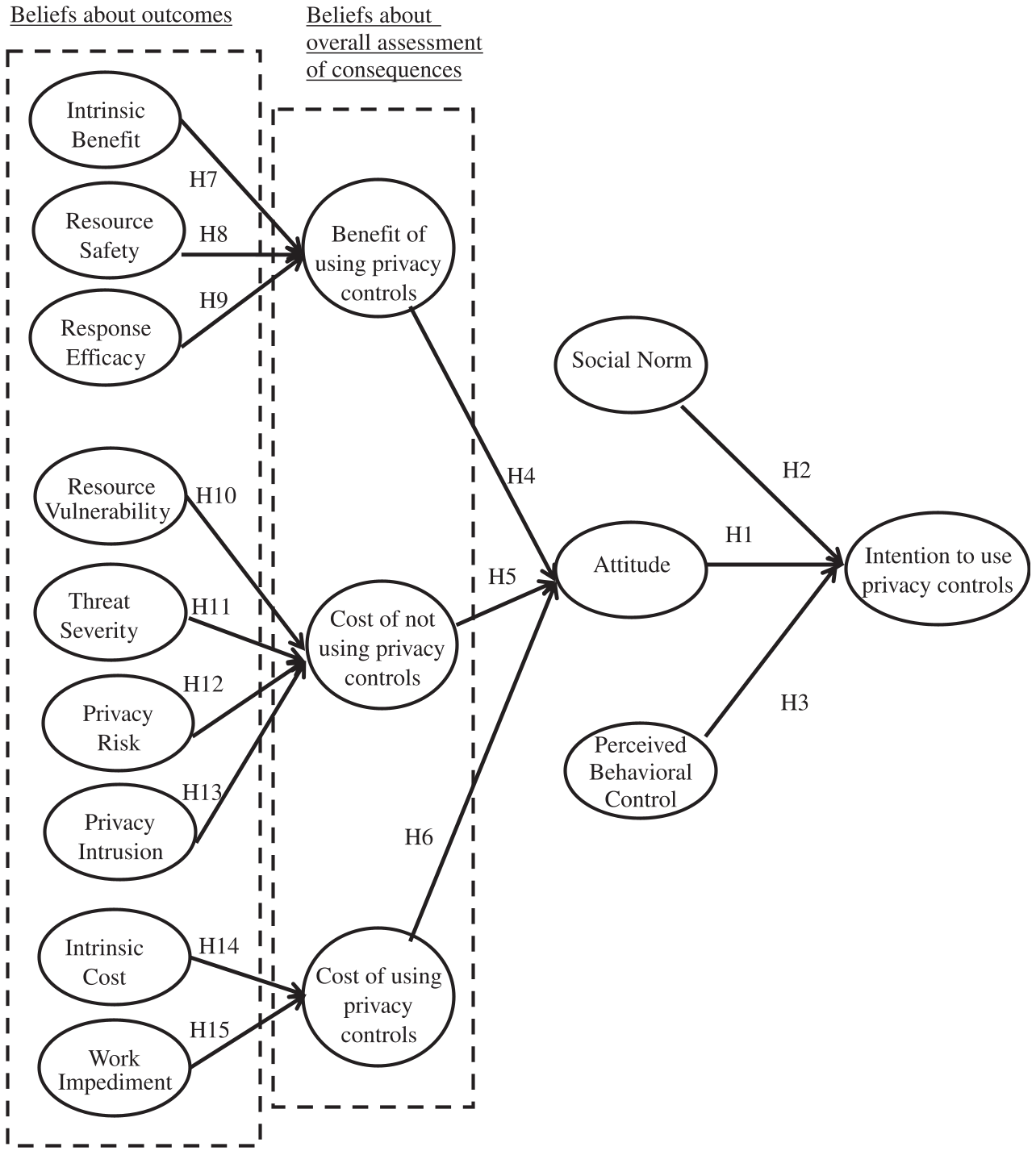
Key Insights: What Actually Drives Us?
1. The Power of Attitude and Social Norms
The study confirmed that if your friends use privacy controls, you are significantly more likely to do so (β = 0.226). In hedonic, social environments like Facebook, "fitting in" extends to how we protect our data.
2. The Non-Significance of "Ease of Use"
Interestingly, Perceived Behavioral Control (how easy it is to use the settings) had no significant impact on intention. This suggests that modern users feel capable of using the tools; they simply choose not to based on other rationalizations.
3. The Drivers of Benefit and Cost
- Resource Safety (β = 0.540): The strongest driver. If users feel the tool truly protects their photos and posts from misuse, they value it.
- Work Impediment: A major deterrent. Users fear that strict privacy settings might hinder their ability to network or find jobs—a crucial insight for the "LinkedIn" generation.
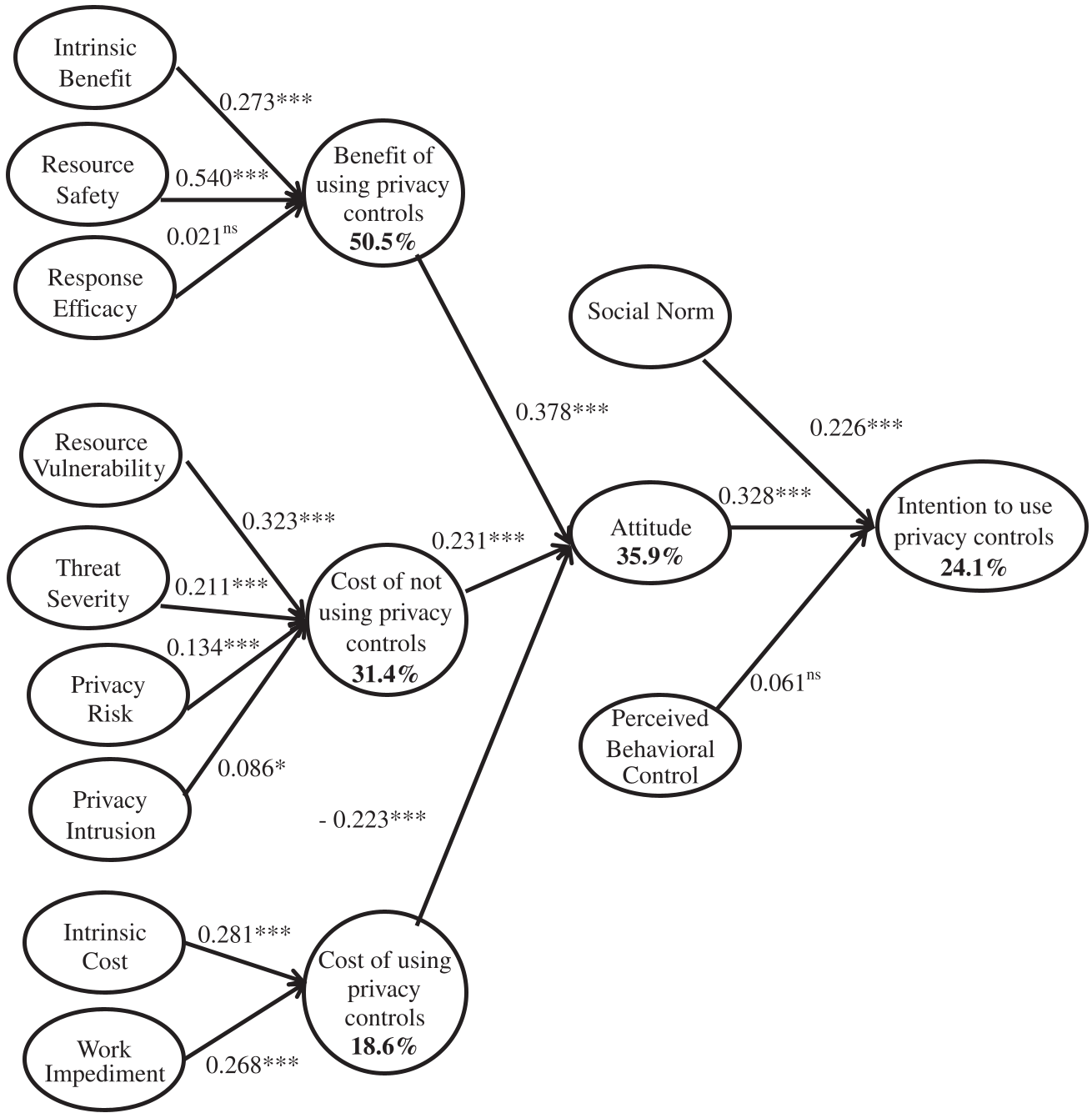
Detailed Findings Table
The following table illustrates the path coefficients and their significance levels, proving that most rationality-based beliefs hold water in predicting user behavior.
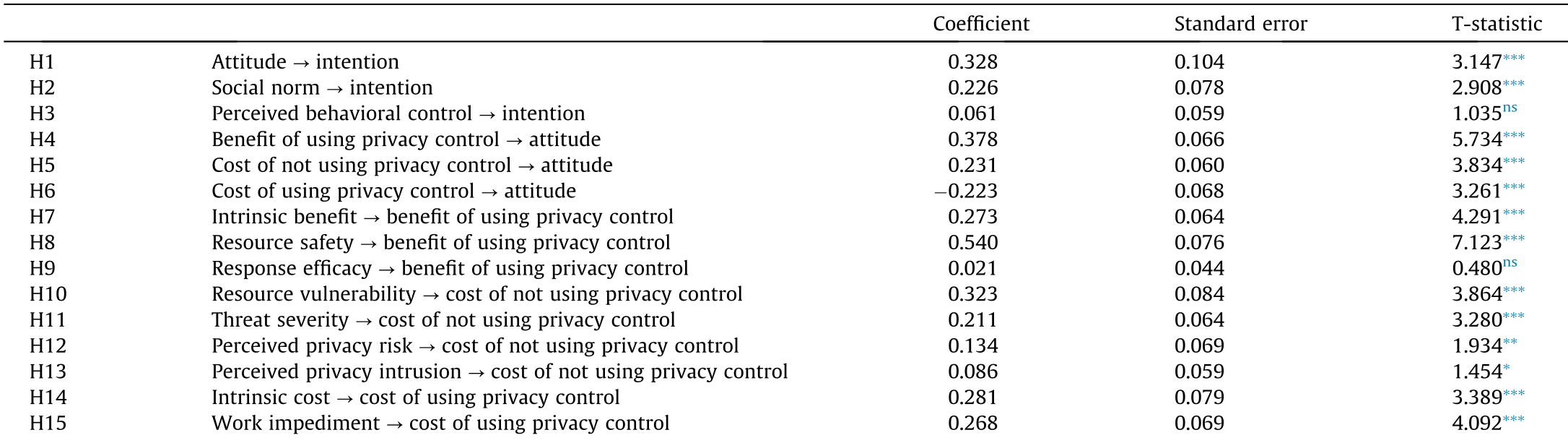
Critical Analysis & Conclusion
This research moves the needle by proving that privacy is a hedonic social behavior, not just a technical one.
Takeaway for Practitioners: If you want users to adopt privacy features, stop making "How-to" guides. Instead:
- Highlight the Danger: Increase the perceived "Cost of Non-use" by illustrating vulnerability and threat severity.
- Socialize Protection: Make privacy "cool" or a standard social norm within the community.
- Minimize "Hidden" Stigma: Address the "Intrinsic Cost"—the feeling that having a private profile means you have "something to hide."
Limitations: The study relies on a student sample (predominantly 18-23 years old). While they are the "power users" of social media, their rationalities regarding "Work Impediment" might differ significantly from established professionals or older generations.
Future Work: As we move into 2026, how do these beliefs change when the "Intruder" isn't just another person, but an AI scraping data for training models? The "Privacy Risk" variable is likely to explode in significance.