
Beyond Writing: Decoding Group-Level Reading Dynamics in Enterprise Blogospheres
Reading behavior on intra-organizational blogging systems: A group-level analysis through the lens of social capital theory
The paper investigates factors influencing continued blog reading behavior within organizations using Social Capital Theory. By analyzing system record data from a large telecommunications company at a group level, it identifies structural, relational, and cognitive social capital as significant drivers of internal knowledge consumption.
TL;DR
In the world of "Enterprise 2.0," we often focus on who is writing, but the real health of a digital community lies in its readers. This study reveals that groups read more when they are socially connected to "superstars" and, interestingly, when they encounter content different from their own. Using Social Capital Theory, the research shifts the focus from individual habits to group-level dynamics.
The "Invisible" Participation: Motivation & Insight
Most managers view corporate blogs as simple information repositories. However, the authors argue that blogging is a dual-structured social practice: blogs create the audience, and the audience enables the blogs. The "pain point" identified here is the lack of understanding regarding the invisible reader. Why do certain workgroups consistently consume the content of others? The researchers suggest the answer lies not in the "what" (content) but in the "who" and "how" (social capital).
Methodology: The Three Pillars of Social Capital
To solve the mystery of reading persistence, the paper breaks down social capital into three rigorous dimensions:
- Structural Capital: Not just how many "friends" a group has (Centrality Owned), but how popular those friends are (Centrality Accessed).
- Relational Capital: The quality of the tie, measured by Reciprocity (do we both comment on each other?) and Continuity (how long have we stayed in touch?).
- Cognitive Capital: Defined by Shared Topics. Borrowing the "Niche Overlap" concept from ecology, the authors measure how much the "knowledge space" of the reader overlaps with the writer.
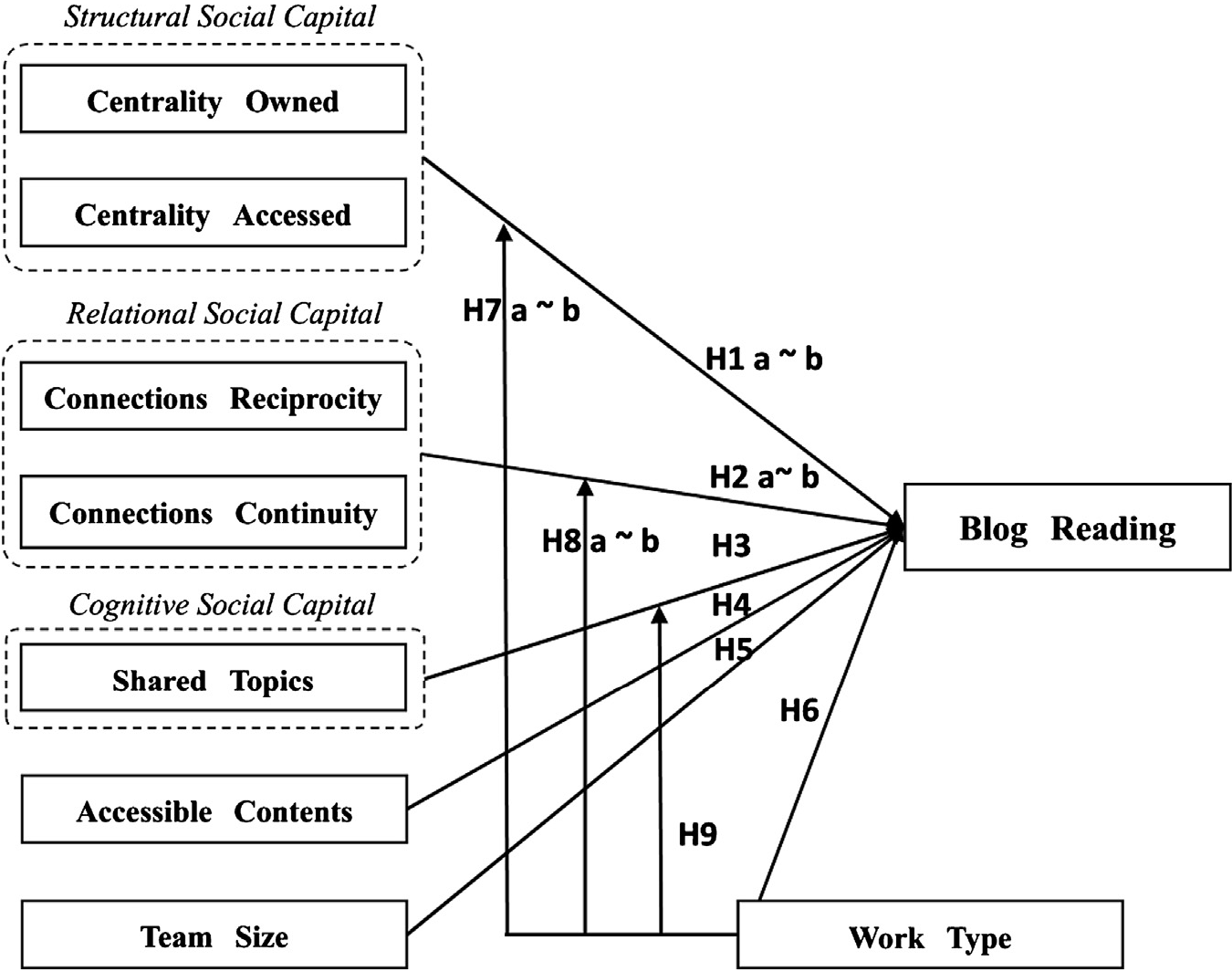 Fig 1: The proposed research model integrating social capital and team characteristics.
The "Variety-Seeking" Paradox
The most striking finding involves Shared Topics. Conventionally, we assume people read what they know. However, the data showed a negative correlation.
- Insight: Employees use internal blogs to escape their "silos." They are variety-seekers. If group A and group B share too much "context," group A finds group B’s blogs redundant. They crave the "Long Tail" of diverse organizational knowledge.
Experimental Results & Team Moderation
The study analyzed 2,693 active workgroups in a telecom giant. The results validated that social capital is a massive predictor of reading volume.
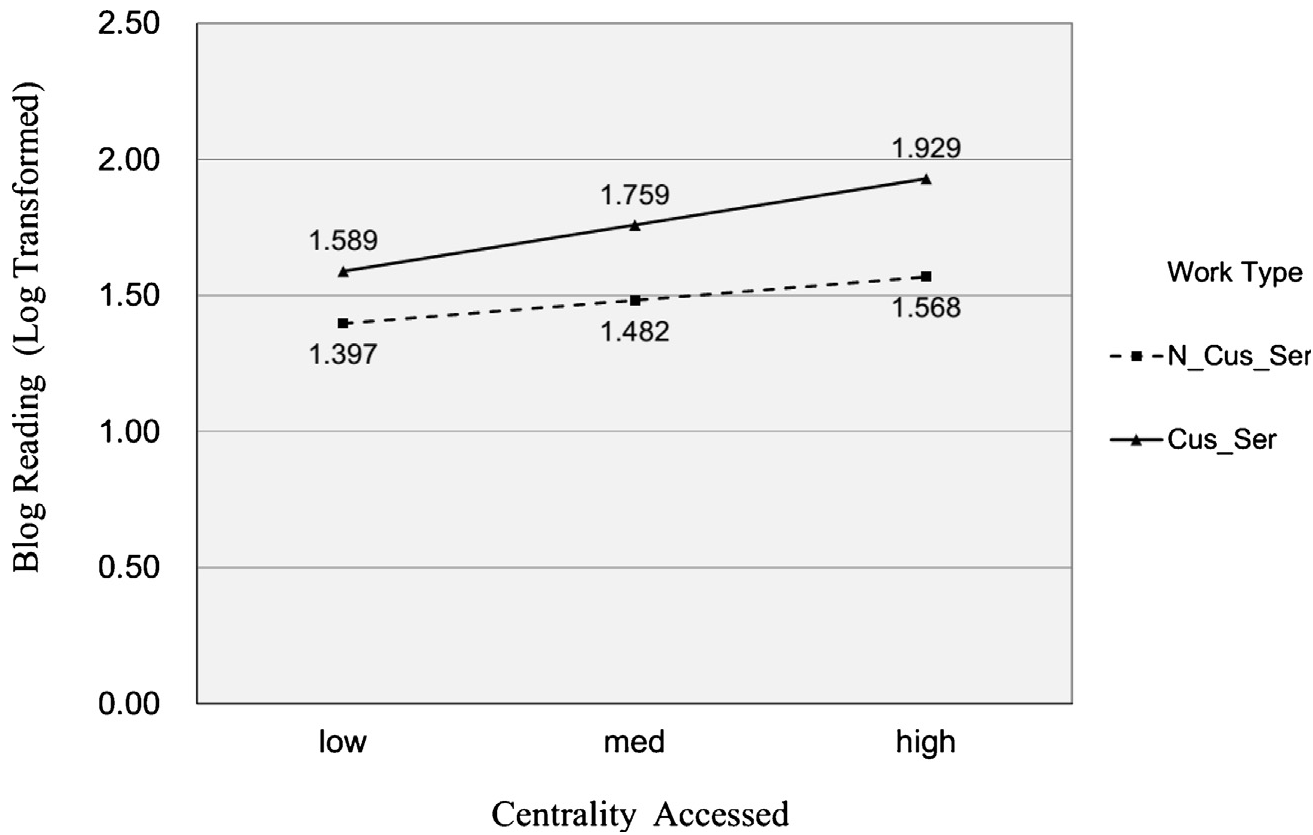 Fig 3: Interaction effect showing that customer service teams are more influenced by "Superstar" friends (Centrality Accessed).
Key Findings:
- Superstars Matter: "Centrality Accessed" was highly significant. Following "popular" groups acts as a social magnet.
- Reciprocity is Sticky: In an organization, unlike the open internet, the "I Scratch Your Back, You Read My Blog" mentality holds the community together.
- Role Differences: Customer service teams behave "more socially" (like internet users), while back-office teams (Finance/IT) follow more traditional, structural patterns.
Critical Analysis & Future Outlook
Takeaway for Managers: Stop trying to homogenize corporate culture. The negative impact of shared topics suggests that a healthy enterprise blogosphere should be a "collision space" for different ideas.
Limitations: The study relies on 2009-2010 data from a single Chinese firm. In the modern era of AI-curated feeds (like ByteDance's internal tools), the social capital dynamics might be mediated by algorithms rather than pure human choice.
Conclusion: This work proves that intra-organizational social networking isn't just a communication tool—it's a social ecosystem. To increase engagement, don't just ask people to write more; help them connect with groups outside their immediate cognitive niche.