
Bridging the Gap: How to Find “Real People” in an Age of Citizen Journalism
Finding "real people": trust and diversity in the interface between professional and citizen journalists
The paper investigates the friction between professional newsrooms and the rise of citizen journalism, proposing a framework for finding "real people" to diversify news. It introduces design implications for community platforms characterized by an "Economy of Trust" and metadata-rich source recommendation systems.
TL;DR
Journalism is facing a "diversity drought." While social media provides a flood of information, professional journalists often retreat to the safety of "usual suspects"—vetted experts who are easy to reach but represent a narrow perspective. This paper explores the "trust gap" between professional newsrooms and citizen contributors, proposing a system where reputation is a currency and diversity is actively incentivized.
The "Usual Suspects" Problem
Despite the rise of participatory media, news organizations often feel like "middle-class, white" islands. Professional journalists operate under extreme time pressure, leading them to rely on the Electronic News Production System (ENPS)—a legacy database of contacts who have already been "verified" by colleagues.
This creates a loop of exclusion:
- Philosophical Objections: Professionals see themselves as "gatekeepers" guarding the truth.
- Practical Constraints: Fact-checking a random blogger takes too much time.
- The Proactive Trap: Contributors who reach out to newsrooms are often viewed with suspicion, suspected of having a biased "agenda."
Methodology: Insights from the Newsroom
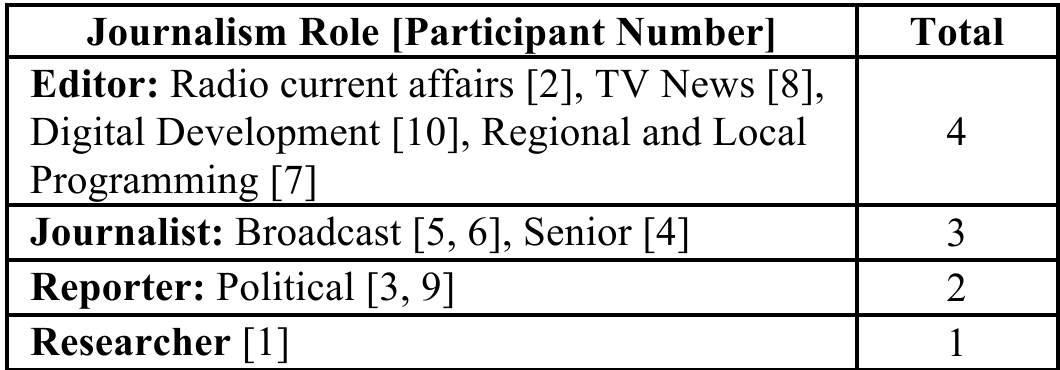
The researchers conducted intensive interviews with professionals at the BBC and other UK outlets to map the "Spectrum of Citizen Journalism."
The study reveals that "Citizen Journalist" is not a monolith. It ranges from:
- The Eyewitness: Someone who happens to be at a helicopter crash and tweets a photo.
- The Community Spokesperson: An amateur who has hosted a local radio slot for 20 years.
- The Proactive Blogger: An aspiring journalist trying to break into the industry.
Methodology: The Core Challenge of Trust
The study identifies that trust in journalism isn't just about truth; it's about functional metadata. A "good" source isn't just honest—they must be:
- Available: Can they get to a studio at the "drop of a hat"?
- Coherent: Do they have high "production value" in their speech?
- Locatable: Can we find their geographic proximity to a breaking event?

Design Implications: An Economy of Trust
The authors suggest that we need to move beyond simple "star ratings." They propose a Trust Currency system:
- Trust as Currency: Trust is earned through successful collaboration and "spent" when a professional vouches for a new citizen source.
- Visibility through Collectives: Since professionals trust "Recognized Organizations," citizen journalists should form collectives (e.g., "Langley Community Voices") to gain institutional visibility.
- Rewarding Diversity: Instead of ranking the most used sources highest, the system should reward journalists who find and verify new voices.
Critical Analysis & Future Outlook
The core takeaway is that the "intimidating" nature of large news organizations (like the BBC) prevents citizens from engaging. Technology should act as an independent interface that "translates" citizen raw data into professional editorial formats.
Limitations: The study focuses on a specific UK context. In more polarized or high-conflict environments, the "distrust of proactive contributors" might be even higher, making a neutral "Trust Economy" harder to sustain without strict cryptographic or AI-driven verification.
Conclusion: To find "real people," we must stop treating citizen journalism as a threat to professionalism and start treating it as a specialized data-stream that requires its own unique set of metadata and reputation metrics.