
Group Rotation Management: Balancing Efficiency and Psychological Stress in Real-Time Crowdsourcing
Group rotation management in real-time crowdsourcing
This paper introduces "Group Rotation Type Crowdsourcing" (GRTC), a workflow management strategy for real-time task streams where workers are organized into rotating groups. The authors propose and evaluate dynamic restructuring algorithms designed to handle worker churn (joining and leaving) while minimizing human psychological stress caused by unexpected task-timing changes.
TL;DR
In real-time crowdsourcing (e.g., live captioning), workers are often rotated in groups to ensure rest and quality. But what happens when workers leave mid-stream? This paper tackles the "Group Rotation" problem: how to restructure groups dynamically without stressing out the humans in the loop. The "Balanced" and "Hybrid" strategies emerge as champions, proving that how we assign tasks is just as important as how many workers we have.
Context & Motivation: The Human-Queue Problem
Imagine you are transcribing a live lecture. You are in Group 3, and a counter on your screen says you have 20 sentences to wait. Suddenly, the counter jumps from 20 to 2. You haven't prepared; you're stressed, and your quality drops.
This is the core challenge of Group Rotation Type Crowdsourcing (GRTC). While traditional computer science treats "nodes" (workers) as interchangeable resources, human workers have psychological limits. The authors identify a critical trade-off:
- Efficiency: Maximizing the number of groups to reduce individual fatigue.
- Stability: Minimizing "irregular jumps" in task timing to keep psychological stress low.
Methodology: The Anatomy of Group Restructuring
The researchers modeled the rotation as a circular graph of groups. They explored a design space for algorithms that handle worker arrivals (Insert) and departures (Delete) using four logic gates:
- Choose: Which group should a new worker join? (Random, Farthest, Balanced, Concentrated, Hybrid).
- Split: When a group gets too big, how do we split it into two?
- Find/Join: If a group becomes too small (below the minimum workers), how do we pull workers from neighbors or merge groups?
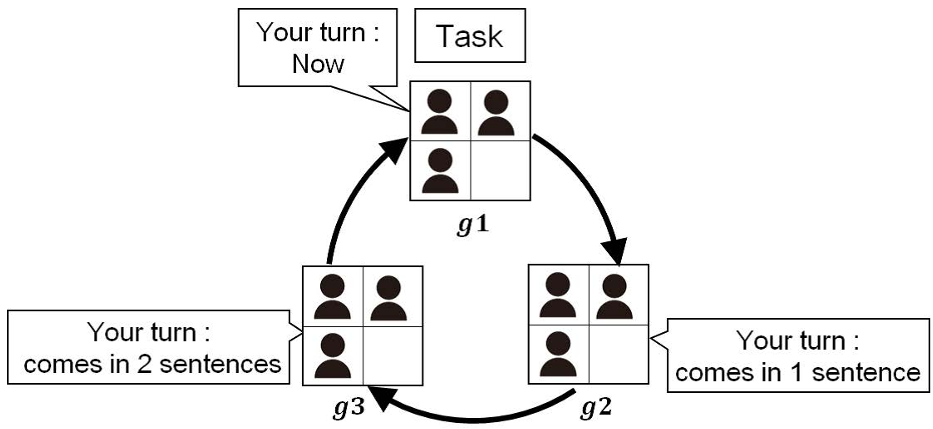 Figure 1: The Group Rotation cycle where workers transition from waiting to performing tasks.
Quantifying Stress: Evaluation 1
To understand how workers feel, the team ran an experiment on Yahoo! Crowdsourcing. They intentionally introduced "irregular jumps" in the task counters.
The findings were intuitive yet vital for system design:
- Departure Penalty: Stress increases if the counter jumps when it's already close to zero.
- Destination Penalty: Stress increases if a worker is suddenly moved to the "active" position (destination near zero).
- Distance Penalty: The larger the jump (e.g., from 15 to 2), the higher the irritation.
Simulation Results: Finding the Sweet Spot
Using Poisson distributions to simulate unpredictable worker churn, the authors tested their restructuring strategies.
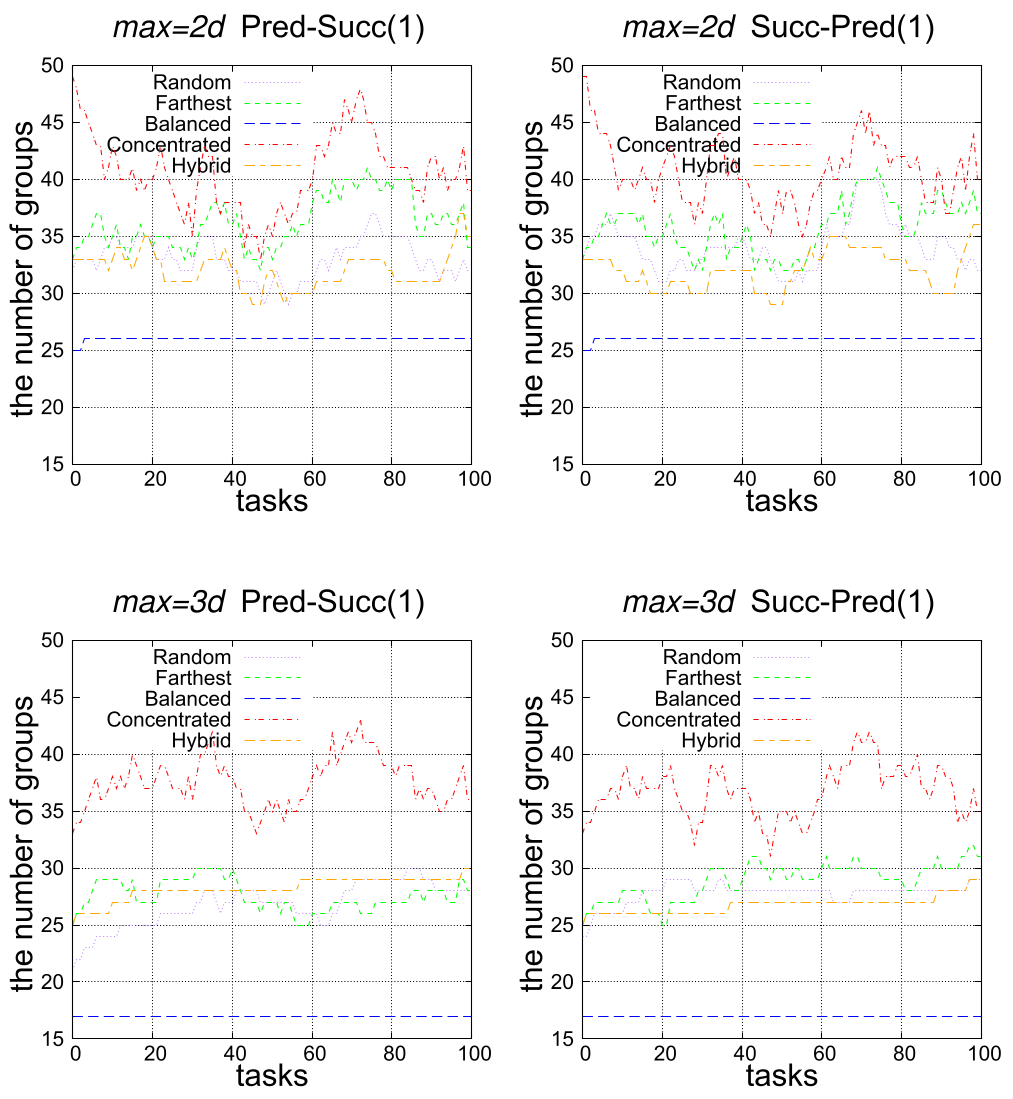 Figure 2: Performance of different 'Choose' strategies. 'Balanced' and 'Hybrid' show superior stability.
Key Discoveries:
- The "Balanced" Strategy: By always adding workers to the smallest group, the system keeps group sizes uniform. This naturally minimizes the need for drastic merges or splits, keeping the "stress penalty" lowest across all metrics.
- The "Hybrid" Strategy: This strategy offers a higher number of total groups (lower workload) but with a slightly higher (yet manageable) stress penalty.
- "Concentrated" is a Disaster: Trying to fill one group at a time causes frequent, massive restructuring that spikes worker stress levels.
Deep Insight: Beyond B-Trees
The authors acknowledge that while these algorithms look like B-Tree index management, the "cost" is not CPU cycles—it's human emotion. The study proves that Consistency > Raw Optimization. A worker who knows exactly when their turn is coming is significantly more effective than one who is subjected to an "optimal" but erratic schedule.
Conclusion & Future Work
This paper bridges the gap between database logic and human-computer interaction (HCI). For future real-time crowd systems, the authors suggest exploring predictive models—moving workers before a group becomes too small, based on historical churn data, to make the rotation even smoother.
Takeaway: In the world of real-time crowd work, the most efficient algorithm is the one that treats workers like humans, not just processing units.