
Hybrid Timescale Fusion: Orchestrating Real-Time Emotion Intelligence
Real-time Emotion Detection System using Speech: Multi-modal Fusion of Different Timescale Features
The paper presents a real-time emotion detection system centered on the multi-modal fusion of speech features across different timescales. By combining intra-frame spectral features (MFCC) and supra-frame prosodic statistics (Pitch/Energy), the system achieves a robust binary classification of "angry" vs. "neutral" states, introducing a novel fusion algorithm to harmonize GMM and k-NN model outputs.
TL;DR
Researchers from USC's SAIL laboratory have developed a real-time emotion detection system that solves the "fusion mismatch" problem. By combining short-term spectral data (20-30ms frames) with long-term prosodic trends (pitch/energy statistics), and employing a unique "Posteri-Log" fusion math, they achieved a 33% relative error reduction in detecting anger versus neutral speech.
Background: The Real-Time Constraint
In the world of Affective Computing, most models are "lab-grown"—they expect perfectly clipped audio files where the sentence has a clear beginning and end. Real-world interaction doesn't work that way. A real-time system must process a continuous stream of audio with no "look-ahead" capability and limited lexical context. This paper tackles this by focusing purely on the acoustic signature across two distinct timescales:
- Intra-frame (Spectral): The "texture" of the sound, captured via MFCCs.
- Supra-frame (Prosodic): The "melody" of the speech, captured via pitch and energy statistics.
The Core Methodology: Bridging GMM and k-NN
The architectural challenge isn't just extracting features; it's how to make two very different "experts" agree.
- The Spectral Expert: Uses a Gaussian Mixture Model (GMM). It outputs a likelihood value (a density function) which can be an extremely small positive number.
- The Prosodic Expert: Uses a k-Nearest Neighbor (k-NN) approach. It outputs a discrete posterior probability (e.g., 8/10 neighbors are "angry").
The Innovation: Scaling the Fusion
Standard fusion uses a weighted sum of log-likelihoods. However, when the k-NN model returns a probability of zero, the log becomes negative infinity, crashing the system's logic. The authors proposed a modified fusion equation: By treating the k-NN output as a linear probability and the GMM output as a log-likelihood, they effectively normalized the dynamic range, allowing the system to find an optimal balance () without one model drowning out the other.
 Fig 1: The multi-threaded pipeline ensures audio acquisition and feature fusion happen simultaneously.
Experimental Insights
The team tested their system on the EMA database, simulating real-time conditions by concatenating utterances.
Key Findings:
- Length Matters for Spectrum: Spectral models (GMM) consistently improved as segments grew from 1 to 5 seconds.
- Prosody is Robust: Prosodic features reached high accuracy much faster, even with shorter segments, because statistics like "pitch range" are highly indicative of emotion regardless of phonetic content.
- Fusion Superiority: The proposed fusion consistently beat single-modality models across all segment lengths.
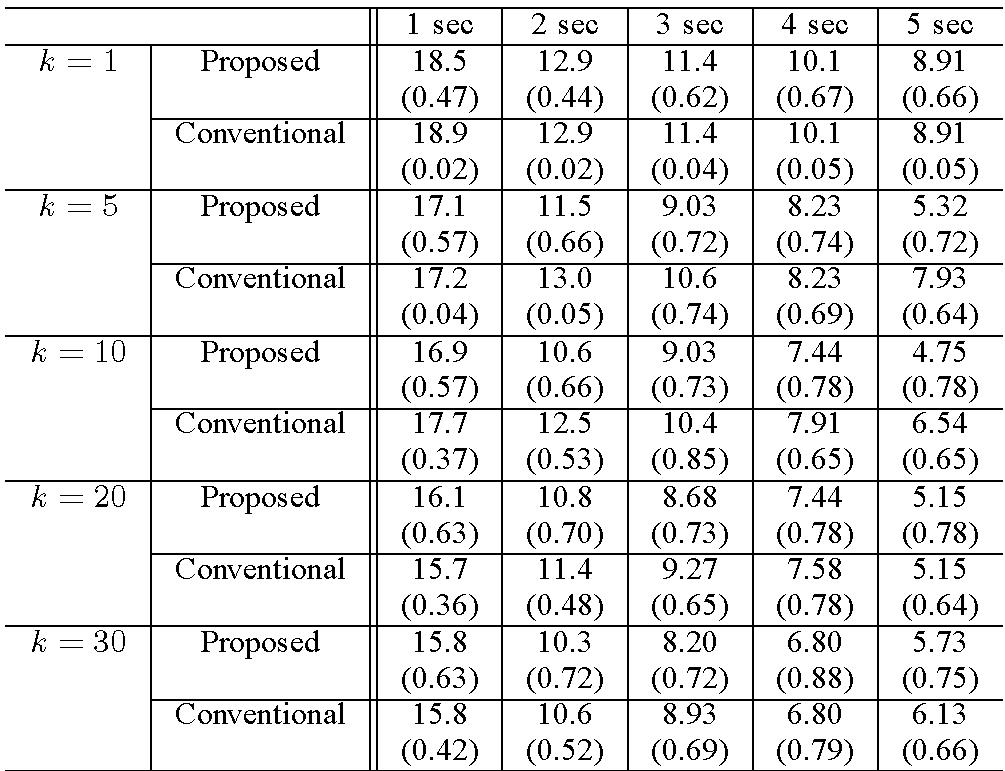 Table 1: Comparing the Proposed vs. Conventional fusion—note the significant drop in EER (lower is better).
Critical Analysis & Conclusion
This work highlights a fundamental truth in sensor fusion: The math of the "merge" is just as important as the quality of the "features." By recognizing that k-NN and GMM inhabit different statistical manifolds, the authors created a more resilient system.
Limitations & Future Work
While highly effective for binary classification (Angry vs. Neutral), the transition to multi-class emotion (Sad, Happy, Fear) will require more sophisticated manifold alignment. The authors plan to integrate Automatic Speech Recognition (ASR) to add a third timescale: the Lexical Level, where word choice provides the ultimate context for emotional intent.
Takeaway for Engineers
If you are building real-time fusion systems, don't just add scores together. Look at the distribution of those scores. If one is a density and the other is a frequency-based probability, you need a transformation layer—like the one proposed here—to make the fusion meaningful.