
Hyperlocal Spatial Crowdsourcing: Maximizing Urban Sensing with Adaptive Budgeting
13961_A Real-Time Framework for Task Assignment in Hyperlocal Spatial Crowdsourcing.
The paper introduces Hyperlocal Spatial Crowdsourcing (Hyperlocal SC), a framework for real-time task assignment where workers can perform tasks within a spatiotemporal vicinity without traveling to specific points. The authors propose the AdaptT algorithm, which combines temporal heuristics with an adaptive budget allocation strategy to maximize task coverage under global budget constraints.
TL;DR
Hyperlocal Spatial Crowdsourcing (SC) allows users to contribute data (like weather reports) if they are "near enough" to a task, eliminating the need for travel. This paper presents a real-time framework to solve the NP-hard problem of worker selection under budget constraints. By using Temporal Heuristics and Contextual Bandit-based budget allocation, the proposed system maximizes task coverage while ensuring workers aren't overloaded.
The Shift to Hyperlocal Sensing
Traditional Spatial Crowdsourcing (SC) platforms—think Uber or TaskRabbit—require workers to move to a specific coordinate. However, for environmental data like rainfall or air quality, a report from a block away is often just as valuable. This is the core of Hyperlocal SC.
The Challenge: In an online world, we don't know who will log in next or where the next storm will hit. If we spend our "activation budget" (rewards or notification costs) too early, we miss better-positioned workers later. If we wait too long, tasks expire.
Methodology: Intelligence Over Intuition
The authors break down the solution into three layers: local worker selection, global budget management, and fairness.
1. Local Heuristics (Which worker now?)
Instead of just picking the worker who covers the most tasks (Basic), the authors suggest two smarter metrics:
- Temporal Heuristic: Prioritizes workers covering tasks nearing their deadlines.
- Spatial Heuristic: Uses Location Entropy to prioritize tasks in "worker-sparse" areas where future coverage is unlikely.
2. Adaptive Budgeting (The Contextual Bandit)
For a campaign spanning days, how do you distribute a fixed budget? The paper introduces an Adaptive Budget Allocation strategy based on the -greedy algorithm. It monitors two signals:
- Delta Budget (): Are we over or under-spending compared to a steady baseline?
- Delta Gain (): Is the current worker significantly "better" than the historical average?
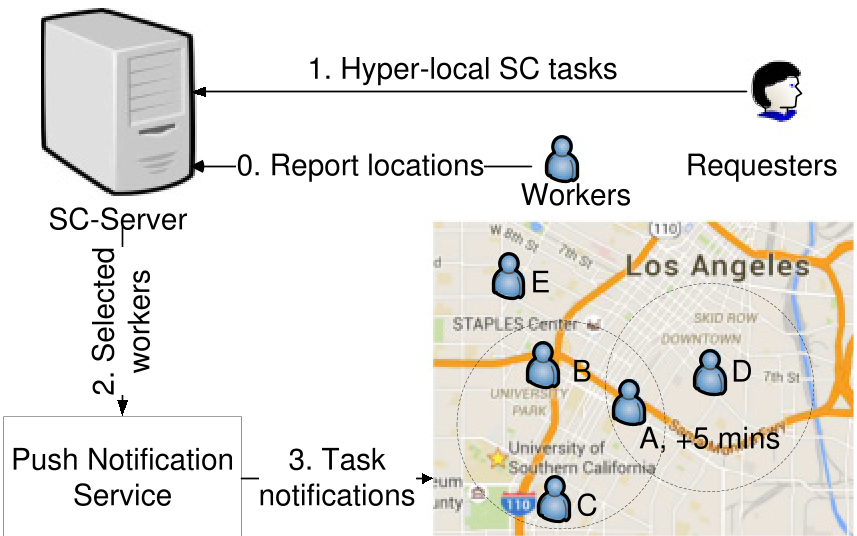 Figure 1: The iRain System Architecture—a real-world application of Hyperlocal SC.
3. Preventing Worker Burnout
To prevent "overloading" workers in popular areas, they employ a Multi-Objective optimization approach (NSGA-II). This ensures a Pareto optimization between maximizing coverage and maintaining "Social Fairness" (balancing workload).
Experimental Validation
Using the SCAWG tool and real-world check-in data (Gowalla/Foursquare), the authors compared their online heuristics against the Offline Optimal (DynamicOff)—a "clairvoyant" model that knows the future.
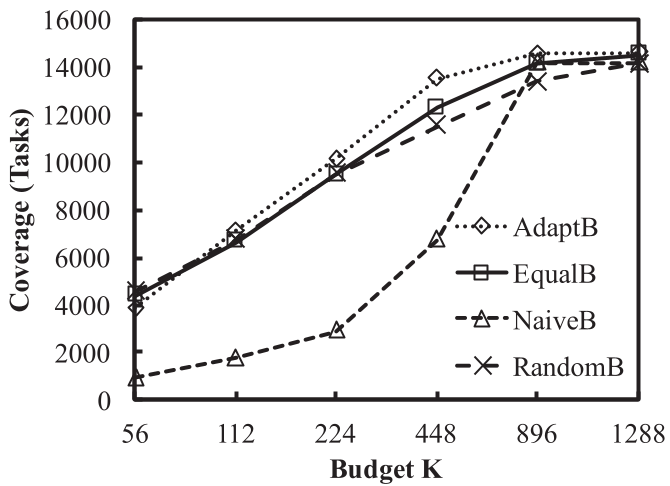 Figure 2: Performance comparison showing AdaptT approaching the theoretical upper bound.
Key Findings:
- AdaptT consistently outperformed "Equal" budgeting, especially in workloads with high temporal fluctuation (e.g., commute peaks).
- The framework handles Distance-Based Utility, where rewards/credits are weighted by how close a worker is to the task center.
- The computational overhead remains low enough for real-time server-side processing.
Critical Insight & Multi-Objective Balance
The most impressive part of this work is the AdaptT-MOO variant. Unlike many papers that prioritize raw performance, this framework recognizes that a crowdsourcing platform dies if it annoys its users. By adjusting the coefficient, operators can sacrifice a tiny fraction of coverage to significantly more balanced worker utilization.
Conclusion
This research provides a robust foundation for the next generation of "Citizen Science" apps. By treating budget allocation as a sequential decision problem under uncertainty, the framework ensures that urban sensing remains efficient, cost-effective, and user-friendly.
Future Outlook: The next frontier involves integrating worker mobility patterns—predicting where a worker will be to further optimize preemptive task assignment.