
Turning Biology into Bytes: A New Frontier for ML Education via Physiological Data
Towards Applying Real Time Physiological Data and Gamification to Machine Learning Educational Systems
This paper introduces a novel educational system design that integrates real-time physiological data and gamification to teach Machine Learning (ML) concepts to novices. By leveraging wearable sensors and interactive storytelling, it creates a hands-on environment for learning data collection, training, and classification.
TL;DR
As Machine Learning (ML) becomes ubiquitous, the gap between user interaction and technical understanding widens. This paper presents a system design that uses real-time physiological data (body signals) and gamification to demystify ML. Instead of using generic data, users train a robot using their own biological signals, making the learning process visceral and personally relevant.
Background: Beyond the Black Box
Traditional ML education often starts with abstract mathematics or pre-cleaned datasets (like Iris or MNIST), which can be alienating for novices. The authors argue that for ML literacy to stick, the data needs to be "personally relevant." By shifting the focus to Physiological Computing, the system transforms the user's pulse or brainwaves into the primary input for training models.
The "Teacher-Robot" Methodology
The core innovation lies in the integration of human-computer interaction (HCI) with traditional ML pipelines. The proposed system follows a structured level-based progression:
- Data Capture: Users connect wearable sensors to capture real-time signals via web technologies.
- Gamified Labeling: Users participate in mini-games to label their own data, effectively performing the role of a data engineer.
- The Storyline: The user is tasked with "teaching" a digital robot to recognize their physiological states (e.g., distinguishing between "relaxed" and "focused").
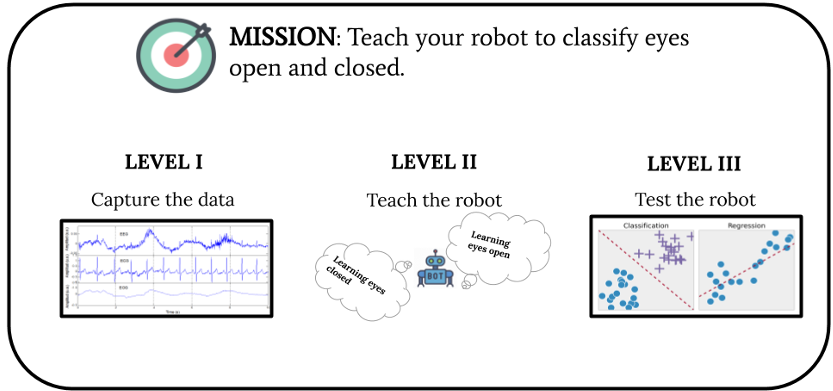 Figure 1: The proposed system architecture showing the loop between physiological input and the ML training interface.
Why This Matters: Physicality in ML
By using physiological data, the system addresses three critical stages of the ML lifecycle:
- Data Cleaning/Noise: Users see how physical movement affects signal quality, teaching them about "dirty data."
- Feature Awareness: Through visualizers, novices can see how their biological "features" change in real-time.
- Inference: The immediate feedback of the robot correctly (or incorrectly) guessing the user's state provides a powerful intuition for model accuracy.
Results and Future Trajectory
While still in the development phase, the framework targets first-year undergraduate students. The primary contribution is a blueprint for Explainable AI (XAI) that doesn't rely on complex dashboards, but on lived experience.
Critical Analysis
- Strength: High "Inductive Bias" for learning; users intuitively understand their own bodies, which lowers the cognitive load of learning signal processing.
- Limitation: Hardware accessibility. The system's success depends on the availability of reliable, consumer-grade wearable sensors.
- Outlook: This approach could evolve into a standard for "Cyber-Physical" education, where students learn AI by interacting with their physical selves rather than static CSV files.
Conclusion
This work represents a shift toward more empathetic and interactive ML education. By gamifying the "tutor-tutee" relationship between a human and a robot, it transforms a daunting technical subject into a personal journey of self-discovery through data.