
Unified Systems: Solving Job-Shop Volatility with Real-Time Feedback Dynamics
Real-time production planning and control system for job-shop manufacturing: A system dynamics analysis
This paper proposes a comprehensive real-time Production Planning and Control (PPC) system for job-shop manufacturing using System Dynamics (SD). By integrating modified APIOBPCS ordering rules and Hopp & Spearman batch sizing mechanisms, the system effectively manages stochastic disturbances and machine failures to achieve SOTA-level operational stability.
TL;DR
Manufacturing researchers have long struggled with the "theory-practice gap" in job-shop environments. This paper presents a Real-Time Production Planning and Control (PPC) system that moves away from static optimization towards System Dynamics (SD). By combining production ordering and batch sizing into a unified feedback-driven framework, the authors achieved significant reductions in backlogs and tardy jobs, even under the stress of machine failures and erratic order patterns.
The Volatility Problem: Why Static Plans Fail
In a typical job-shop, "the plan is obsolete the moment it's printed." Stochastic inter-arrival times of orders, machine breakdowns, and sudden cancellations create a "bullwhip effect" within the factory walls. Traditional Operations Research (OR) models often treat these as static snapshots.
The authors identify two fatal flaws in prior work:
- Lack of Transparency: Decision-makers lack real-time visibility into WIP discrepancies.
- Open-Loop Rigidity: Most systems don't have built-in "corrective measures" that adjust to the current shop state automatically.
Methodology: The "Anchoring and Adjustment" Insight
The core of the paper lies in its hybrid control mechanism. Instead of complex, computationally heavy genetic algorithms, the authors use a System Dynamics approach focused on three primary feedback loops:
1. Production Ordering (The Governor)
The system uses a modified APIOBPCS rule. It doesn't just look at demand; it "anchors" to the current order file and "adjusts" based on the gap between Actual WIP and Desired WIP, as well as the number of Tardy Jobs.
2. Batch Sizing (The Synchronizer)
Using the Hopp & Spearman (HS) technique, the system dynamically calculates the optimal batch size for each workstation. This ensures capacity is not wasted on excessive setups while simultaneously preventing the massive queues associated with oversized batches.
 Figure 1: The causal structure showing the negative feedback loops (L1, L2, L3) that stabilize WIP and Tardy Jobs.
Experimental Results & Robustness
The authors validated their model using a 5-workstation/6-product simulation and a real-world refrigeration-body manufacturer.
Key Performance Wins:
- Backlog Reduction: ~7.8% improvement over standard APIOBPCS.
- WIP Efficiency: ~4.6% reduction in idle inventory.
- Tardy Job Minimization: ~7.6% better adherence to due dates.
The ANOVA Breakthrough
Using Analysis of Variance (ANOVA), the researchers made a surprising discovery: Near-optimal control values are remarkably stable. Whether the customer demand follows a Poisson or Normal distribution, or if machine failures occur frequently, the same internal control settings (Kw, Kl, Kb) remain effective. This suggests that a well-tuned SD model is inherently "robust" to external noise.
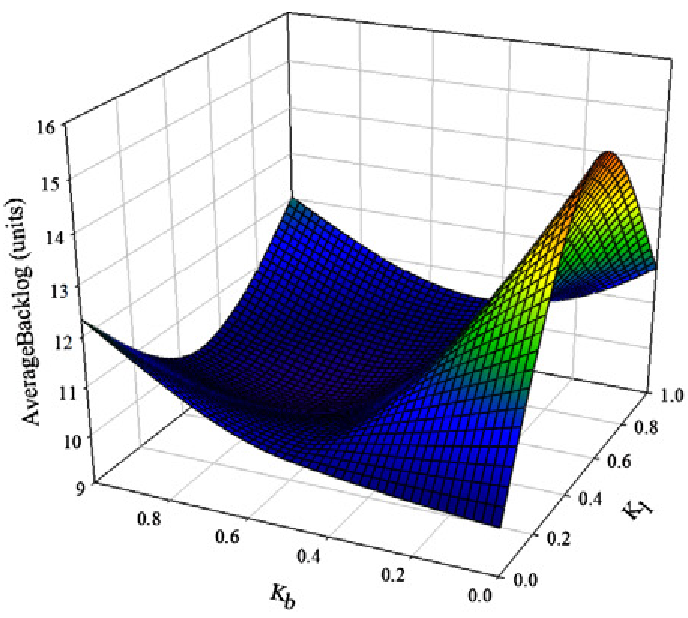 Figure 2: Performance metrics showing the convergence of average backlog and WIP under real-time control.
Critical Insight: The Value of Transparency
One of the most striking findings is the "Review Period" effect. As the monitoring frequency shifts from continuous to weekly, the Average Backlog explodes (see Figure 5 in the paper). This quantifies a long-held industrial intuition: information latency is the primary enemy of manufacturing efficiency.
Deep Insight & Conclusion
This work shifts the focus from "finding the perfect schedule" to "building a resilient system." By treating the job shop as a living set of reservoirs (stocks) and flows, the authors provide a template for Modern Digital Twins.
Limitations: The model assumes sequence-independent setups and no assembly (simple routing). In more complex aerospace or electronics assembly, the "batch transfer" logic would require further refinement to handle sub-component synchronization.
Future Outlook: The next logical step is integrating cost elements directly into the feedback loops—ordering not just to reduce tardiness, but to maximize the Net Present Value (NPV) of the production run.