
RT2M: Decoding Real-Time Social Trends via Mention-Based Networks and Topic Modeling
RT^2M: Real-Time Twitter Trend Mining System
This paper introduces RT2M (Real-time Twitter Trend Mining), an integrated system designed for high-velocity social media data processing. Using state-of-the-art techniques like Dirichlet-Multinomial Regression (DMR) and Voltage-clustering, the system successfully identifies emerging social issues and hidden user communities during the 2012 Korean presidential election.
TL;DR
The RT2M system is a real-time mining framework that moves beyond static "follower" metrics to analyze the pulse of social media through mentions and temporal topic modeling. Tested during the 2012 Korean presidential election, it demonstrated a "predictive nature," detecting controversial issues before they peaked in traditional mass media.
The Motivation: Why Follower Counts Lie
In the era of Big Data, social media acts as a "social sensor." However, the authors argue that the industry's reliance on "follow/following" relationships is flawed for two reasons:
- Static Bias: Follower links are often permanent and don't reflect current engagement.
- Context Blindness: Passive following does not equate to active discussion or influence.
The authors propose that mentions are a much more granular and accurate indicator of "thematic coherence" and active user behavior.
Methodology: The RT2M Architecture
The RT2M system is built for speed and depth, integrating several high-level components:
1. High-Speed Stream Processing
To handle the massive influx of tweets, the system utilizes Redis as an in-memory key-value store. This allows for near-instantaneous term co-occurrence retrieval and similarity calculations between users.
2. Temporal Topic Modeling (DMR)
Instead of standard LDA, which treats documents as static, RT2M uses Dirichlet-Multinomial Regression (DMR). This allows the model to treat the "time of the tweet" as a metadata feature that influences the probability of a topic appearing.
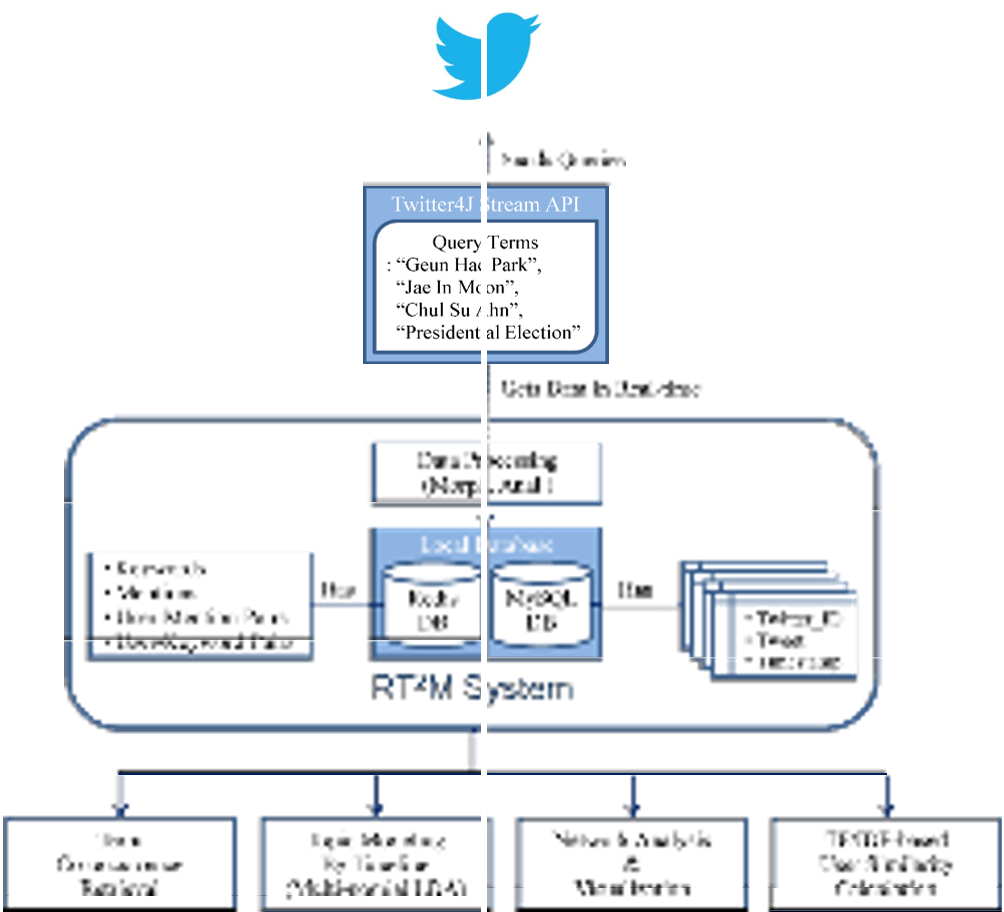 Figure 1: The architecture of RT2M, highlighting the integration of Redis and the mining modules.
3. Mention-Based Community Detection
The system uses the Voltage-clustering algorithm, a physics-inspired approach that identifies communities in linear time. By focusing on mentions, the system can map how different political camps (Conservative vs. Progressive) actually interact or collide.
Case Study: The 2012 Korean Presidential Election
The authors analyzed 1.74 million tweets. Two key findings stood out:
- Predictive Power: In the "Jeongsu Foundation" case, the topic probability in Twitter spiked on October 10—five days before the major media coverage began on October 15.
- Echo Chambers vs. Bridges: By visualizing the mention network, the system identified "High Betweenness" nodes—users who acted as bridges between isolated political clusters.
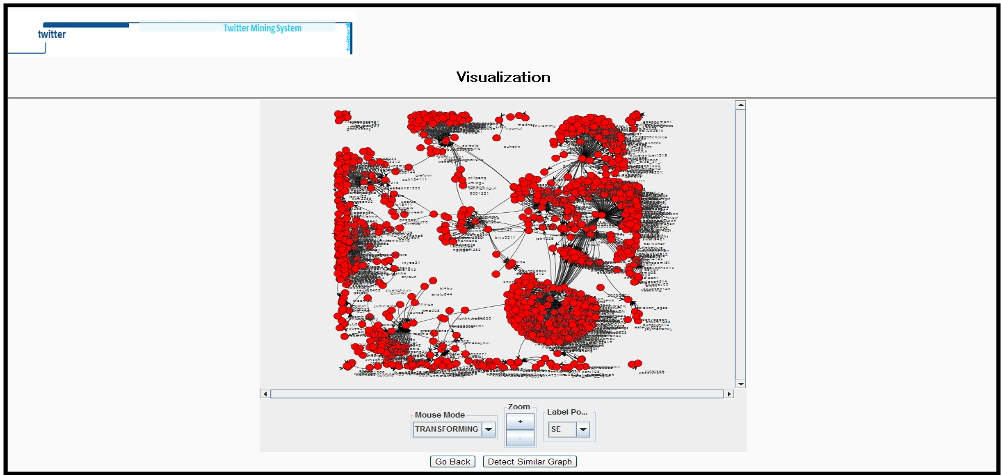 Figure 2: Visualization of Twitter users mentioning "Jae In Moon," showcasing the complex community structure.
SOTA Comparison: Real-Time vs. Retroactive
| Feature | Traditional Methods | RT2M (This Paper) |
|---|---|---|
| Data Scope | Static/Retroactive | Real-time Streaming |
| Network Type | Follow/Following | Mention-based (Interactive) |
| Topic Detection | Standard LDA | Temporal DMR |
| Performance | Disk-bound (Slow) | In-memory Redis (Fast) |
Critical Analysis & Conclusion
Takeaway: RT2M proves that the "velocity" of social media isn't just a challenge—it's a feature. By capturing the temporal shifts in topics, we can predict news cycles.
Limitations: While the hardware-level speed (Redis) is impressive, the system still relies on a customized lexicon for Korean morphological analysis, which may struggle with the rapid evolution of internet slang compared to modern transformer-based embeddings (like BERT or GPT).
Future Outlook: The integration of Sentiment Analysis into this real-time pipeline would be the "holy grail"—not just knowing what people are talking about, but how the collective mood towards a candidate is shifting in a single second.