
DMS-Trade: Bridging Data Mining and Multi-Agent Systems for Next-Gen Tourism Marketing
Realization for Destination Marketing System Platform Based on Data Mining
This paper introduces the DMS-Trade platform, a multi-agent destination marketing system that integrates data mining to optimize electronic tourism commerce. It focuses on personalized service delivery by automating tourist acquisition and segmentation through specialized agents (e.g., MDQARC Agent).
TL;DR
The tourism industry is swimming in data but starving for actionable intelligence. This paper presents DMS-Trade, an intelligent Destination Marketing System (DMS) platform. By leveraging a multi-agent architecture and data mining technology, it automates the pipeline from tourist data collection to personalized service negotiation, effectively turning raw data into successful travel transactions.
Problem & Motivation: The Gap in Digital Tourism
Most existing Destination Marketing Systems function as simple digital brochures—they provide weather, price, and facility info, but they don't understand the visitor. From a business perspective, two major pain points exist:
- Tourist Acquisition: Finding new loyal customers is expensive and often "blind" without data.
- Tourist Segmentation: Enterprises struggle to group tourists with similar behavioral patterns, leading to generic, ineffective marketing.
The authors' insight is to treat the DMS not just as a website, but as a distributed transaction platform where autonomous agents represent the interests of both the enterprise and the traveler.
Methodology: The Multi-Agent Engine
The core of DMS-Trade is its 8-Agent architecture, designed to divide the complex task of marketing into manageable, specialized units.
The System Configuration
- Management Agent: The "supervisor" that coordinates communication and user registration.
- MDQARC Agent: The "brain" that executes the core data mining algorithms to find patterns.
- Negotiation & Advertisement Agents: The "front-line" agents that use the mined knowledge to interact with tourists, pushing emails or instant messages based on detected preferences.
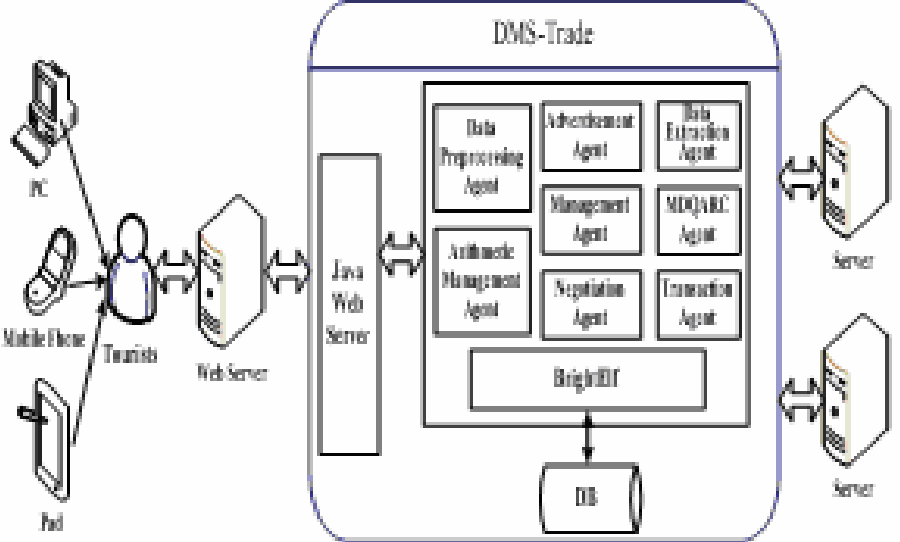 Figure 1: The aggregated model divided into User, Agent (DMS-Trade), and Service Provider domains.
The MDQARC Logic
Central to the mining efficiency is the MDQARC algorithm. The process begins with the Data Extraction Agent, which pulls distributed data into a local environment, followed by the Data Preprocessing Agent, which handles "noise" and data discretization—essential steps for ensuring that the mined rules are actually accurate and not just statistical artifacts.
Workflow and Experiments
The system operates in a dual-loop workflow. The Data Mining Process works in the background (extracting and storing rules), while the Tourist Trade Process works in the foreground (applying those rules to live sessions).
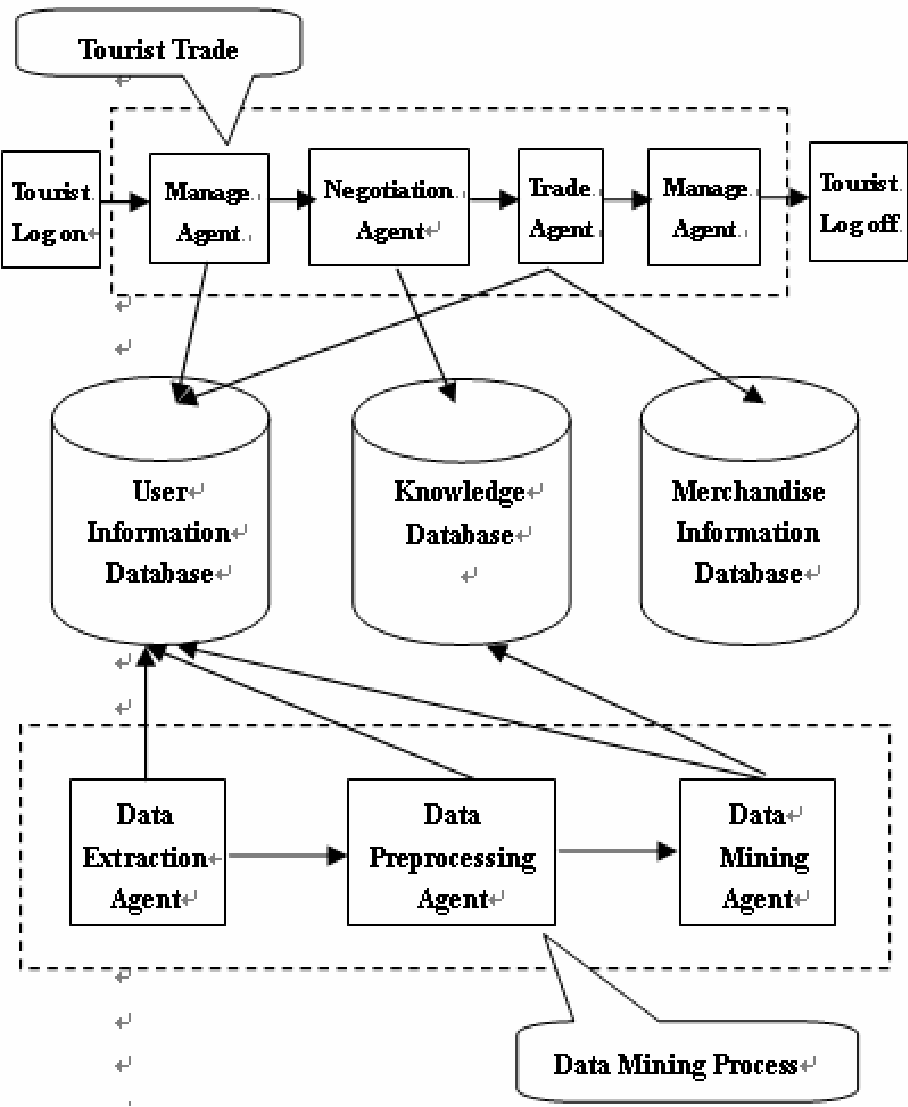 Figure 2: The iterative cycle of data extraction, preprocessing, and active transaction support.
Key Insights from results:
- Precision Marketing: By mining academic background data, the system successfully identified that tourists with bachelor's degrees preferred "humanities scenery," allowing the Advertisement Agent to target this group with higher precision.
- Efficiency: The use of a Data Extraction Agent to move distributed data to a local environment significantly improved mining speed compared to traditional distributed queries.
Critical Analysis & Conclusion
Takeaway
The value of this research lies in its systemic integration. It doesn't just propose a new algorithm; it proposes a new architecture for how tourism platforms should operate—shifting from static databases to active agent-facilitated markets.
Limitations
The paper is a foundational architectural work from 2006. In a modern context, its rule-based representation of knowledge is less flexible than today’s Deep Learning or Embeddings-based approaches. Additionally, the quantitative performance of the "MDQARC" algorithm relative to modern SOTA association rule mining (like FP-Growth) is not deeply explored.
Future Outlook
The move toward "Mobile Agents" mentioned in the paper was prophetic. Today, we see this evolving into AI-driven travel assistants that not only "mine" your data but proactively negotiate the best hotel prices using LLM-based reasoning. The DMS-Trade model provides the structural blueprint for these modern autonomous travel ecosystems.