
Audiovisual Emotion Recognition: A "Divide and Conquer" Approach to Human-Machine Interaction
Recognizing Human Emotional State from Audiovisual Signals
This paper presents a systematic audiovisual emotion recognition system that integrates prosodic, MFCC, and formant audio features with Gabor wavelet-based visual features. By employing a novel multiclassifier scheme and stepwise feature selection, the system achieves a SOTA recognition rate of 82.14% for six basic emotions across diverse languages and cultures.
TL;DR
This research tackles the complexity of human emotion recognition by moving beyond single-modality systems. By combining audio signals (Prosodic, MFCC, Formant) with visual data (Gabor wavelets) and applying a sophisticated multiclassifier scheme, the authors achieved an 82.14% accuracy rate. Crucially, the system is designed to be language and culture-independent, proving that the physical manifestations of emotion transcend linguistic boundaries.
The Core Challenge: Modality Dominance and Data Sparsity
In the realm of Human-Computer Interaction (HCI), recognizing emotions like anger or fear is notoriously difficult. Previous works often faced two "walls":
- Modality Imbalance: Some emotions are audio-dominant (e.g., Anger), while others are visual-dominant (e.g., Happiness).
- The Curse of Dimensionality: Simply throwing 153 different features into a classifier often leads to noise and overfitting, especially when the training data is limited.
Methodology: Specialized Feature Extraction
The authors didn't just extract features; they selected them based on human perception.
- Audio: Beyond basic pitch and energy, they utilized 13 Mel-frequency Cepstral Coefficients (MFCC) to mimic human hearing and Formant frequencies to model vocal tract characteristics.
- Visual: Instead of tracking specific points (like mouth corners), they treated the face as a holistic pattern. They used HSV color models for face detection and Gabor wavelets to capture spatial frequency structures.
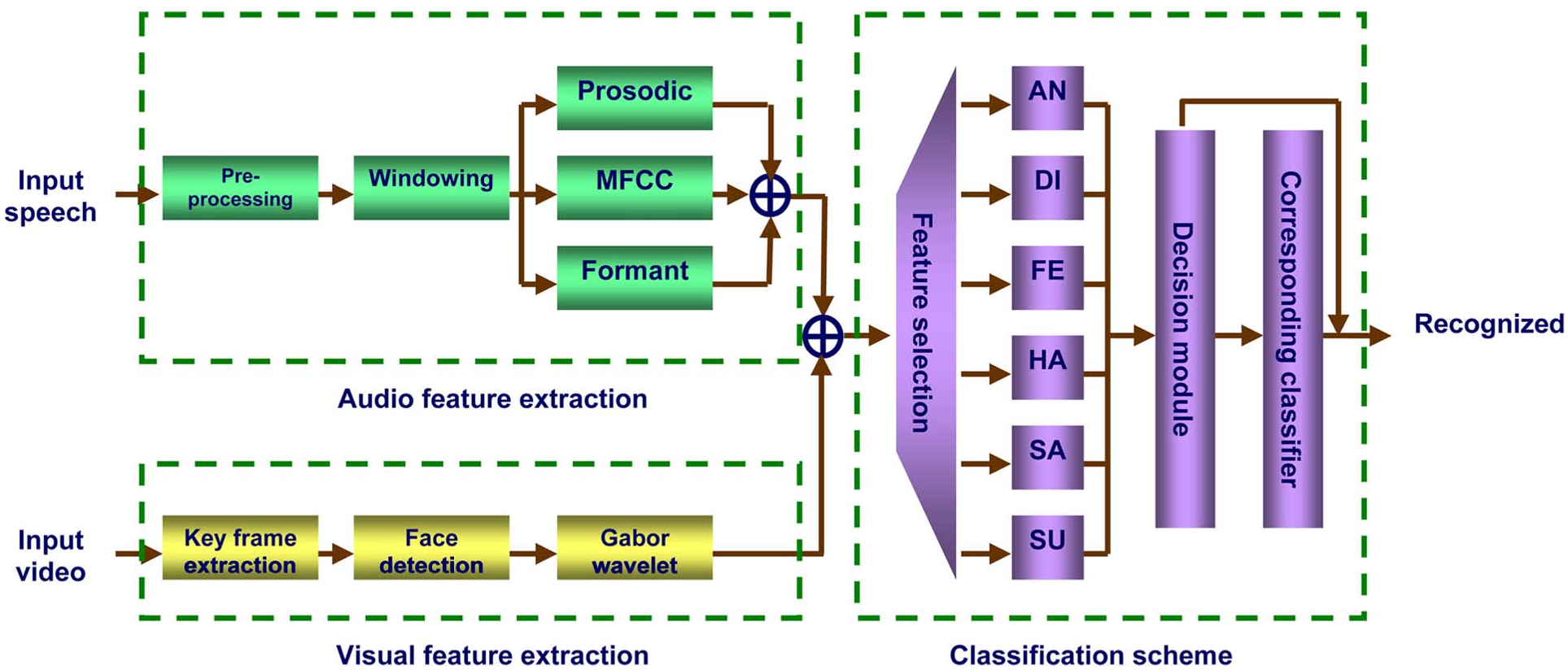 Figure 1: The proposed system flow, from dual-channel feature extraction to bimodal fusion.
The "Divide and Conquer" Multiclassifier
The standout innovation of this paper is the Multiclassifier Scheme. Rather than asking one model to choose between six emotions, they built a hierarchy:
- OAA Classifiers: Six independent "One-Against-All" models determine the probability of a sample belonging to a specific emotion.
- Refined Decision Rules: If the OAA models are uncertain (e.g., a sample looks like both Sadness and Disgust), it is passed to a specialized N-class classifier trained specifically to distinguish between those overlapping categories.
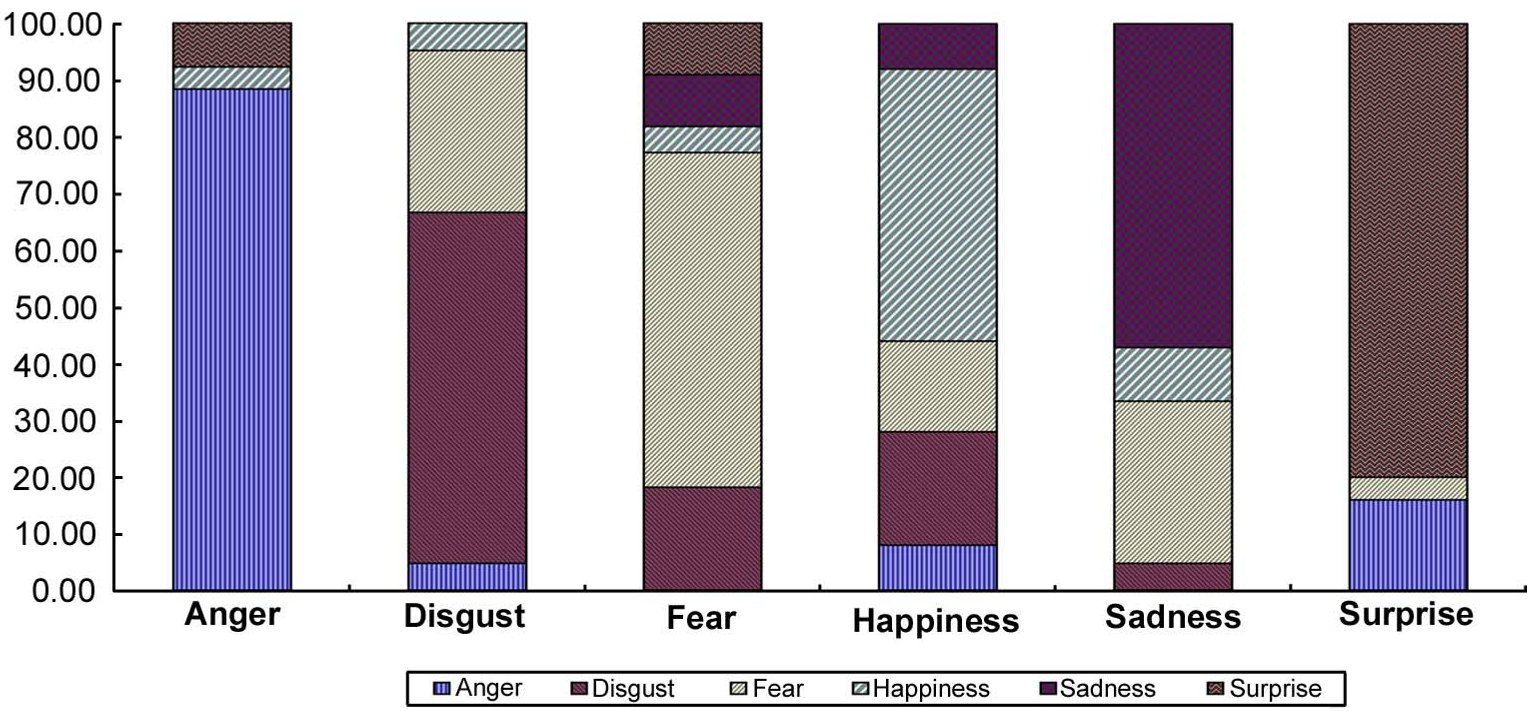 Figure 2: Analysis of audio vs. visual dominance; notice how audio excels at 'Surprise' while visual is stronger for 'Happiness'.
Experimental Breakthroughs
The team tested their system on a diverse database featuring six languages: English, Mandarin, Urdu, Punjabi, Persian, and Italian.
- Feature Selection Matters: Standard Dimensionality reduction (PCA) actually hurt performance (dropping accuracy to 62.86%). However, the Stepwise Mahalanobis Distance method boosted it to 75.71% by keeping only the most discriminative features.
- Final Performance: The full Multiclassifier scheme reached 82.14%, effectively proving that "Dividing and Conquering" class boundaries is superior to global classification.
Critical Insight & Future Outlook
While the system is highly effective, the authors admit a limitation: visual features are still the weak link (achieving only ~49% alone). The reliance on a "key frame" for visual analysis misses the temporal dynamics of a smile or a frown.
The takeaway for the industry is clear: Multimodality is mandatory for robust HCI. For future researchers, the next frontier lies in "Hybrid Fusion"—combining holistic facial patterns with local component tracking (eyes/mouth) and temporal deep learning architectures to capture the rhythm of emotion.
Takeaway for the Reader: The physical "signature" of a human emotion is a complex bimodal signal. By isolating the features that distinguish specific pairs of emotions, we can build machines that understand us better, regardless of the language we speak.