
These Words are Music to My Ears: Mastering Music Emotion Recognition via AdaBoost
These words are music to my ears: Recognizing music emotion from lyrics using AdaBoost
This paper introduces an AdaBoost-based framework using decision stumps for Music Emotion Classification (MEC) from song lyrics. By treating lyrics as short-form text and leveraging ensemble learning, the method achieves a state-of-the-art average accuracy of 74.12% across 14 emotion categories, significantly outperforming traditional SVM baselines.
TL;DR
Music Emotion Classification (MEC) has long relied on audio analysis, but lyrics offer a rich, semantic layer that is often overlooked. This paper argues that traditional text classifiers like SVMs fail on lyrics because songs are too short for standard statistical modeling. By employing AdaBoost with Decision Stumps, the authors achieved a 74.12% accuracy across 14 emotional categories, proving that "weak" learners can collectively "hear" the emotion in text better than complex kernels.
The Short-Text Problem: Why Lyrics are Not News
In the world of Natural Language Processing (NLP), more data is usually better. However, music lyrics are inherently sparse. The authors' analysis of 3,766 songs revealed a critical bottleneck:
- Average length: 150 words.
- Unique words per song: Only ~70.
Standard Bag-of-Words (BOW) models and Support Vector Machines (SVMs) rely on dense word distributions. When the document is as short as a song, the feature vector becomes too sparse, leading to poor generalization.
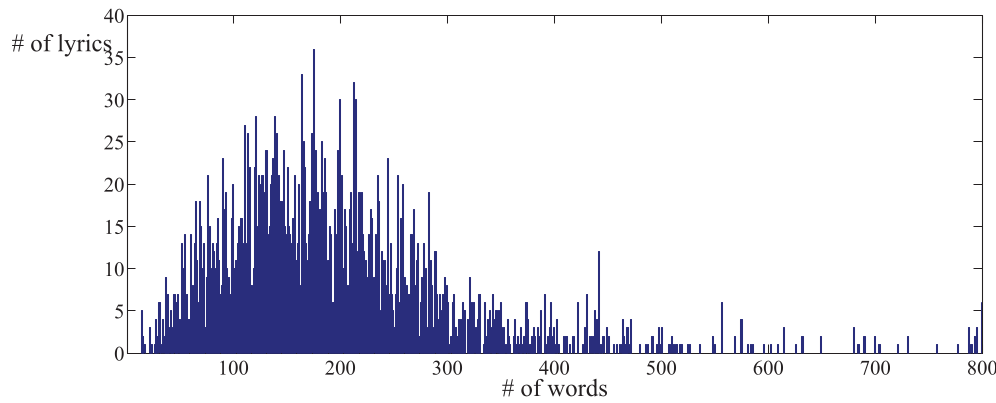 Fig 1: Statistics showing the brevity of song lyrics compared to standard text corpora.
Methodology: From Weak Indicators to Strong Predictions
To solve the sparsity problem, the authors took inspiration from call-routing systems. Instead of trying to map the entire document into a high-dimensional space, they used AdaBoost.
How it Works:
- Iterative Focus: The algorithm trains a series of "Decision Stumps" (one-level trees). Each stump looks for the presence or absence of a single N-gram (e.g., the word "dead" for the 'Sad' category).
- Adaptive Weighting: If a song is misclassified in one round, its weight is increased. The next learner is "forced" to focus on that difficult song.
- Confidence-Rated Predictions: Each weak learner outputs a confidence value. The final decision is a weighted sum of these confidences.
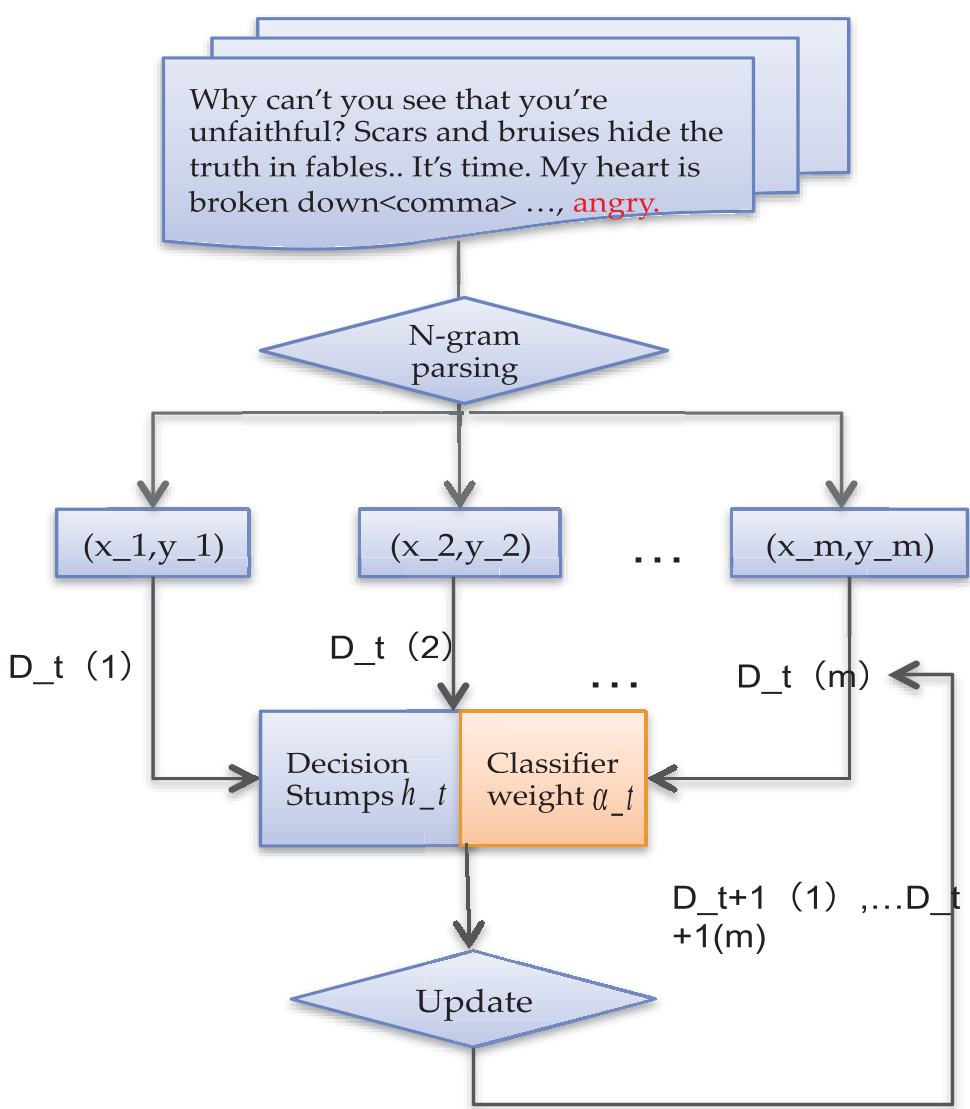 Fig 2: The iterative training framework of the AdaBoost MEC system.
Experimental Validation
The authors tested their approach against two strong baselines (SVM with Boolean features and SVM with TF*IDF).
Key Findings:
- Consistent Superiority: AdaBoost outperformed SVMs across almost all emotional categories.
- Unigrams are King: Surprisingly, simple unigrams (single words) often outperformed bigrams and trigrams, suggesting that for lyrics, specific emotional "anchor words" carry more weight than complex phrases.
- Linguistic Independence: The model successfully identified emotion regardless of language—notably picking up the French word "je" as a salient marker for "sexy" lyrics.
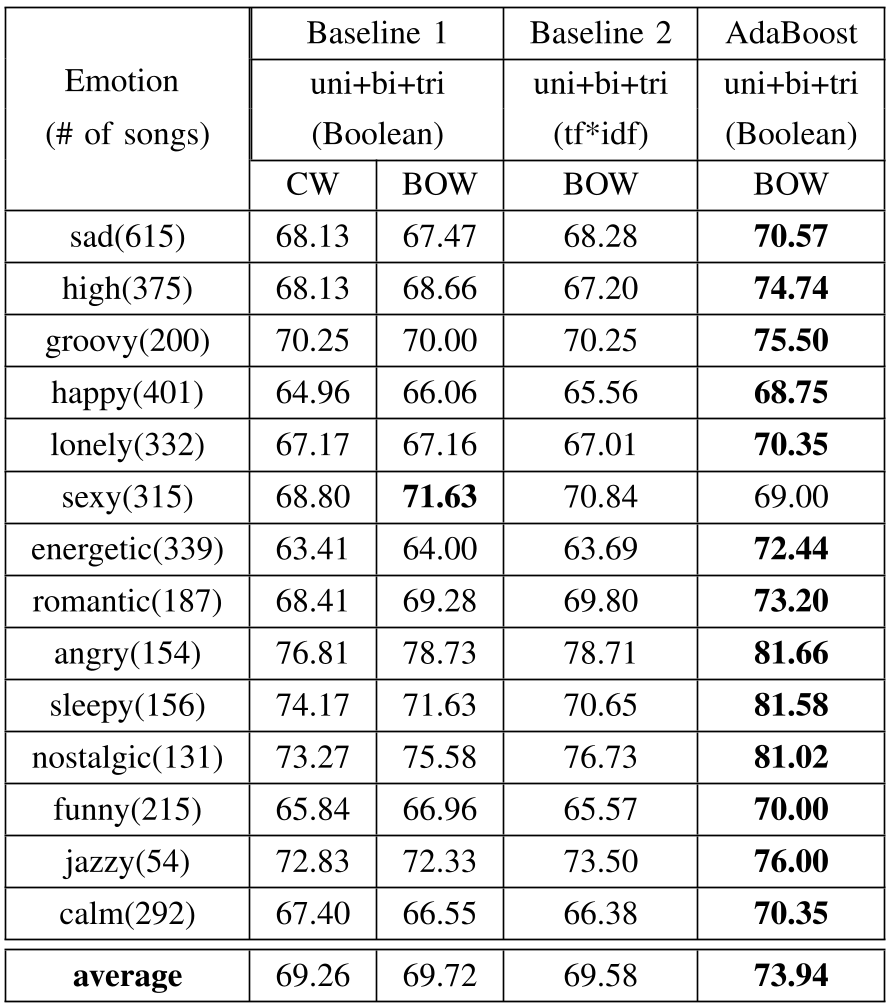 Table 1: Accuracy comparison between SVM baselines and the proposed AdaBoost system.
Salient Features: What Does 'Happy' Look Like?
One of the most insightful parts of the study is the extraction of the most "salient" words for each emotion category.
- Romantic: "Hat", "clouds", "guitar", "loving".
- Angry: Not just swear words, but pronouns like "I", "you", and "me", indicating a high level of personal confrontation.
- Sad: "City", "dead", "apart", "bones".
Critical Insight & Conclusion
This paper demonstrates that when dealing with domain-specific short text, the "Inductive Bias" of the algorithm matters more than the complexity of the feature engineering. AdaBoost's ability to pick out a few "salient phrases" echoes the way humans listen to music—we often identify the mood of a song based on a few key lines rather than a statistical analysis of the entire vocabulary.
While modern LLMs might now surpass these accuracies, this work provides a foundational understanding of why ensemble methods are uniquely suited to the sparse, emotional landscape of human song.