
The Human Gap in Social Algorithms: Evaluating Collaboration Recommendations
Recommending Collaboration with Social Networks: A Comparative Evaluation
This paper evaluates the "Expertise Recommender" (ER) system, which utilizes two distinct social network models—Work Group Graph (WGG) and Successive Pile Sort (SPS)—to match information seekers with potential collaborators. By comparing these social-matching techniques against a "No Matching" baseline, the study reveals significant discrepancies between system-generated social networks and users' subjective perceptions of their personal relationships.
TL;DR
In this classic CSCW study, David W. McDonald explores a critical tension in groupware: does embedding social networks into systems actually help us find experts? By testing two different social models—one focused on work context and one on sociability—within the Expertise Recommender (ER) system, the research discovers that "system-perceived" social closeness often clashes with "user-perceived" reality. The result is a cautionary tale about the trade-offs between social comfort and raw technical expertise.
Problem & Motivation
In the real world, we don't just ask the smartest person for help; we ask the smartest person we feel comfortable talking to. Groupware designers have long tried to mimic this by embedding social network analysis (SNA) into systems.
However, prior work often treated these social networks as static, objective maps of an organization. The author identifies a major pain point: systems use aggregate data to prescribe social interaction, but they rarely evaluate if users actually find these automated social boundaries helpful or accurate. The core question is: if a system hides a potential expert because it thinks they are "too socially distant" from you, do you trust the system or feel frustrated?
Methodology: Two Networks, Two Perspectives
The study was conducted at "Medical Software Company" (MSC), focusing on technical development and support departments. To test how different types of social ties affect recommendations, McDonald built two distinct networks:
- Work Group Graph (WGG - "Departmental"): Collected via ethnographic methods, this graph emphasizes shared work context and logical boundaries rather than formal org charts. It targets the "shared language" necessary for effective collaboration.
- Successive Pile Sort (SPS - "Social Network"): A quantitative approach where participants sorted cards based on "who hangs out together." This created an edge-weighted network representing workplace sociability.
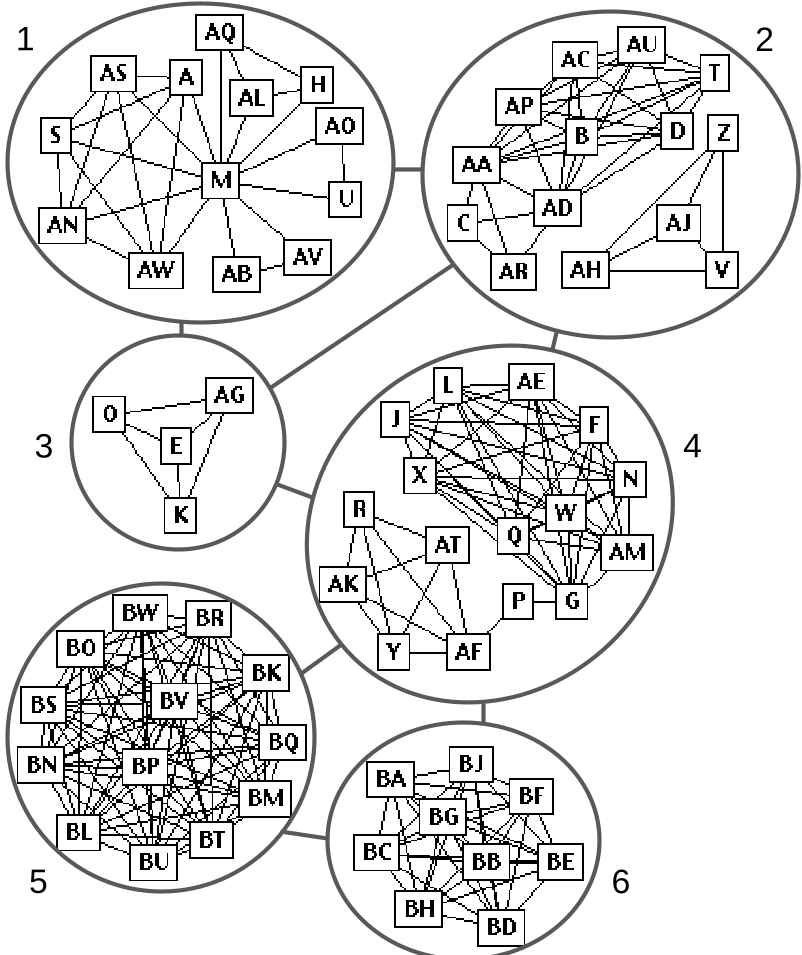 Figure 1: The WGG visualization, showing logical work groups beyond organizational silos.
The evaluation compared these filters against a "No Matching" baseline, which simply listed all experts without social prioritization.
Experimental Setup & Results
Participants performed "expertise requests" and compared the filtered vs. unfiltered results side-by-side.
Key Findings:
- The "More is Better" Conflict: Many users preferred the "No Matching" baseline. Why? Because social filters suppress people. If an expert was highly qualified but socially distant according to the system, they were hidden. Users felt they were losing valuable choices.
- The Breakdown of Aggregate Truth: A major friction point was that the SPS (Social Network) was an aggregate of everyone's opinion. Users like Liz and Daniel were frustrated when the system claimed a colleague was "distant" when they personally felt "close." This highlights the failure of global social models to represent individual ego-centric realities.
- The Perceived Trade-off: Users viewed the choice as a zero-sum game: do I want a "friend" or do I want an "expert"? While the system tried to find both, users were suspicious that "Social Matching" prioritized "hanging out" over technical competence.
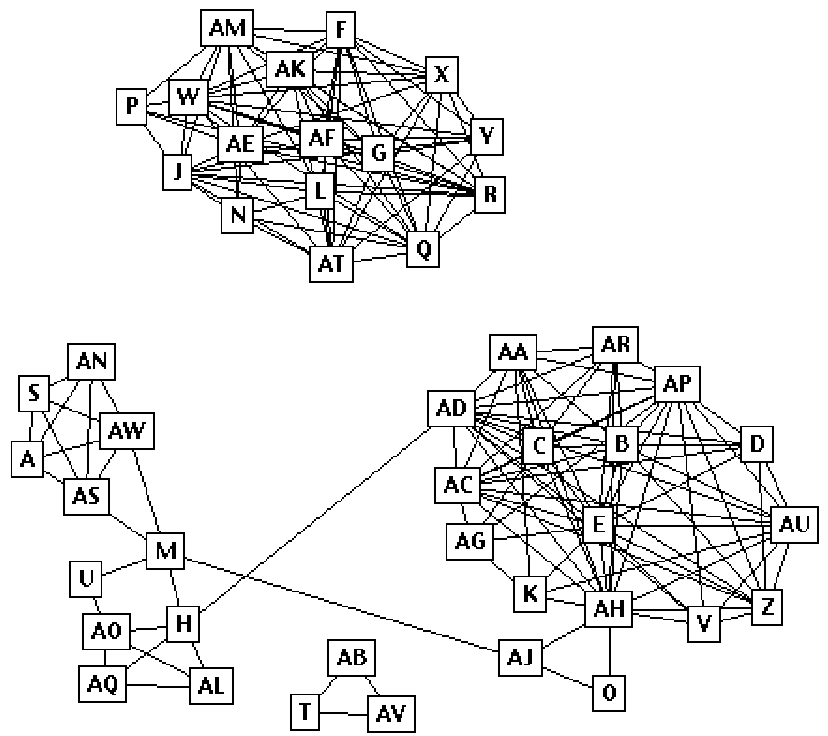 Figure 2: The SPS Social Network visualizing clusters of sociability.
Depth Insights & Conclusion
Summary (Takeaway)
This paper proves that social networks are not just data structures; they are deeply personal. When a system "prescribes" a social connection, it enters a realm of high subjectivity where accuracy is measured by individual perception, not global averages.
Critical Analysis & Limitations
- Social Dynamism: The networks were "snapshots" taken during research. In reality, workplace relationships shift weekly. The study correctly identified that without "learning" or "updating" mechanisms, these models quickly become obsolete.
- Control over Transparency: A recurring theme was the lack of Control. Users didn't just want a recommendation; they wanted to adjust the "knobs" (e.g., "Search Support first, then Development").
Future Outlook
As we move toward AI-driven workplace assistants, the lessons of this 20-year-old paper remain urgent. We cannot treat social metadata as a simple filter. Future systems must provide transparency (explaining why someone is recommended) and agency (allowing users to define their own "Social Network") rather than relying on black-box aggregations.