
i-EKbase: Bridging Environmental Big Data and the Linked Open Data Cloud via Semantic ML
Recommending environmental knowledge as linked open data cloud using semantic machine learning
The paper introduces i-EKbase, an Intelligent Environmental Knowledgebase that integrates diverse Australian environmental big data (SILO, AWAP, ASRIS, MODIS, CosmOz) into the Linked Open Data (LOD) Cloud. It utilizes a semantic machine learning pipeline featuring PCA, FCM, and g-SOM to provide visual knowledge recommendation and attribute ranking for decision support.
TL;DR
The i-EKbase (Intelligent Environmental Knowledgebase) project addresses the massive fragmentation in environmental monitoring by merging heterogeneous data sources (SILO, AWAP, ASRIS, MODIS, and CosmOz) into a unified Linked Open Data (LOD) framework. By applying a unique pipeline of PCA, Fuzzy-C-Means, and g-SOM, the system doesn't just store data—it recommends the most valuable knowledge attributes for environmental decision support.
Problem & Motivation: The "Silo" Trap of Environmental Data
Environmental forecasting is inherently uncertain. Data is often trapped in incompatible formats, originates from sensors in extreme geographical locations, or suffers from communication failures.
The authors identify a critical gap: the lack of automatic cross-validation and integration. For instance, MODIS satellite data and CosmOz ground soil moisture sensors should theoretically complement each other, but their structural differences make real-time integration difficult. Most existing systems act as simple repositories, failing to provide the "intelligence" needed to guide researchers toward the most relevant data features for their specific models.
Methodology: Semantic Machine Learning
The core of i-EKbase is a hybrid approach that marries the structural rigor of the Semantic Web with the discovery power of Unsupervised Machine Learning.
1. The Recommendation Pipeline
Instead of manual feature engineering, the authors employ a three-tier ML strategy:
- PCA (Principal Component Analysis): Used to identify attributes contributing most to data variance and eliminate redundant, highly correlated features.
- FCM (Fuzzy-C-Means): Provides a "degree of belongingness" for data points, allowing for soft-clustering that reflects the overlapping nature of environmental phenomena.
- g-SOM (Guided Self-Organizing Map): Translates high-dimensional environmental data into a 2D visual map, enabling researchers to "see" natural groupings of data attributes at a glance.
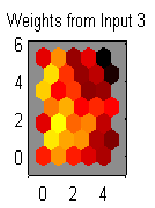 Fig 1. The visual selection interface powered by g-SOM allows for quick inspection of attribute correlations.
2. Knowledge Representation via RDF
To make this knowledge inter-operable, the extracted insights are converted into Resource Description Framework (RDF) format. This uses the (Subject, Predicate, Object) triple structure, where every resource is assigned a Uniform Resource Identifier (URI). This ensures that the environmental data isn't just a file on a server, but a node in the global Linked Open Data Cloud.
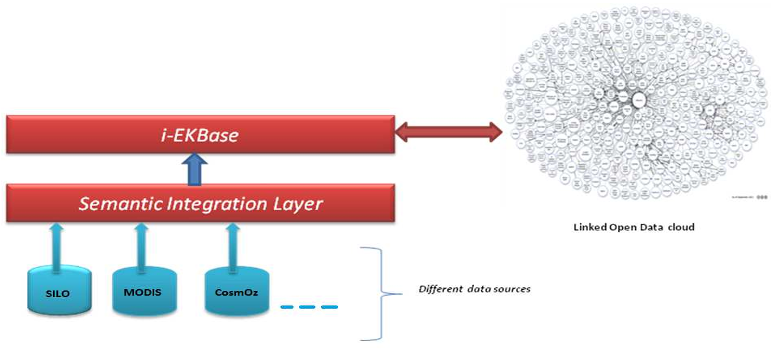 Fig 2. The flow from raw environmental data to the LOD Cloud through the Sesame Triplestore.
Experiments & Results: Making Big Data "Smart"
The authors successfully implemented the Sesame Triplestore (now known as RDF4J) to manage the i-EKbase.
- Data Fusion: The system handled diverse sources ranging from soil resources (ASRIS) to terrestrial water balance (AWAP).
- Attribute Ranking: By using PCA-guided clustering, the system provides a ranked list of importance for attributes, effectively acting as an "automated consultant" for future application designers.
- Accessibility: Through the UI, users can perform SPARQL-like queries to browse integrated knowledge, complete with provenance (source) metadata.
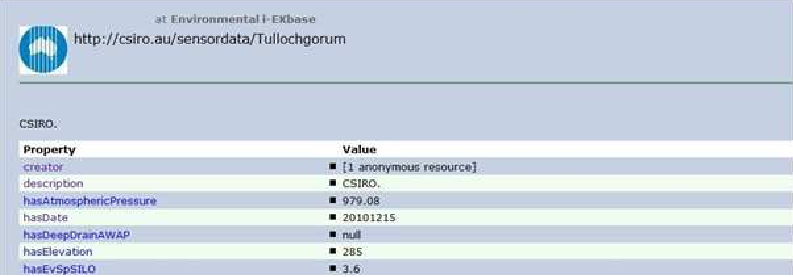 Fig 3. The i-EKbase user interface providing access to the underlying RDF triples.
Critical Analysis & Conclusion
Takeaway
i-EKbase represents a shift from Big Data storage to Knowledge Recommendation. By leveraging the Linked Open Data standard, it ensures that environmental findings are discoverable, linkable, and machine-interpretable, which is vital for global climate collaboration.
Limitations & Future Work
While the clustering approach provides a powerful visual tool, the paper focuses primarily on unsupervised discovery. Future iterations could benefit from:
- Semantic Enrichment: Integrating more complex ontologies (e.g., SSN for sensors).
- Scalability Testing: Evaluating the Sesame triplestore performance as the "Cloud" grows to billions of triples.
- Real-world Utility: Moving from "browsing" to "predictive" applications, such as real-time flood or drought forecasting using the i-EKbase backbone.
In summary, i-EKbase sets a blueprint for how we can stop looking at environmental data in isolation and start treating the Earth's monitoring systems as a single, interconnected semantic graph.