
Beyond Manual Mapping: A Social Network Approach to Tripleset Interlinking
Recommending tripleset interlinking through a social network approach
This paper introduces a Social Network-based recommendation approach for tripleset interlinking in the Linked Data domain. By adapting link prediction measures—specifically Jaccard and Adamic-Adar coefficients—the system builds a ranked list of candidate triplesets for a new data publisher, significantly reducing manual search efforts.
TL;DR
The "Web of Data" thrives on links, yet finding which datasets to link to is like finding a needle in a global haystack. This paper applies Social Network link prediction algorithms to the Linked Data graph, achieving over 90% recall and reducing manual inspection effort by up to 90% through a simple yet effective ranking mechanism.
Background & Positioning
In the Linked Data ecosystem, a dataset is only as valuable as its connections. However, a data publisher faces a daunting task: out of thousands of triplesets (like DBpedia or GeoNames), which ones should they link to? Traditionally, this required deep semantic analysis—comparing schemas or every single data instance—which is computationally "heavy."
This work positions itself as a lightweight filtering layer. Instead of diving into the data content immediately, it looks at the "social" structure of the graph—who is already talking to whom—to recommend potential partners.
The Core Motivation: The Scalability Wall
Existing SOTA methods often rely on:
- Keyword searches: Limited by surface-level naming.
- Ontology Matching: Requires heavy computation and aligned schemas.
- Expert Knowledge: Doesn't scale with the explosion of the Semantic Web.
The authors' insight is simple: If Tripleset A links to Tripleset C, and your new Tripleset B also links to C, there is a high structural probability that B and A share common ground and should be interlinked.
Methodology: Treating Data as a Social Network
The authors define a Linked Data Network , where are triplesets and are edges representing at least one URI link between them.
The Recommendation Procedure
To recommend links for a target tripleset , the system requires a "seed" context (at least one known connection). It then ranks other triplesets in the network using two adapted measures:
- Jaccard Coefficient: Measures the simple overlap ratio between contexts.
- Adamic-Adar Coefficient: A more nuanced metric. It rewards common connections but weights them by the inverse logarithm of their popularity.
- Physical Intuition: If two datasets both link to a very "exclusive" dataset, they are likely more related than if they both link to a "celebrity" dataset like DBpedia, which everyone links to anyway.
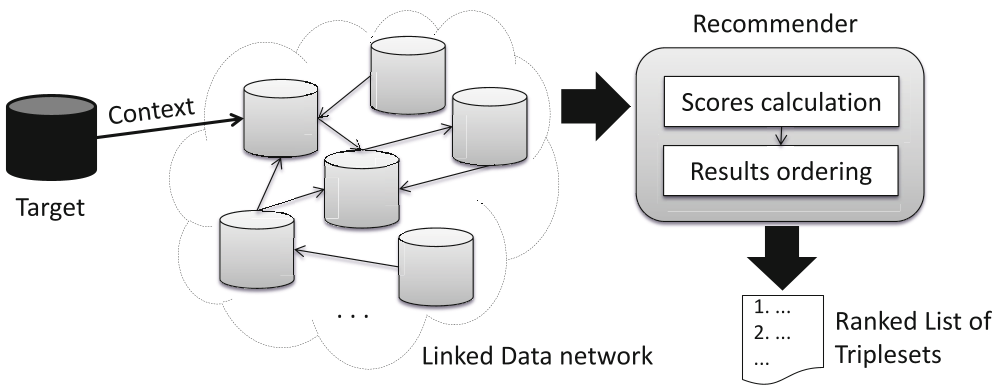 Figure 1: The workflow of taking a target tripleset and generating a ranked list based on network structure.
Experimental Insights
The researchers used a real-world dataset from the Data Hub catalogue (15,012 connections).
Key Findings:
- High Recall with Minimal Input: Even with only one known connection, the system finds most relevant targets within the recommended list.
- The Superiority of Adamic-Adar: As shown in the performance charts, Adamic-Adar consistently outperformed Jaccard in Mean Average Precision (MAP). By penalizing "generic" hubs, it identifies more specific, relevant connections.
- Effort Reduction: The "average relative position" of the last relevant tripleset was found within the top 10-18% of the ranking. This means a human expert only has to look at a fraction of the possibilities.
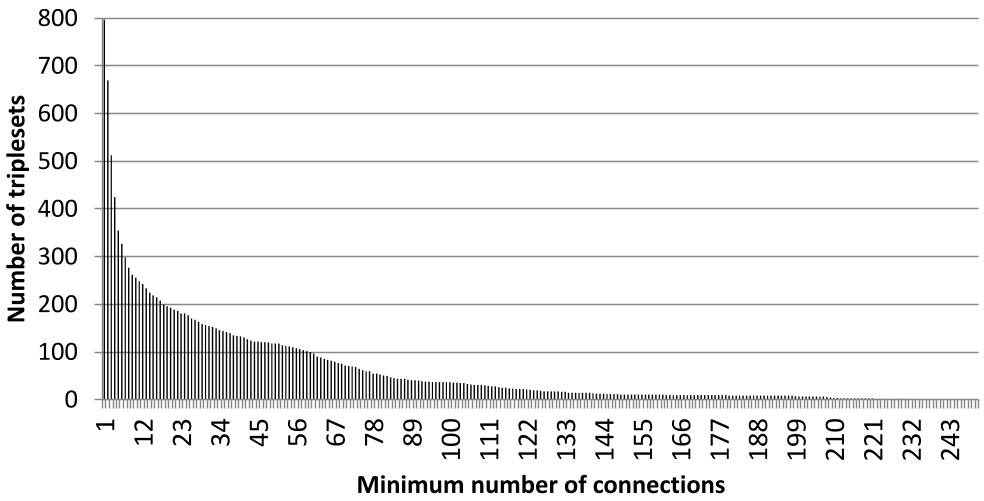 Figure 2: Performance metrics showing Adamic-Adar's higher precision compared to Jaccard.
Critical Analysis & Future Outlook
Strengths: The beauty of this approach is its agnosticism. It doesn't care if your data is about biology or movies; it relies purely on the topology of the Web of Data. It serves as an excellent "pre-filter" before applying more expensive Semantic Web reasoning.
Limitations: The main drawback is the Cold Start problem. To get a recommendation, you must already know at least one tripleset you link to. Additionally, the current model uses an "unweighted" graph, treating a dataset with 1 link the same as one with 1,000 links.
Takeaway for the Industry: For developers of Data Catalogs or Knowledge Graph tools, integrating structural link prediction is a "low-hanging fruit" that can dramatically improve the user experience for data publishers.
Conclusion
By borrowing from Social Network theory, this paper proves that the "Web of Data" follows similar organizational principles to human relationships. The Adamic-Adar metric, in particular, proves that in data linking, the "friends of my friends" are indeed the best places to look for new connections.