
End-to-End Resilience: Bypassing Data Imputation in Environmental Time Series
Reconstructing Environmental Variables with Missing Field Data via End-to-End Machine Learning
The paper introduces an end-to-end machine learning approach using Long Short-Term Memory (LSTM) networks to predict environmental variables directly from raw sensor data containing missing values. By bypassing the traditional data imputation phase, the model achieves a SOTA-level R² of 0.86 on rainfall field reconstruction tasks in Northern Italy, even during sensor failures.
TL;DR
Data gaps are the "Achilles' heel" of environmental monitoring. While most researchers spend weeks refining imputation algorithms to fill these gaps, this paper asks a radical question: What if we just stop filling them? By training an LSTM network to recognize missing data markers, the authors achieved higher accuracy in rainfall field reconstruction than traditional analytical methods, turning sensor failure from a roadblock into a learnable pattern.
The Pitfalls of Traditional Reconstruction
In environmental science, missing data is usually handled via Imputation (filling with means/neighbors) or Interpolation (fitting polynomials or Kriging).
However, these methods have two fatal flaws:
- Error Propagation: Any error made during imputation acts as noise for the subsequent prediction model.
- Loss of Dynamics: Simple statistics often fail to capture the highly localized and intense nature of convective storms, which are neither linear nor smooth.
The authors argue that the "cleansing" phase is a bottleneck. Instead of a two-step process (Reconstruct → Predict), they propose a direct mapping: Raw Input (with gaps) → Desired Output.
Methodology: Teaching Machines to "See" the Absence
The core innovation lies in the End-to-End training strategy.
1. Simulating Real-World Failure
To make the LSTM robust, the researchers didn't just hide random data points. They modeled the stochastic nature of sensor failure using:
- Time to Failure (TTF): Exponential distribution (Mean = 442 steps).
- Time to Restore (TTR): Exponential distribution (Mean = 10.79 steps).
2. The Architecture
They utilized a single-layer LSTM with 10 neurons. The crucial trick? Missing values were replaced with -1 (an out-of-range value for rainfall). This allowed the LSTM's forget and input gates to develop a "failure-aware" logic, effectively learning to ignore the -1 inputs and lean on the hidden states derived from other functioning sensors.
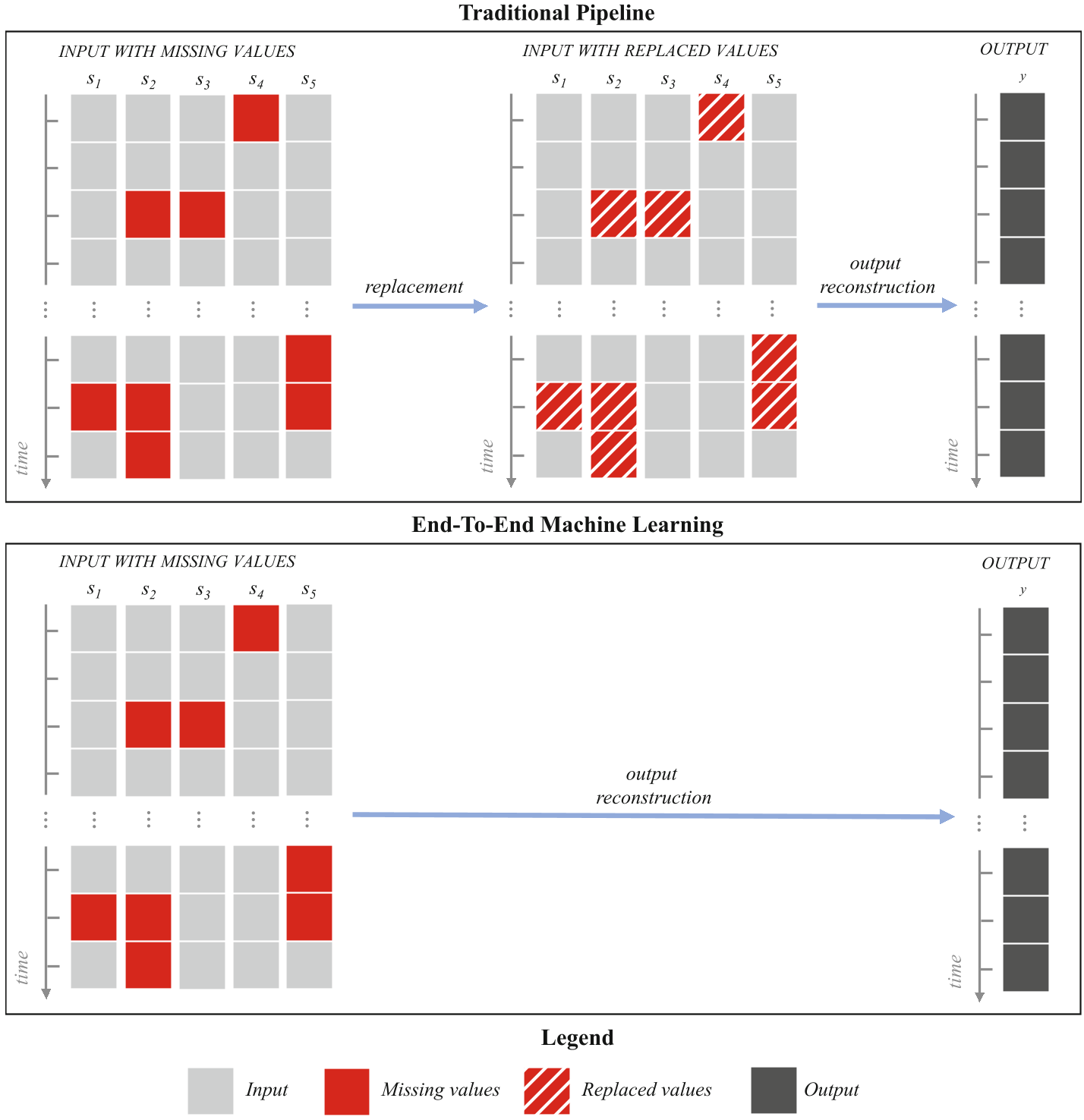 Figure 1: The End-to-End workflow showing raw inputs with missing values entering the model directly.
Experimental Results & Performance
The model was tested on a challenging rainfall dataset from Northern Italy (ARPA Lombardia).
Quantitative Dominance
Compared to a standard analytical benchmark (which adjusted weights based on active sensors), the LSTM showed superior resilience:
- Analytical R² (Test): 0.64
- LSTM R² (Test): 0.86 (+22% improvement)
Qualitative Insight: Spatial Redundancy
The paper reveals that the LSTM performs "implicit interpolation." As shown below, even when a primary station () fails during a storm, the LSTM reconstructs the peak by leveraging the spatial correlation with other gauges.
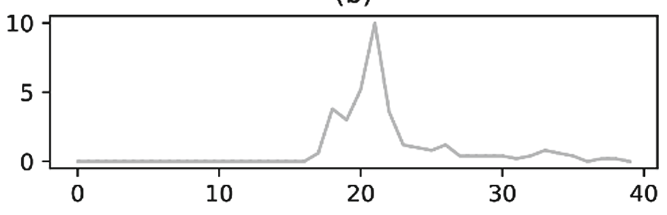 Figure 2: Performance comparison during sensor failures. The NN (bottom row) tracks the actual values much closer than traditional methods.
Critical Analysis: Is Imputation Obsolete?
While the results are impressive, the study notes a critical limitation: Information Loss. If the only sensor recording a localized peak fails, even the smartest LSTM cannot "invent" that missing information. The model's strength relies significantly on spatial redundancy.
Furthermore, this method requires a "complete" historical dataset to train the "failure simulations." In scenarios where a golden reference dataset is unavailable, self-supervised pre-training (like Masked Time-Series Modeling) might be the necessary next step.
Conclusion
This work marks a shift from Data Cleaning to Model Robustness. By proving that LSTMs can natively handle temporal discontinuities, the authors provide a blueprint for more efficient, real-time environmental monitoring systems that are built to fail—and recover—gracefully.